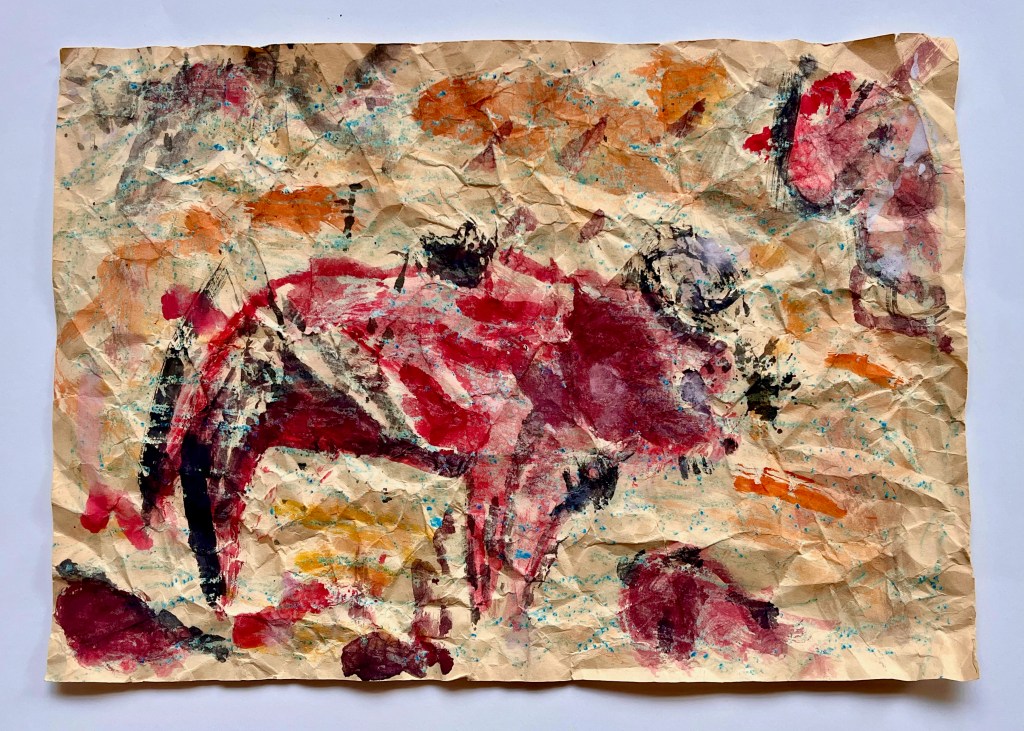
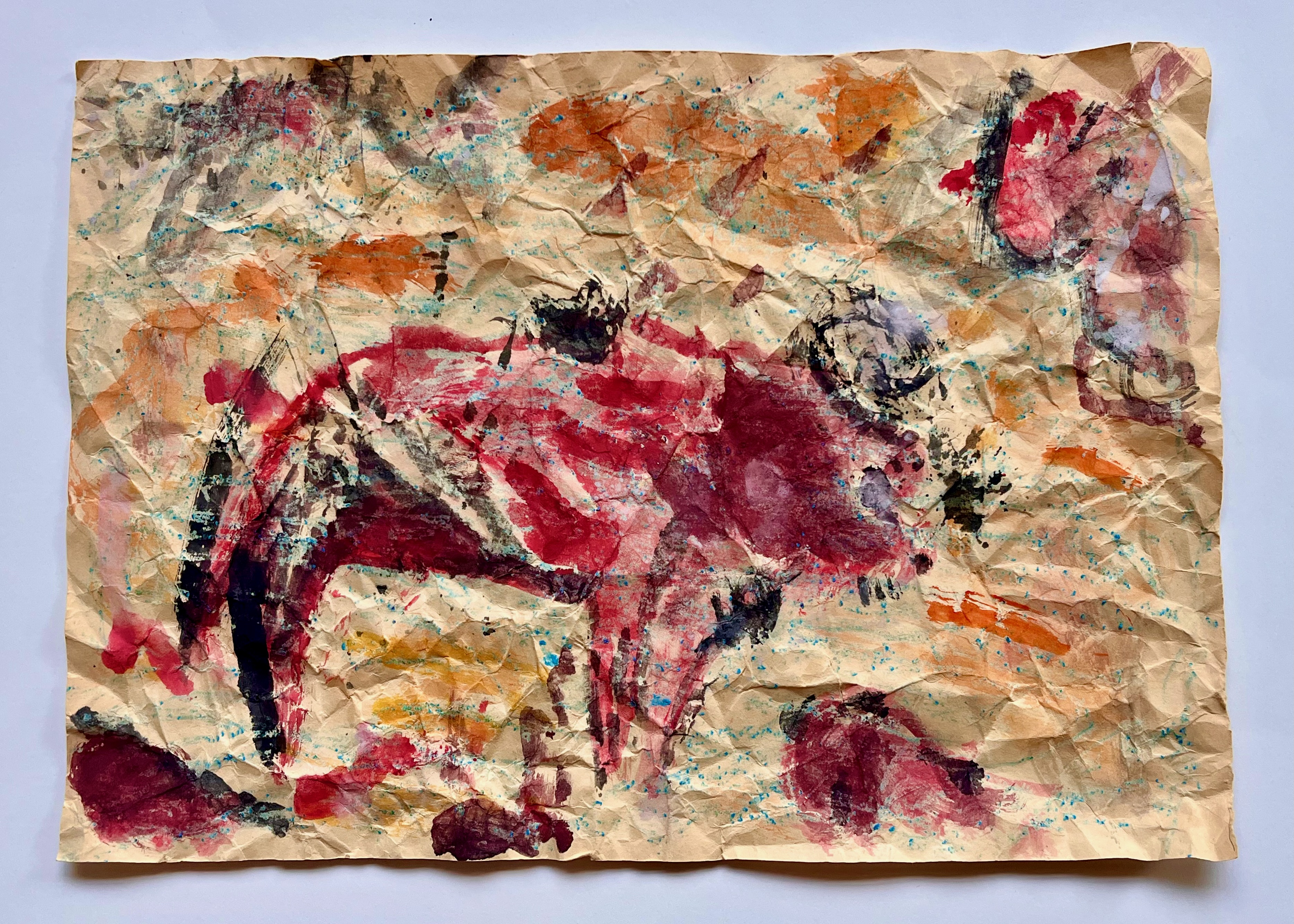

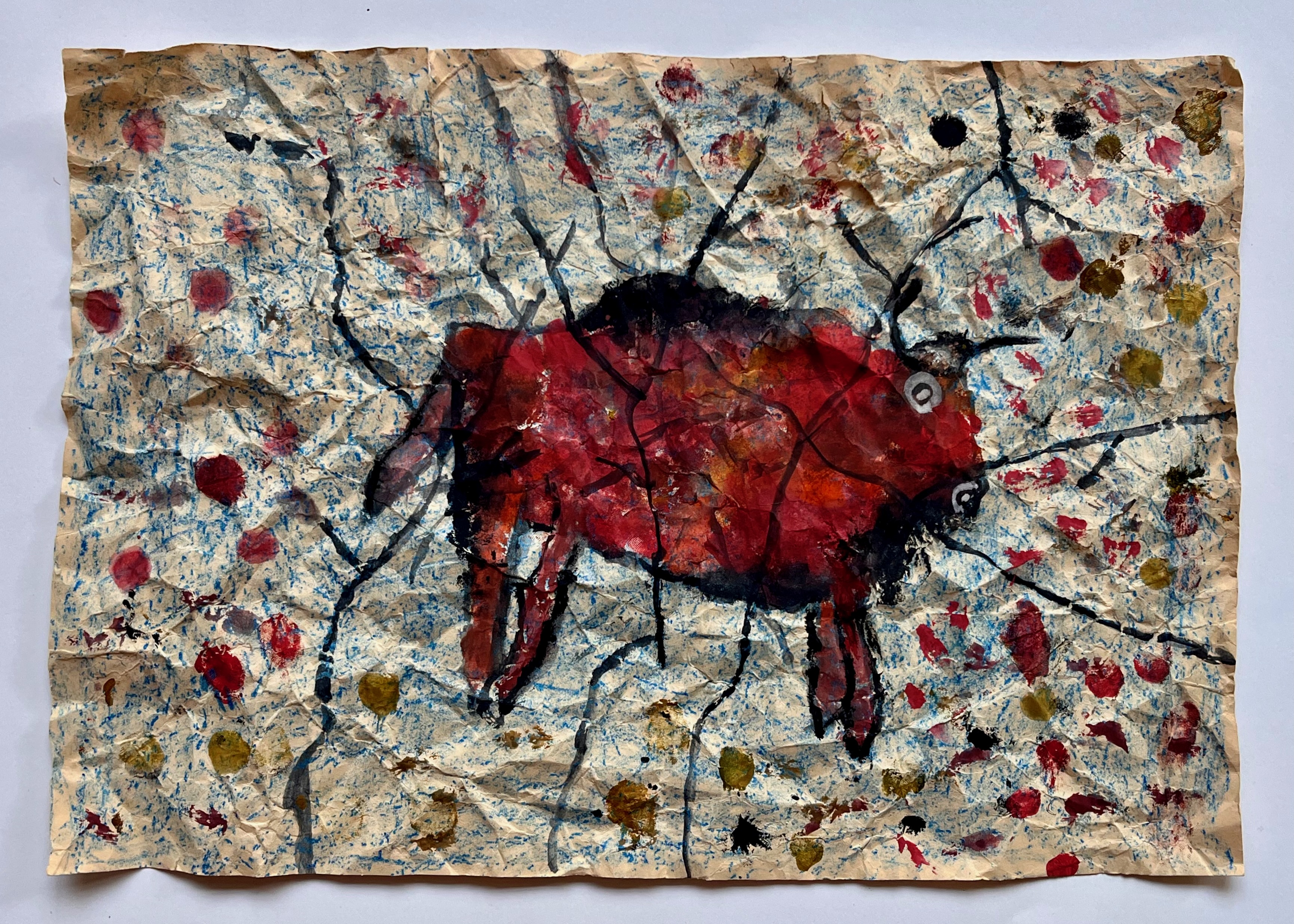
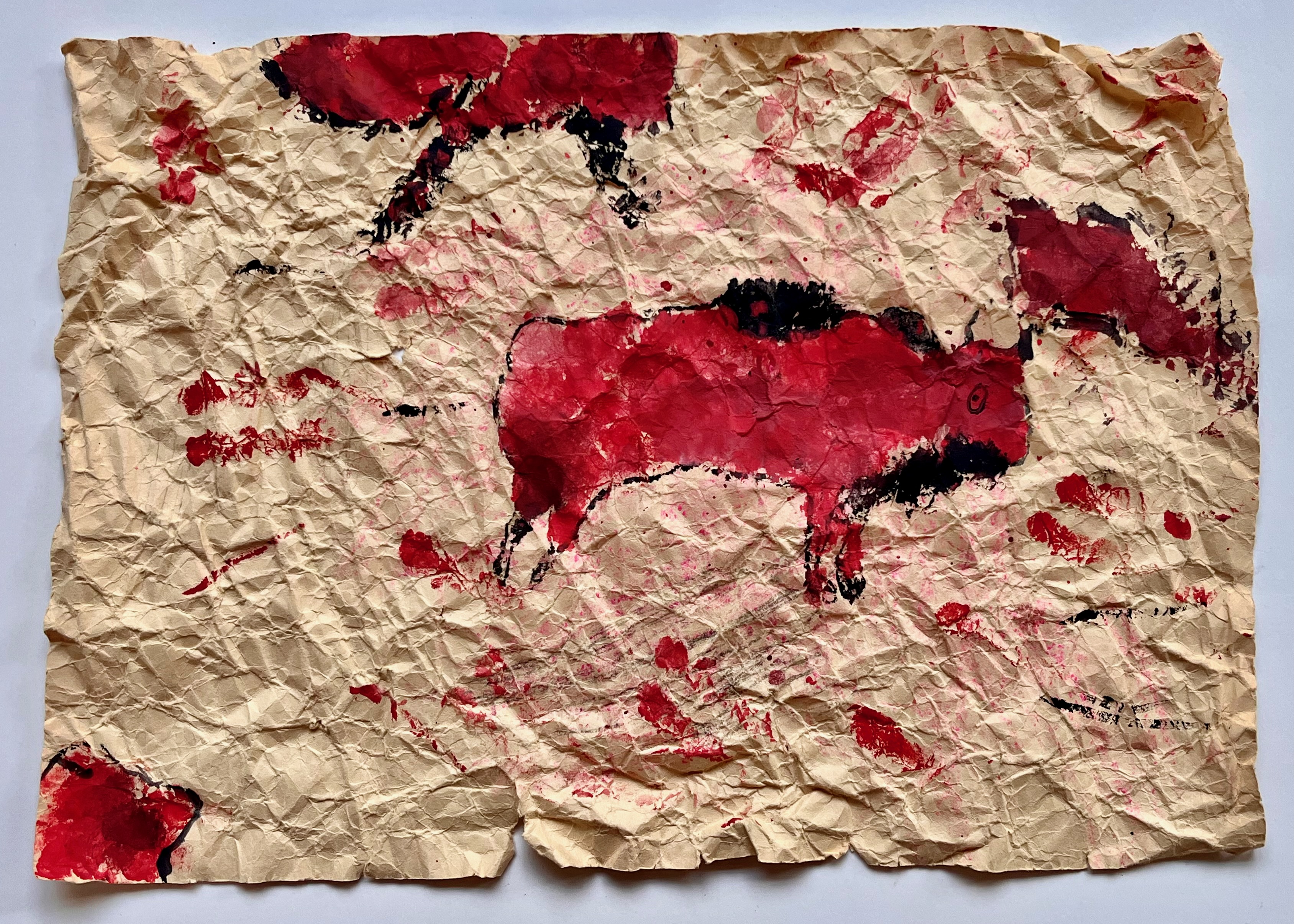
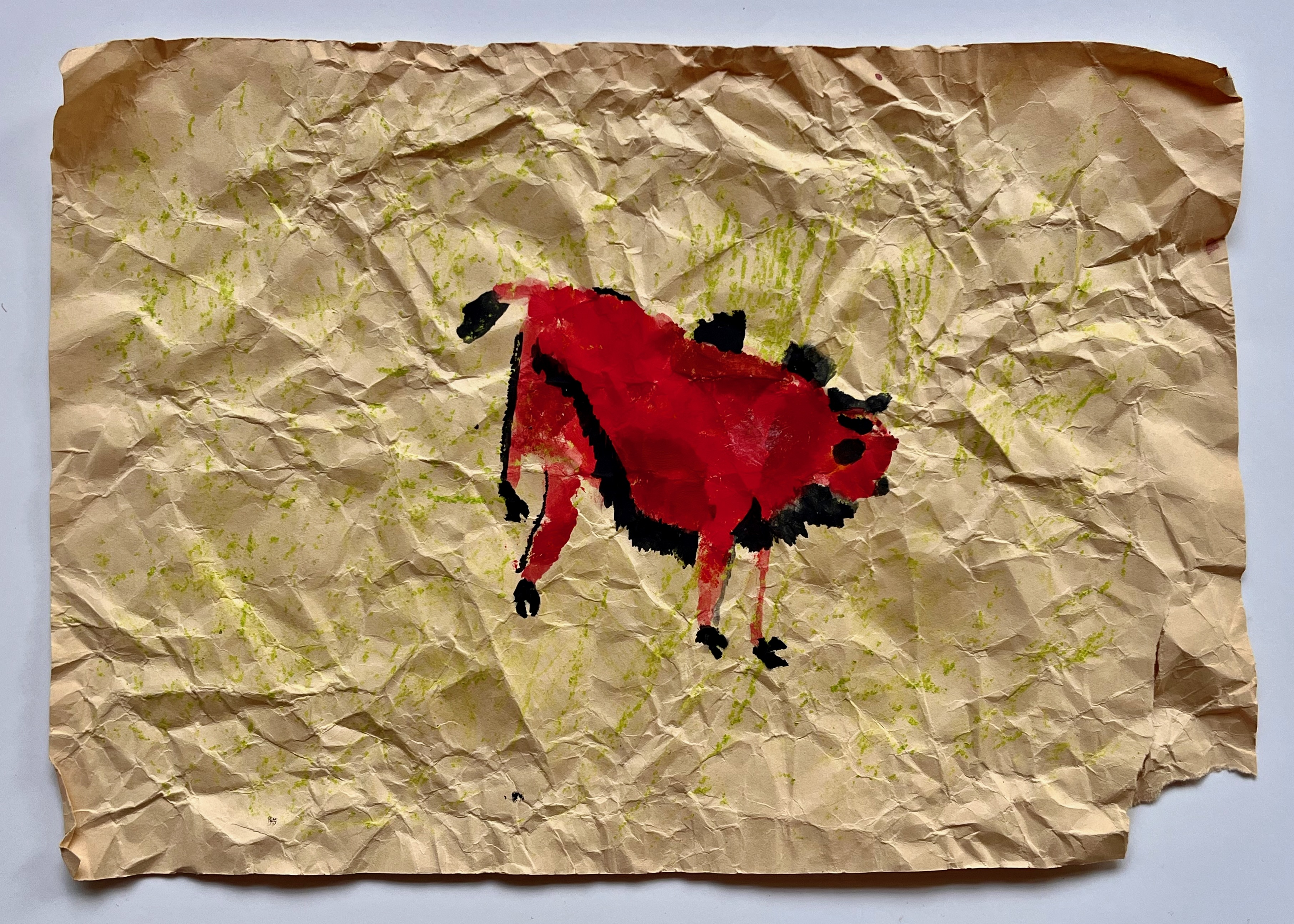


After researching and studying Prehistoric Art, Grade 6 students worked with painting and mark-making on their own custom-made paper.
Students first manipulated the page, to create an uneven ‘crumpled’ surface. Then made a rubbing on rock, to build the surface texture.
Finally students experimented with mark-making, using wet and dry application of paint, as well as a range of drawing tools.
The results are spectactular. From beautifully rendered painted depictions of cave paintings, to impacftul drawings that explored the negative and positive space of the hand print.
After completing the practical work, students wrote their own reflections on what they had learned during the project. Below are some very thoughtful reflections:
‘I learned not all paintings have to have clean and perfect lines to be a good art piece. You can have squiggles and crumpled paper and it is still art. However long or short it took it is still a masterpiece. The paper of mine was crumpled and ripped, and bumpy but it came out very cool. I had random lines scribbled all over the place and splotches of paint everywhere. There was a main drawing but also little ones beside it. I think all the mistakes and scribbles were the best part. In the end, no matter what or how many mistakes you make, art is art.’ Sadie W.
‘Today we started to paint the animal and it was a challenge to do it with no pencil to trace. In the beginning, I felt confused because I thought it was not possible. We had to take just the right brush and the right amount of water and start drawing. We needed to mix red and a little bit of brown to make the color of the skin of the animal. The water got dirty and changed color so that didn’t help much. But I am curious and I like challenges. I started enjoying it even if it was a bit difficult to guess how to realize it. The most challenging part was to draw all the small thin lines that surrounded the piece of cave art.’ Gabriele B.
‘I saw that if you put a lot of water on the paint brush the paint will become thicker and harder to control. But when you put less water on the paint brush is easier to control and you can see the solid colour itself. Painting on rough surfaces is not as easy as a flat surface. You have to clean your brush in the water in order to get another colour. I saw that when we first started, the paint brush was dry but when we put it in water and rubbed it with our hands it became so much softer than how it was before.’ Amen T.
 MMI Art Expanded Classroom
Leave a comment