
This project challenged students to capture modern Rome through the lens of Realism, asking: If a Realist artist were alive today, how would they depict the city?
Drawing from the tradition of 19th-century Realist painters like Courbet, Daumier, and Millet, who rejected idealization in favor of documenting ordinary life, students explored contemporary urban environments with an unflinching eye.
The stark visual language of Italian Neorealist cinema, particularly Pasolini’s Accattone, provided a cinematic counterpoint that informed their photographic approach.
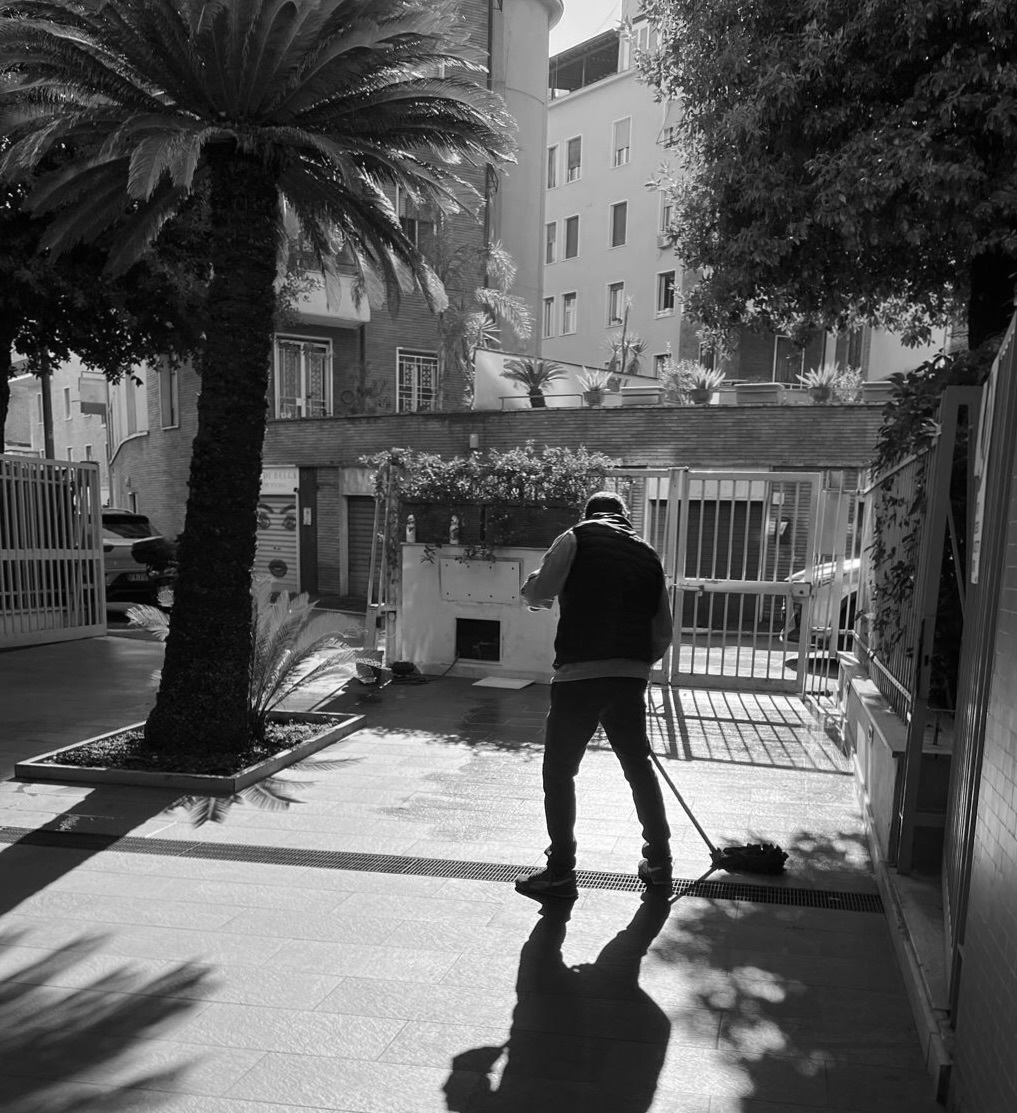
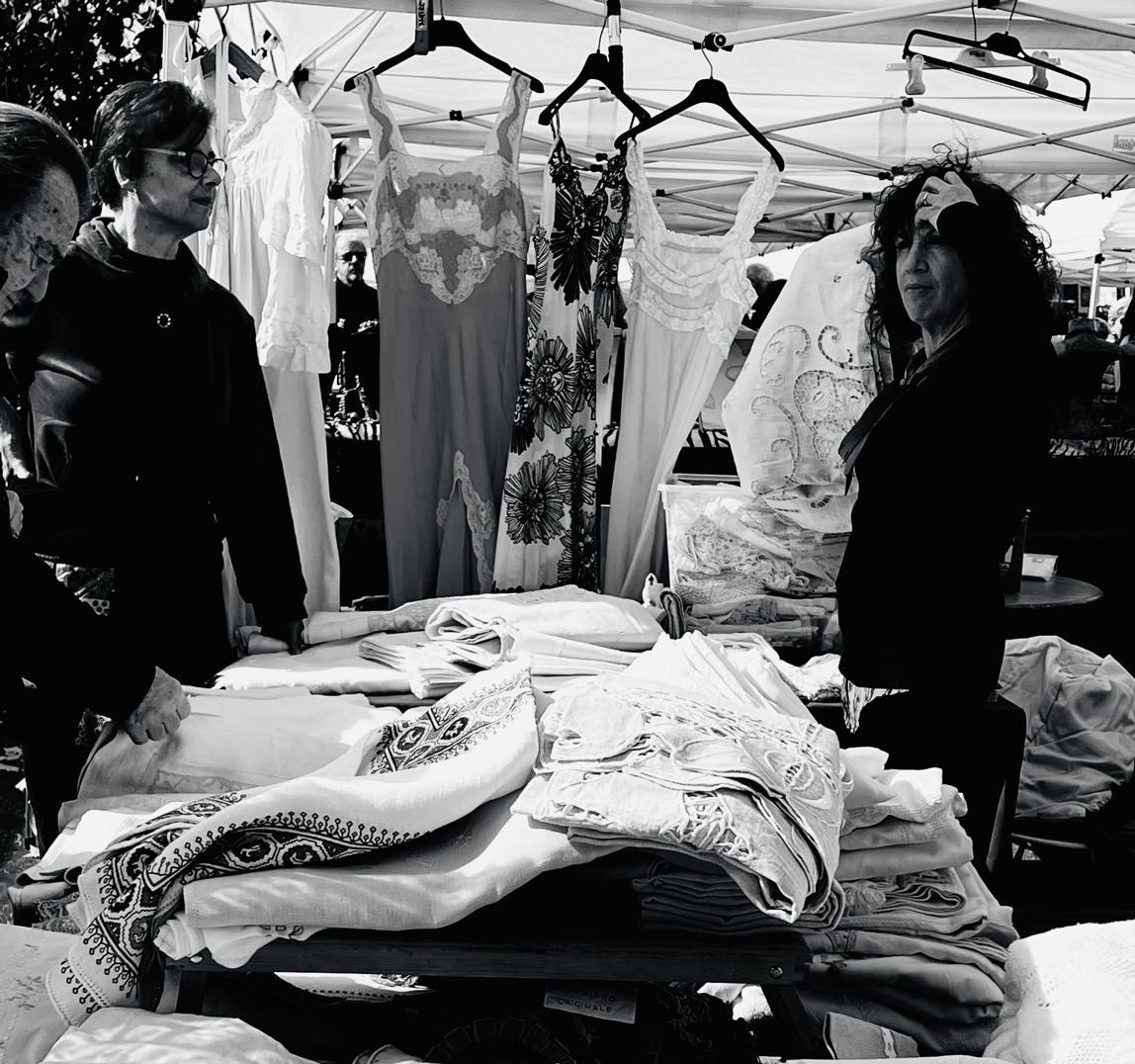
Venturing through Rome’s streets and beyond, students focused on subjects that historical Realists championed: the working class, social inequities, and the unvarnished beauty of daily existence.
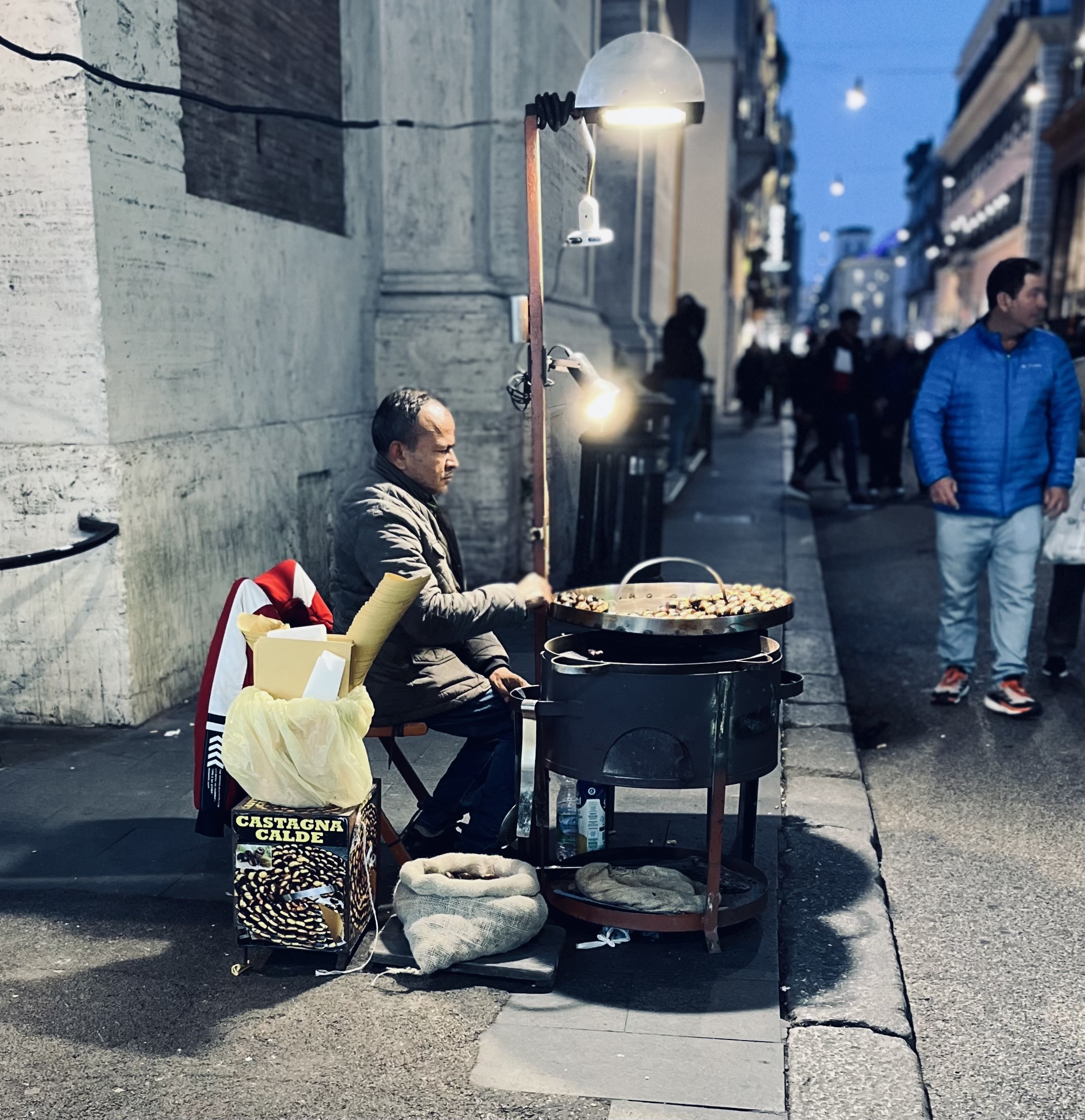
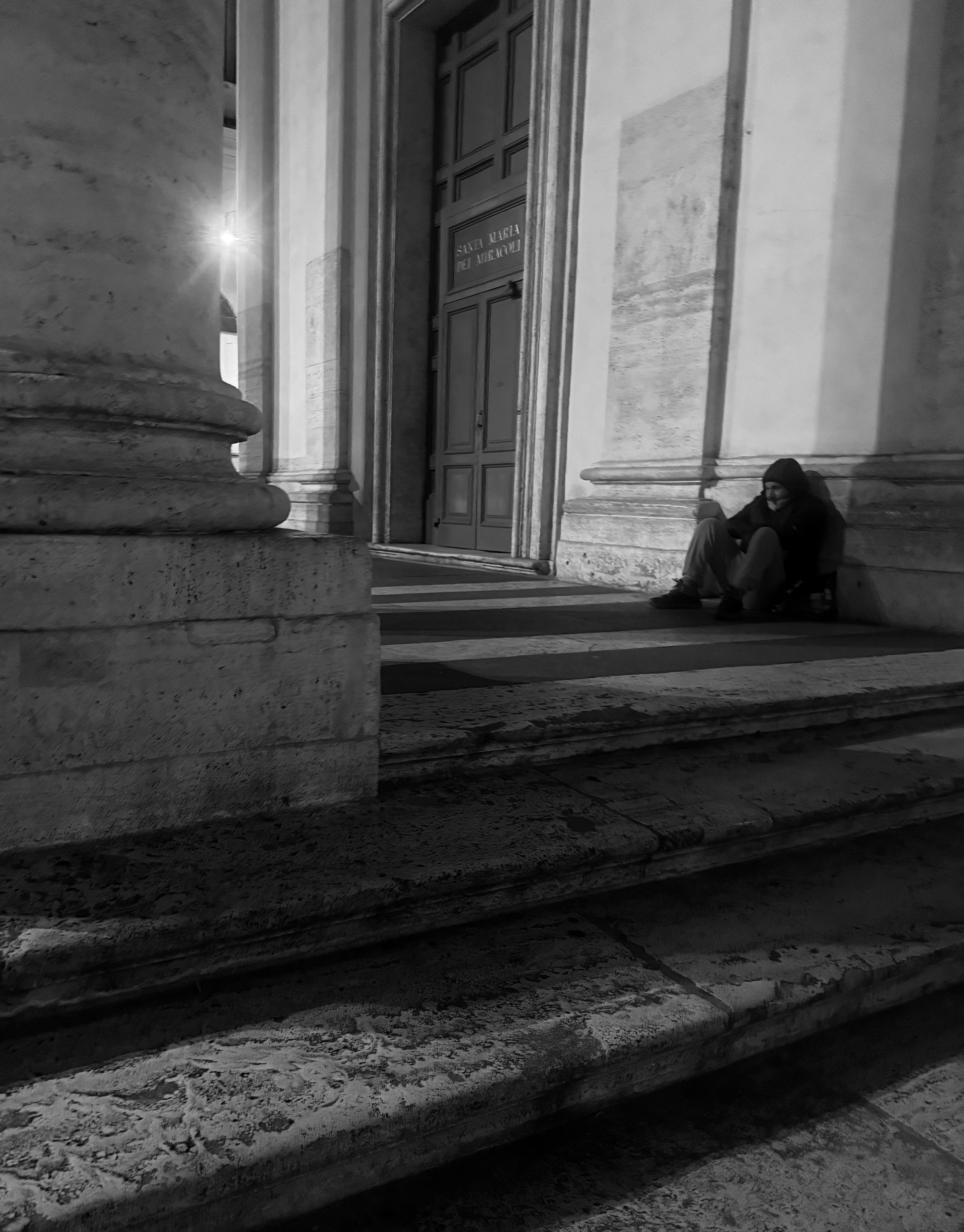
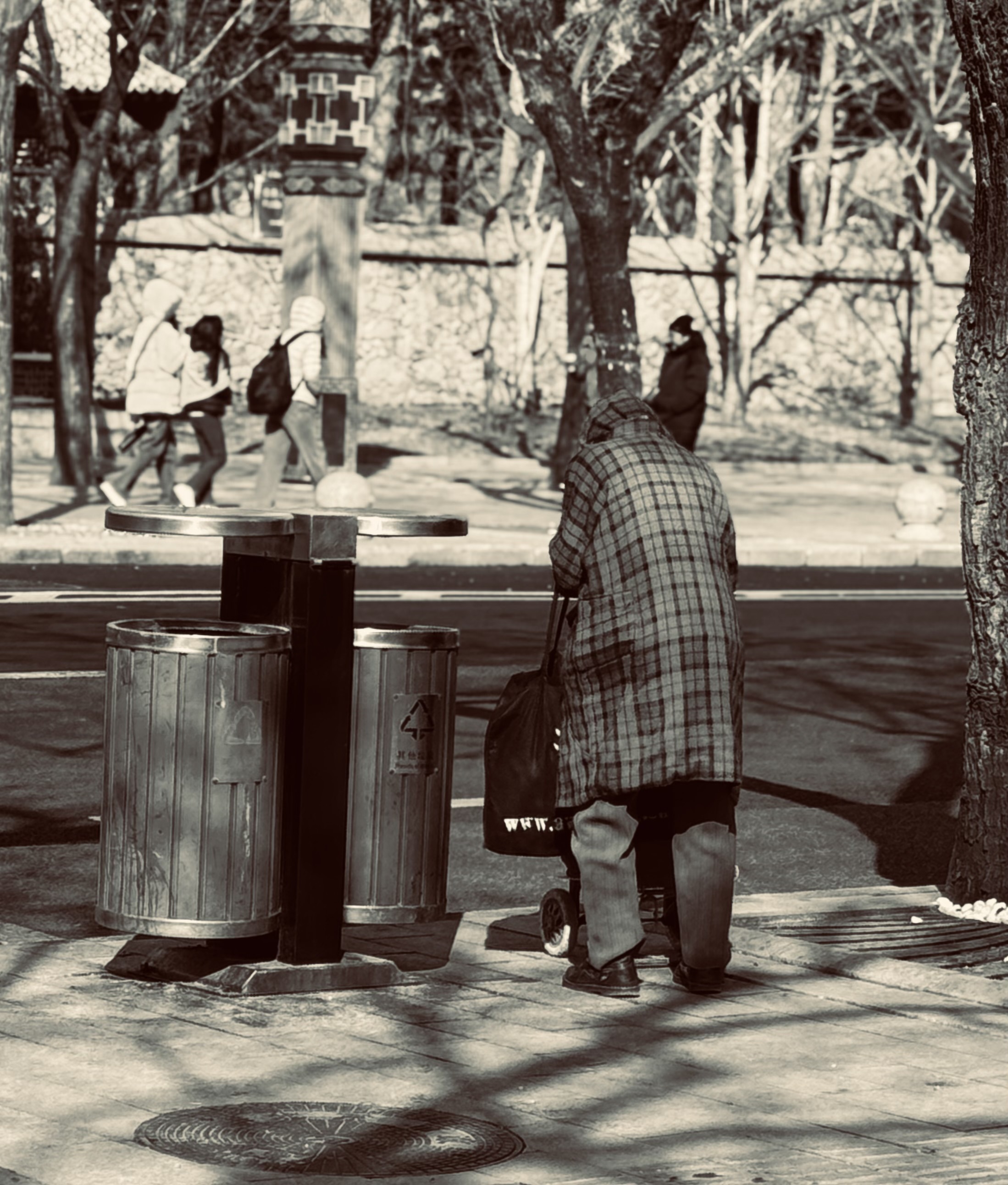
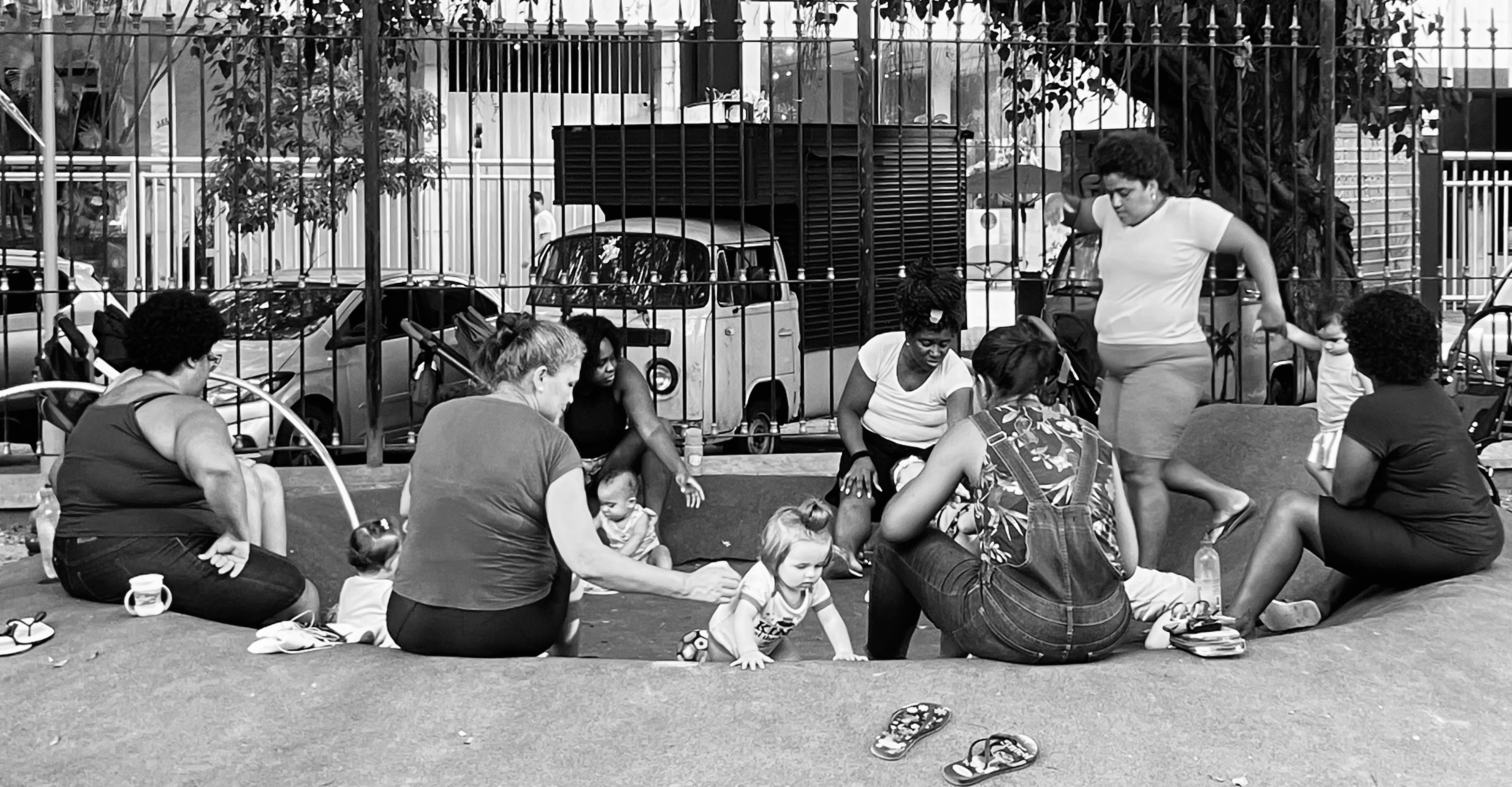
Their photographs reveal what Courbet would have sought; the dignity of labor evident in a street vendor tending his chestnut cart at dusk, the societal margins depicted in a solitary figure resting between weathered columns, the communal experience captured in mothers gathering with their children on worn pavement.
The photographic results demonstrate a sophisticated understanding of Realism’s dual commitment to aesthetic form and social documentation. Strong black and white compositions employ strategic lighting effects that echo both Daumier and the cinematography of Rossellini, while color images exploit visual tensions, juxtaposing the vibrant traditional dress of tourists against the fatigued posture of a service worker in Beijing’s Forbidden City.




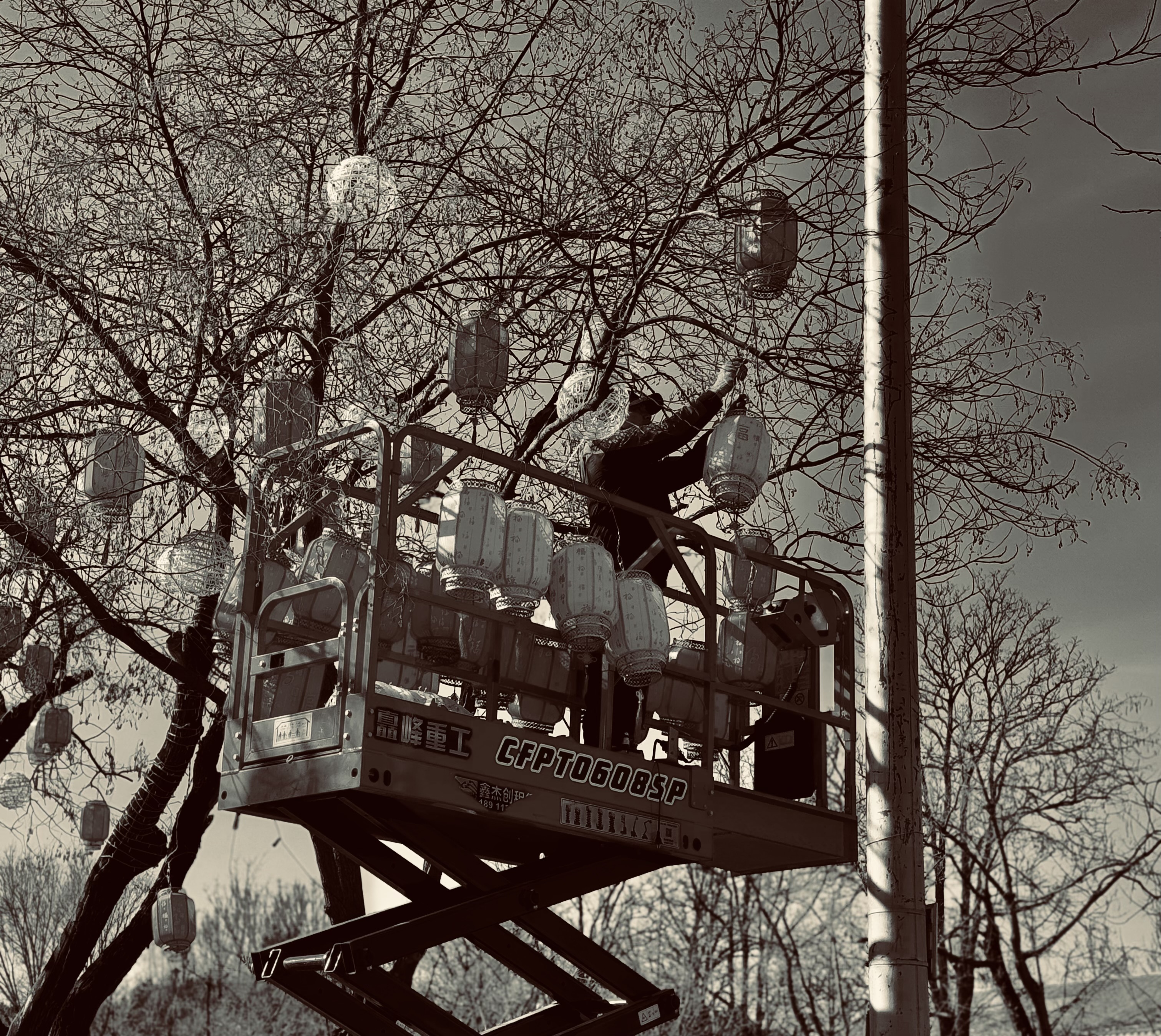



Students traveling beyond Rome during the holiday period applied these same principles to diverse locations, creating a comparative study of how Realist approaches transcend specific geographies while remaining attentive to local conditions.
What unites these varied images is their commitment to what Daumier called “the present-day truth”—a rejection of the picturesque in favor of the authentic.
Through careful framing choices that recall the compositional strategies of Millet’s field workers, and post-production techniques that enhance rather than mask social realities, students navigated the contemporary challenge of creating honest documentation in an age of filtered perfection.
This project was not merely an aesthetic exercise but a form of visual sociology, capturing cities as they truly are, beyond idealized representations.
In doing so, students created a compelling visual archive that connects directly to Realism’s historical project while addressing the unique complexities of documenting urban life in the digital age.
Explore the students’ work in our gallery and discover how they have reimagined urban environments through the uncompromising eye that defined Realism in its original context and continues to offer powerful insights today.
 MMI Art Expanded Classroom
Leave a comment