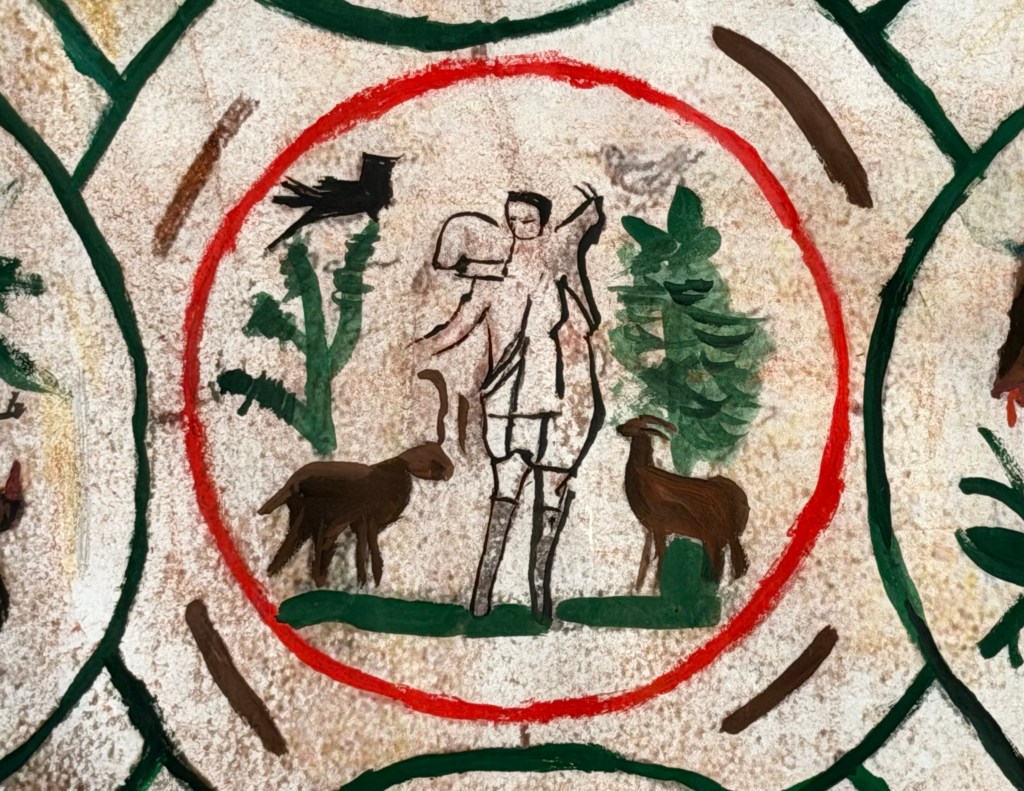
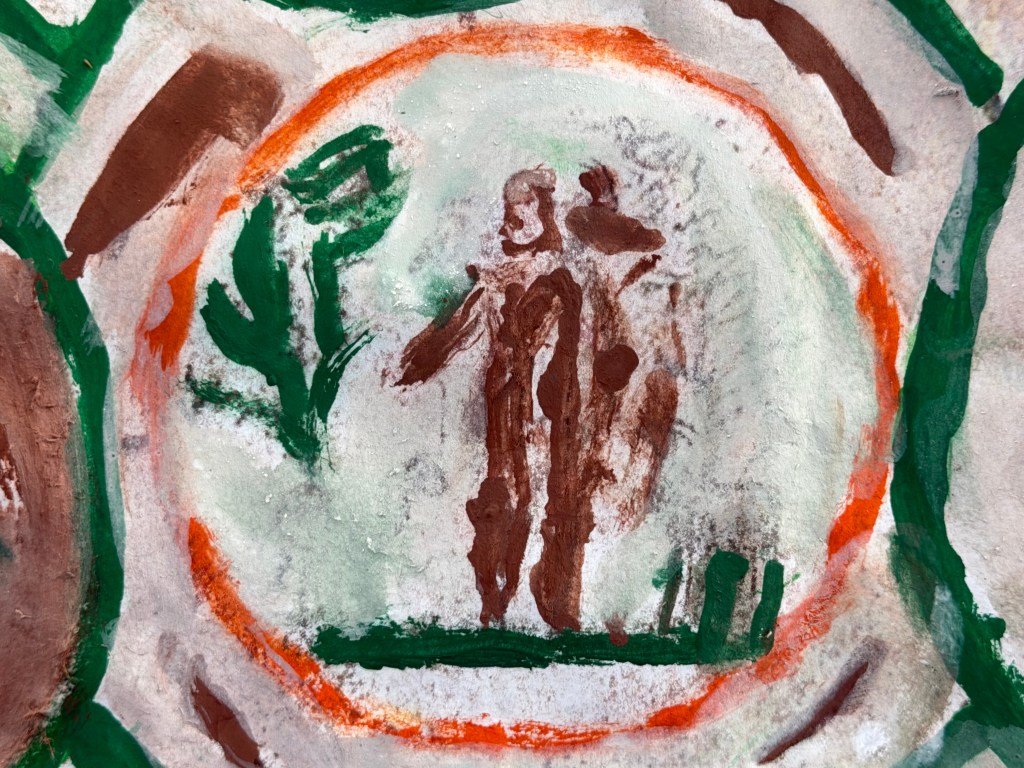
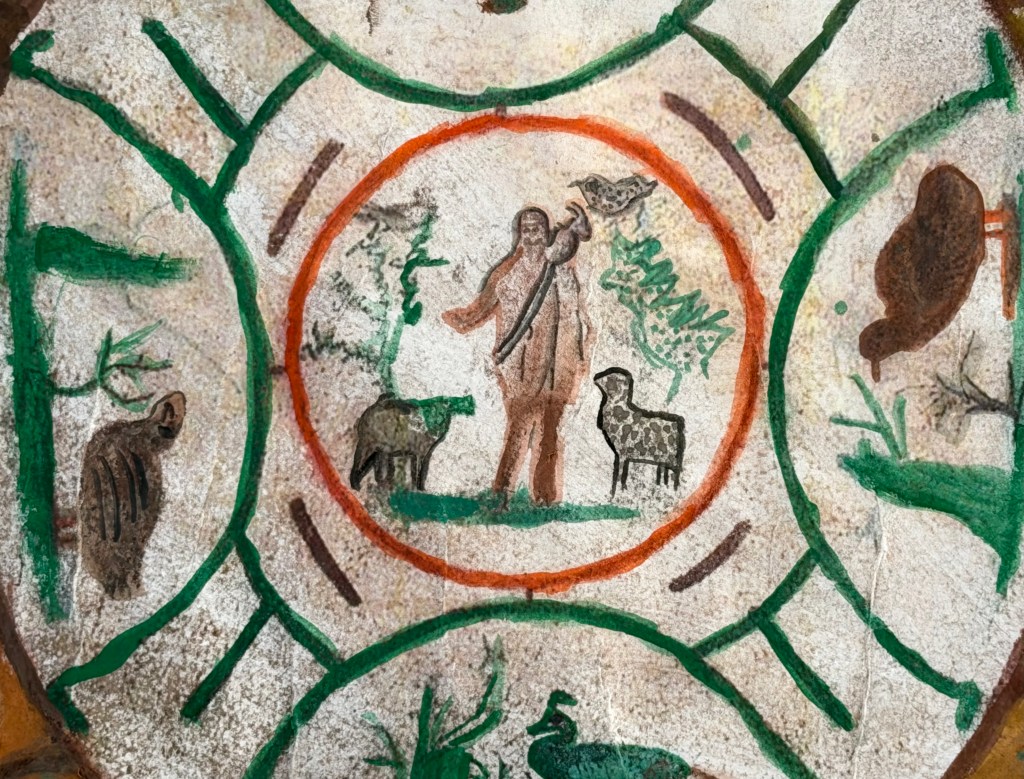
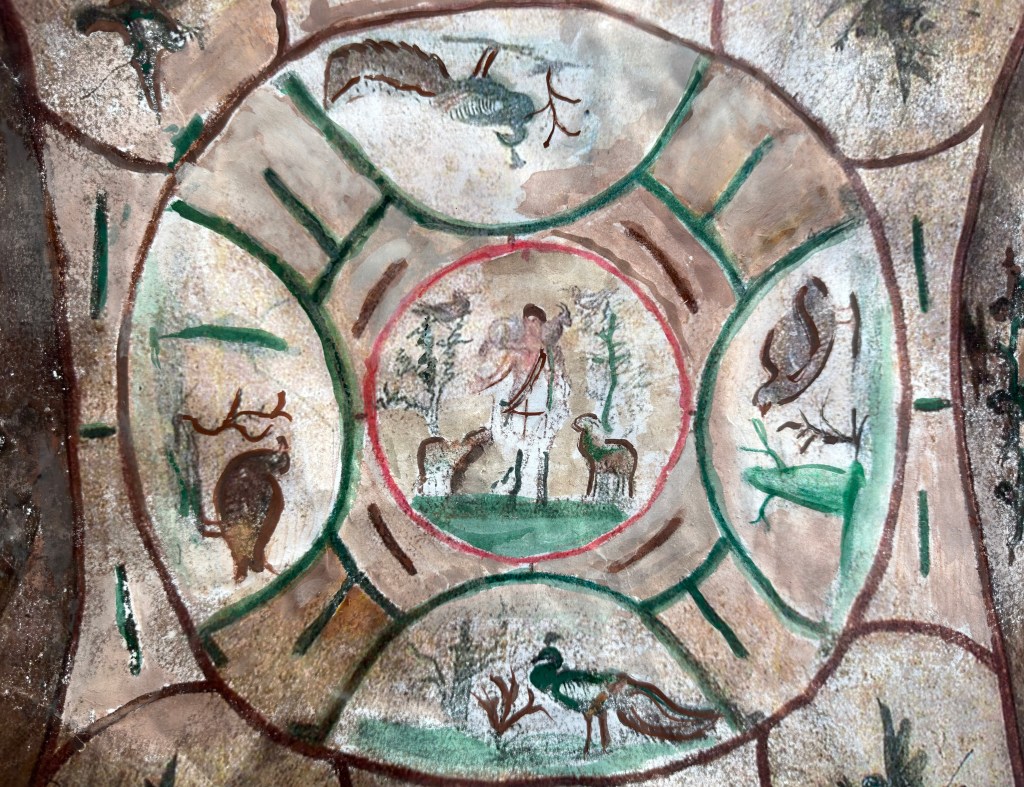
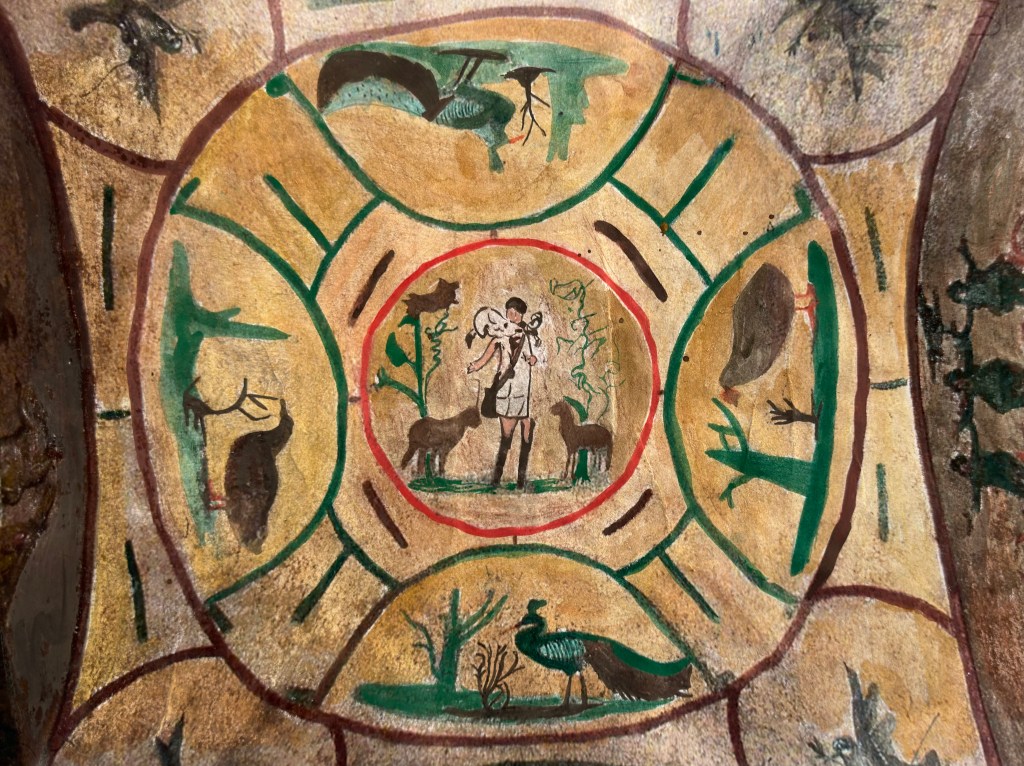
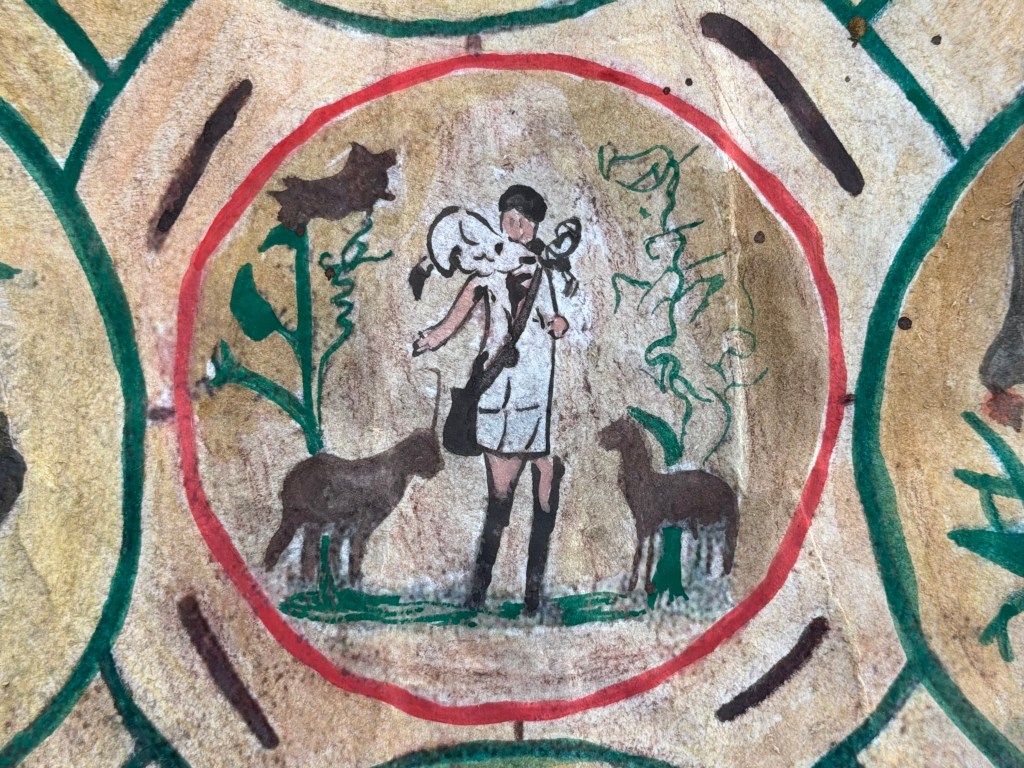
In this Grade 7 Visual Arts project, students explored one of the most meaningful images in Early Christian Art: The Good Shepherd from the Catacombs of Priscilla.
Beneath the streets of Rome, the original fresco shows a calm and caring figure surrounded by animals, painted on the walls of ancient burial chambers. Over hundreds of years, frescoes often fade and crack, shaped by moisture, dust, and the slow touch of time. In the damp air of the catacombs, minerals rise through the plaster, pigments lose their brightness, and fine cracks spread like veins across the surface. Soot from ancient oil lamps and the slow settling of dust leave a soft, smoky patina that both hides and protects the image beneath.
Students began by working from a printed copy of the fresco. Their first task was to age the print, recreating how the original artwork has changed over centuries. They used soft washes, stains, and gentle surface abrasion to suggest the wear of time, learning that age and imperfection can make an image feel even more alive.
Next, they moved into the process of restoration. Using colour matching, fine brushwork, and careful observation, students worked to revive lost details and balance tones. They learned how conservators approach ancient frescoes with respect and patience, restoring without erasing history.
Through this work, students discovered that an artwork is not a static object but a living surface that tells a story across time. The layers of pigment, the cracks, and the brushstrokes became a kind of visual poem about endurance and renewal.
“I didn’t realise how much work it takes to match a single colour,” a student reflected. “It made me see how time changes everything we make.”
Each finished piece reflects both the patience of restoration and the mystery of decay. The students’ reinterpretations capture the quiet beauty of the original fresco while showing how young artists can bridge the distance between history and the present.
Learning outcomes:
Through this unit, students developed skills in observation, colour mixing, and material experimentation. They also deepened their understanding of Early Christian symbolism and the connection between faith, art, and storytelling.






 MMI Art Expanded Classroom
Leave a comment