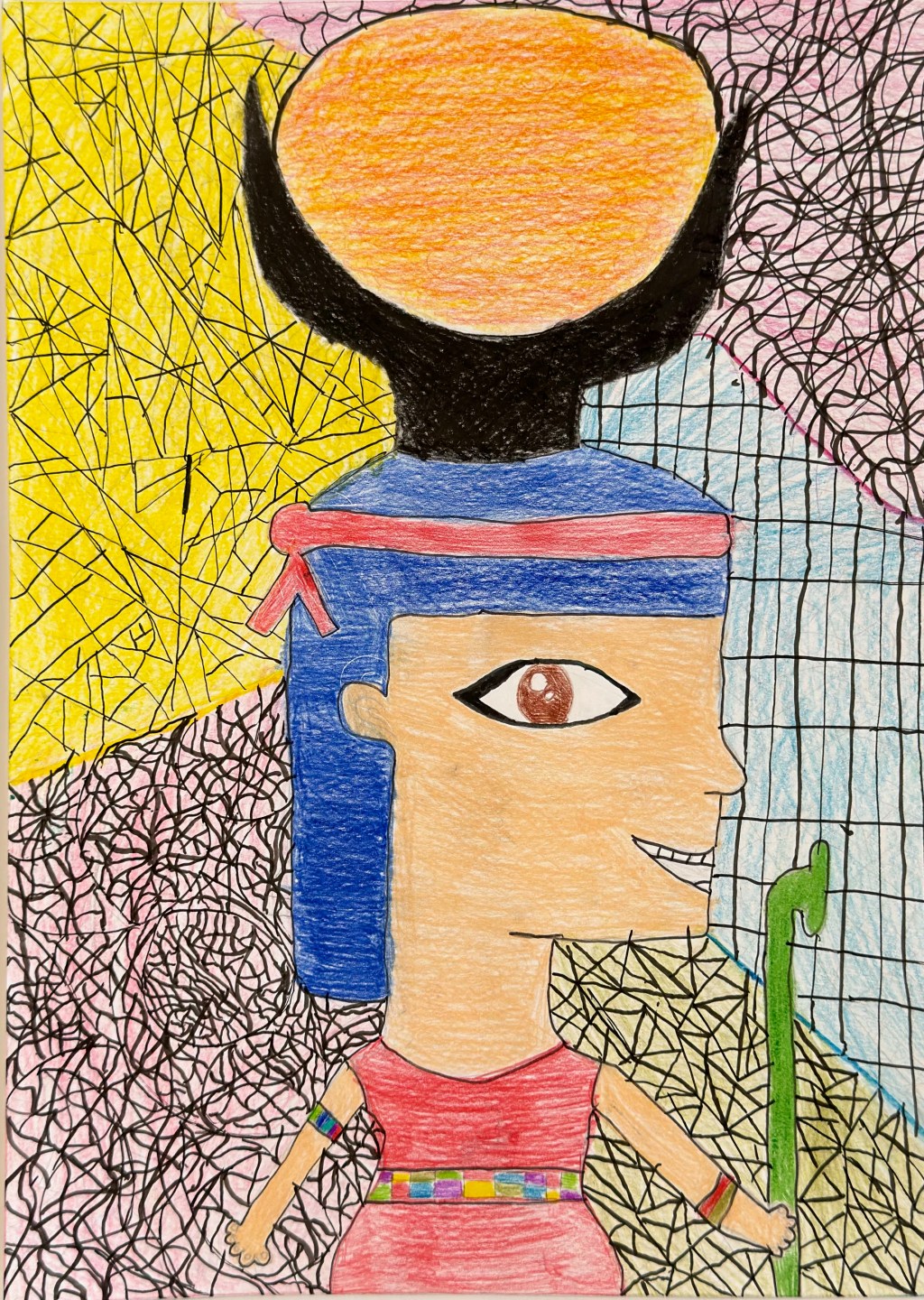
The sixth graders spent the past few weeks travelling between two worlds, the mythic imagination of Ancient Egypt and the expressive intensity of Japanese manga.
The project began with a simple thought experiment: what happens when you combine a god who has lived for thousands of years with a drawing style that lives in the present moment. That question sparked a rush of inventive character making that felt both scholarly and wildly playful.
Students began by researching the Egyptian deity they chose to transform. They studied the god’s traditional symbols, colours, powers, responsibilities, and the objects that have always accompanied them in temple reliefs and funerary art.
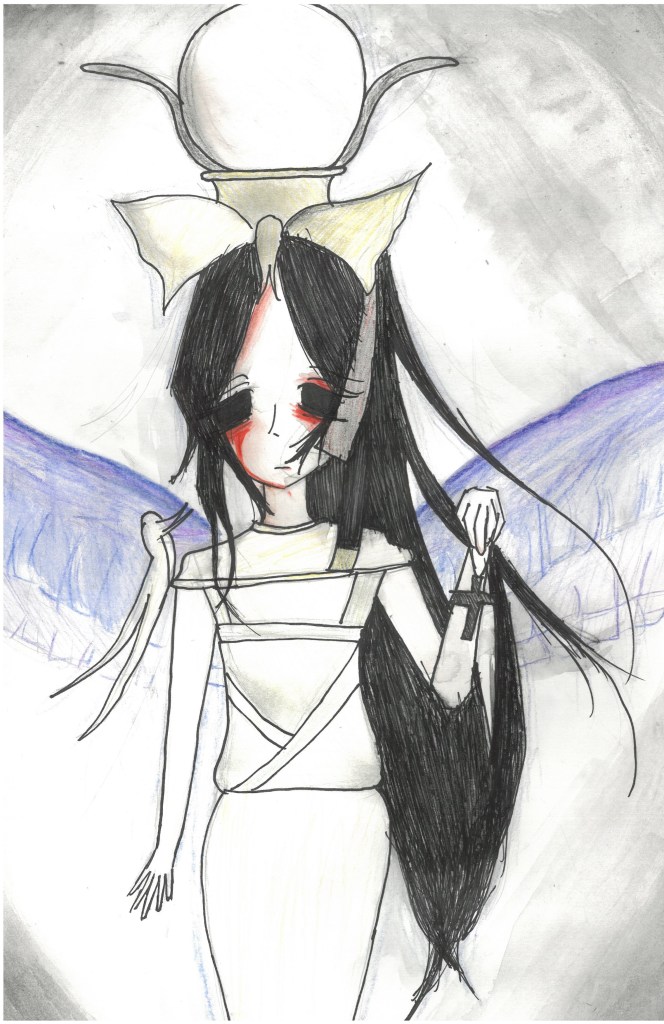
They learned why Ra carries the sun disk, why Anubis guides the dead, why Horus appears as a falcon, why Hathor wears a headdress shaped like the sky. This grounding gave them the confidence to redraw these figures in a new visual language while keeping the symbolic heart intact.
Once they stepped into manga, the drawings changed temperature. Students explored bold outlines, expressive eyes, stylised poses, and dramatic graphic backgrounds. They researched how manga characters communicate personality through line, tension, posture, and pattern.
This became the foundation for their reimagining. The traditional frontal poses of Egyptian art opened into looser, more animated silhouettes, and the god’s defining objects and animal forms were reinterpreted through the lens of contemporary illustration.
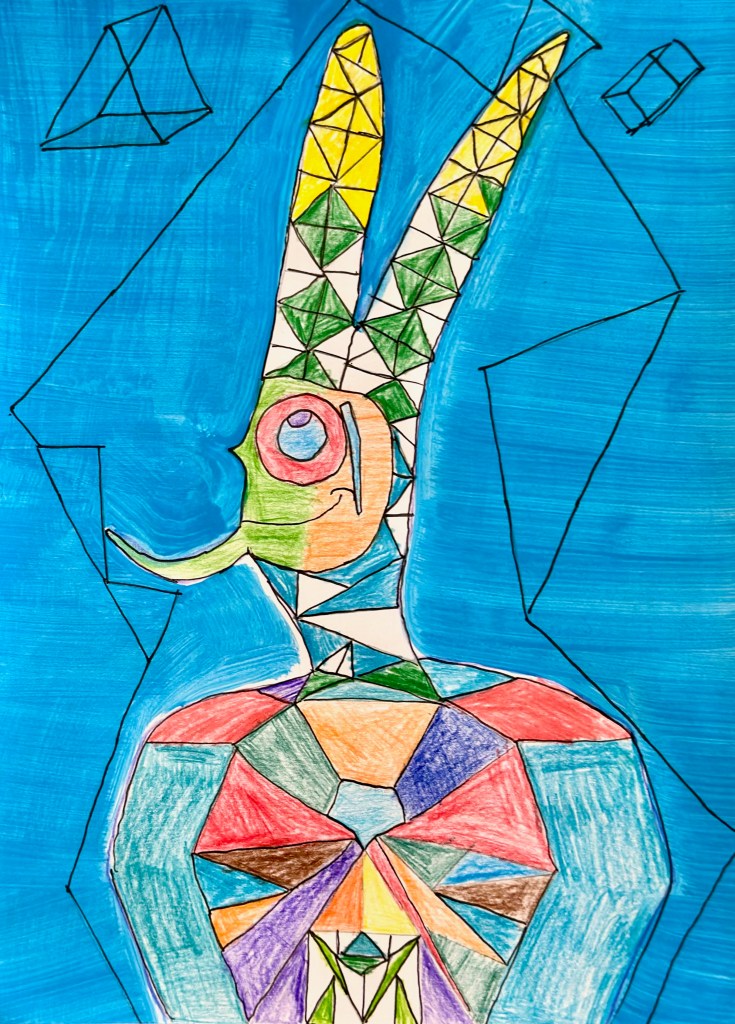

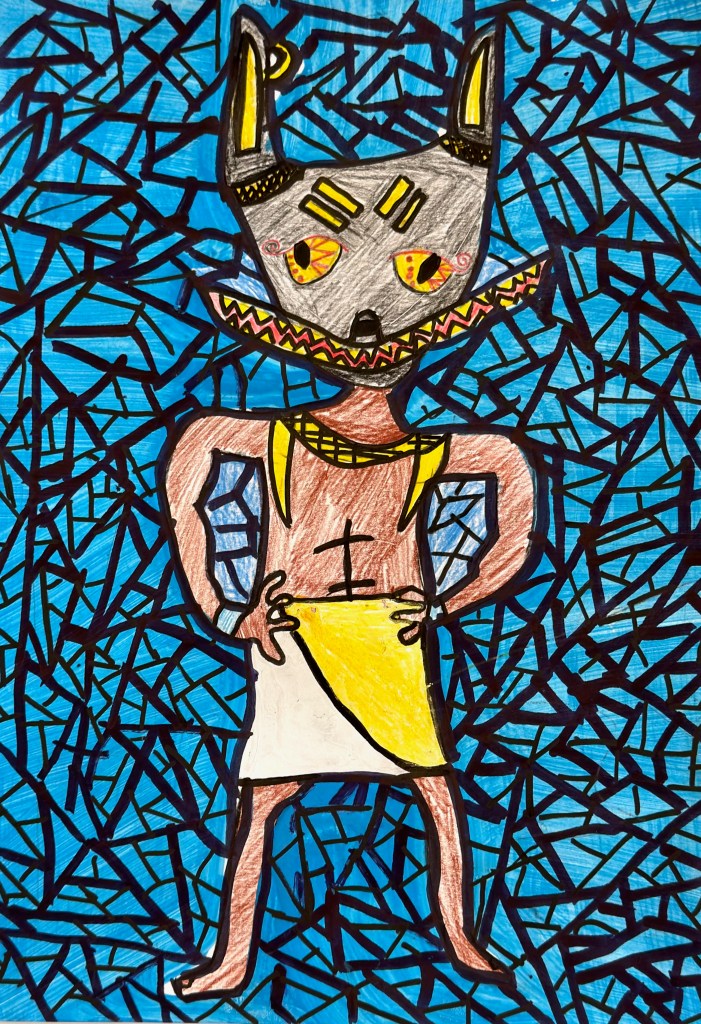
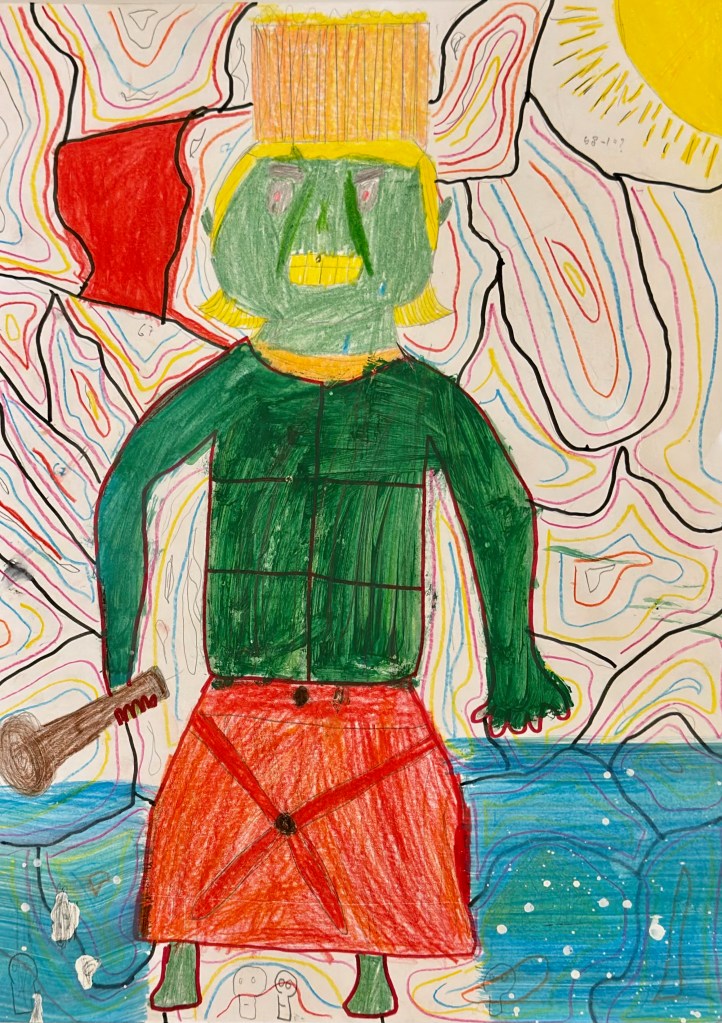

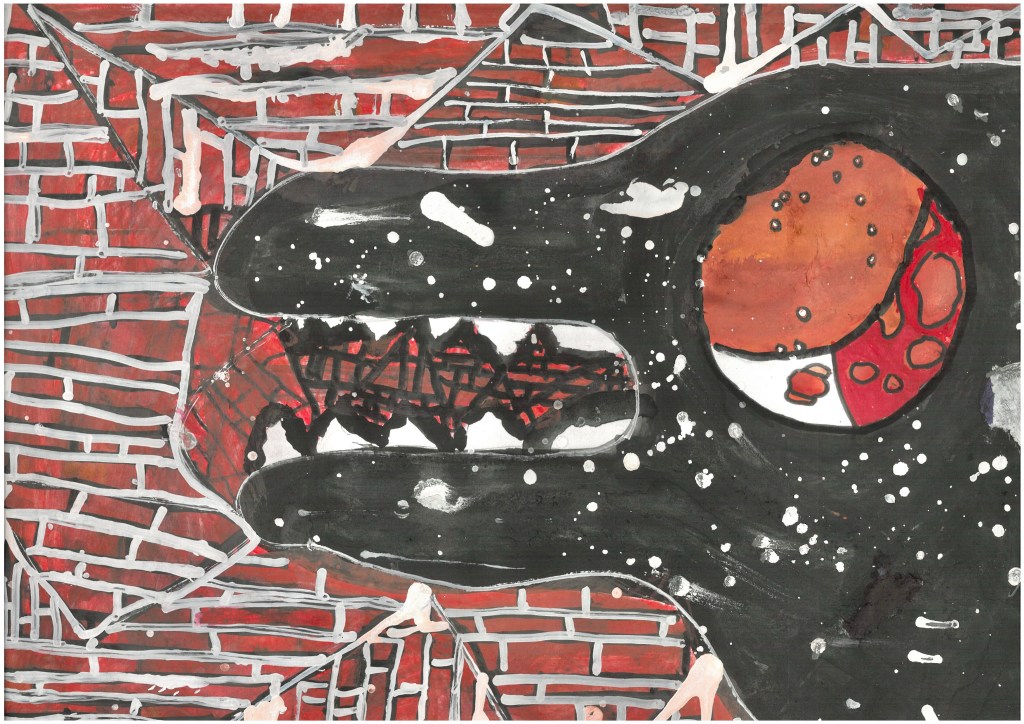
The transformation varied from student to student. Some works became fierce, angular, and intense. Others leaned toward a softer, more humorous mood.
Each piece shows the same careful consideration: the god remains recognisable, the symbols remain grounded in research, and the new manga styling gives the figure a fresh narrative energy.
Many students used complex patterned backgrounds to echo both Egyptian surface design and the rhythmic textures of manga. These patterns give the drawings a sense of movement and space, as if the characters were caught between ancient myth and modern imagination.
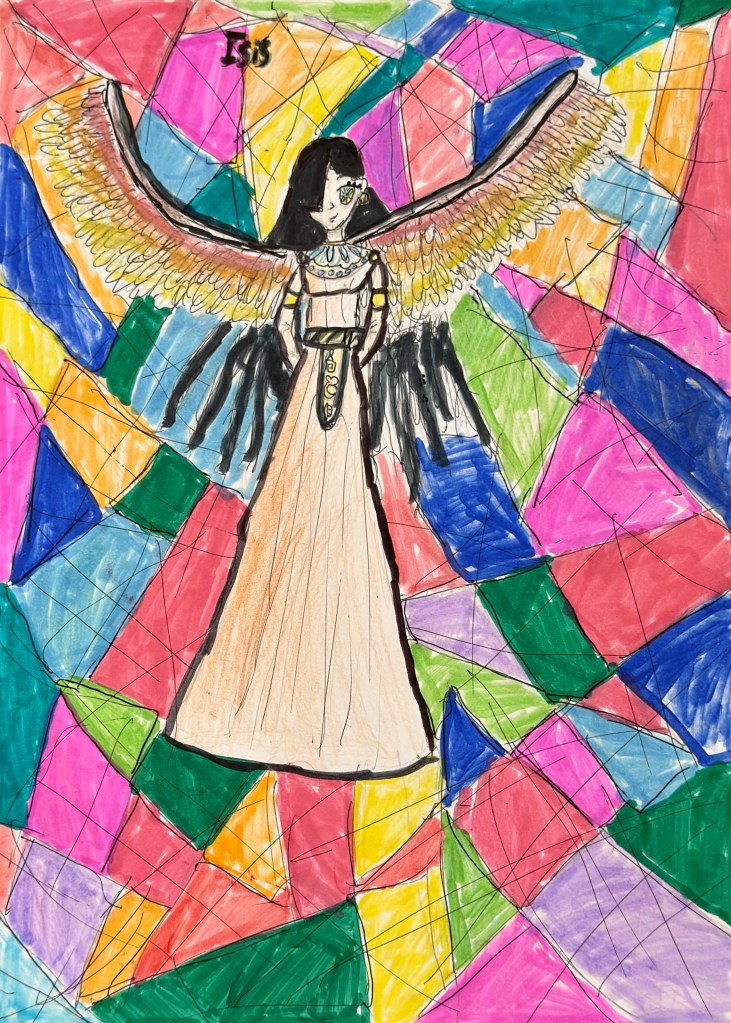


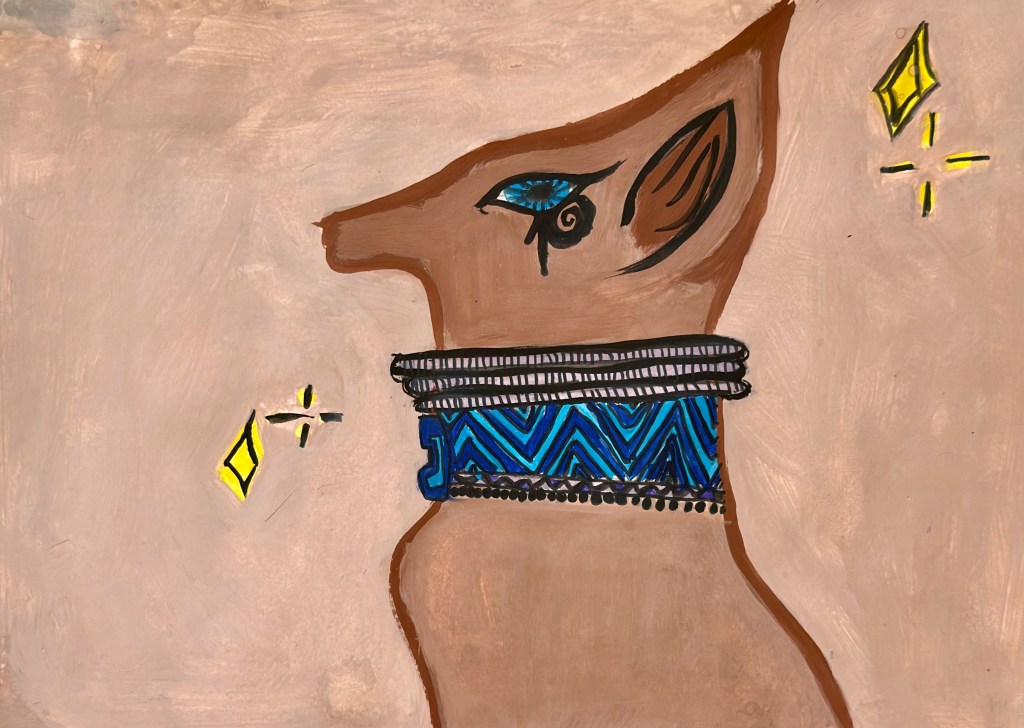
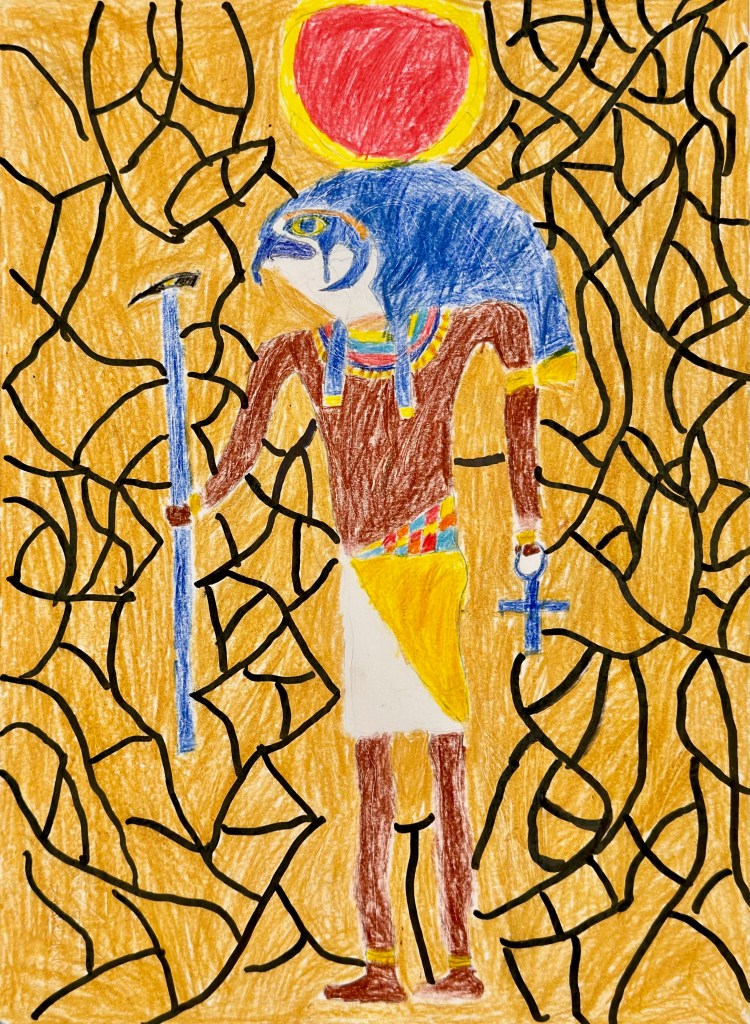
What emerged from this process is a gallery of hybrid identities. A fox headed Anubis with bright manga eyes. A jewel coloured Thoth broken into geometric shards. A radiant Hathor outlined against a rising sun. A falcon headed Ra who feels like the hero of a graphic novel.
Each drawing is a small collision of cultures and a reminder that young artists are capable of seeing historical material as something alive and adaptable, not static.
This project was more than a lesson in drawing. It was research, symbolism, character design, and visual storytelling. The students learned how to translate a visual tradition into a new form, how to respect the source material while taking creative risks, and how to build a character with personality and presence.
The results are full of colour, confidence, and imagination. These drawings show students discovering that they can shape myth, style, and history into something distinctly their own.
 MMI Art Expanded Classroom
Leave a comment