Expertly curated content to support your Visual Arts education at Marymount International School.
Merging Worlds: The Enchanting Video Walks of Cardiff and Miller
In an enchanting intersection of the real and the surreal, Canadian artists Janet Cardiff and George Bures Miller have bestowed upon Edinburgh a mesmerizing experience that blends visual art, storytelling, and technology in a truly innovative way.
Commissioned by the Fruitmarket with support from the Art Fund, their latest video walk is now a proud piece of the Gallery’s permanent collection, promising to captivate audiences regularly.
The journey begins with an iPad screen showcasing an image of the street that mirrors the viewer’s exact location, setting the stage for a unique adventure.
As viewers follow Cardiff’s voice through the headphones, they are guided on a walk through the backstreets of Edinburgh’s Old Town. This path unravels a disjointed narrative that is part game, part surrealistic poetry, possibly even weaving through a murder mystery, all while being enveloped in a soundscape that blurs the line between digital and physical realms.
The experience, first presented in collaboration with the Edinburgh International Festival and the Edinburgh Art Festival in the summer of 2019, is a testament to Cardiff and Miller’s genius in creating immersive worlds.
Through their innovative use of video, sound, and location, they invite participants to piece together scenes and characters, much like collaging memories or recalling a vivid dream. Their process, akin to choreography, involves meticulous planning and improvisation, where the environment itself becomes a canvas for their narrative.
What makes their walks so impactful is the blend of intimacy and exploration they foster, turning an art viewing into a journey of personal discovery and connection.
By encouraging participants to slow down and observe their surroundings with childlike wonder, Cardiff and Miller not only redefine the boundaries of art but also remind us of the magic and illusion inherent in everyday life.
This video walk in Edinburgh’s Old Town is not just an art piece; it’s an invitation to explore the layers of reality, memory, and imagination in a way that is both profoundly personal and universally resonant.
‘The Nightmare’ by Henry Fuseli
‘The Nightmare’ is a haunting composition that immerses viewers in a fantastical dreamscape. At the forefront, a woman lies in a vulnerable slumber, draped across a bed with her eyes wide open. Above her, an otherworldly creature, a grotesque goblin, perches menacingly, exuding an eerie presence. The composition is shrouded in shadows, intensifying the dreamlike atmosphere that Fuseli masterfully conjures.
Fuseli’s brilliance lies in his deliberate choices that enhance the painting’s emotional impact. The bend of the woman’s wrist and the exposed vulnerability of her neck amplify the sense of vulnerability. This juxtaposition of sensuality and horror contributes to the overall psychological tension embedded in the artwork.
Delving into the details of the painting, the horse, a spectral presence at the foot of the bed, demands attention. Fuseli’s brushwork is particularly noteworthy in capturing the intensity of the horse’s eyes: they are both wild and expressive. The flowing mane, energetically painted, adds a dynamic quality to the composition, mirroring the tumultuous nature of the dreamscape.
Henry Fuseli’s ‘The Nightmare’ is a masterpiece that transcends time, drawing viewers into a realm where reality and fantasy intertwine. Through a careful analysis of artistic choices, formal elements, and paintwork, we gain a deeper appreciation for Fuseli’s ability to evoke emotions and elicit visceral reactions.
Space in Art: James Turrell
As part of our History of Art unit on “Experience and Relations: Space in Art,” we delve into artist James Turrell’s transformative body of work, a testament to his mastery in sculpting space with light and color.
Born in 1943, James Turrell’s oeuvre revolves around the concept of immersive experiences, inviting viewers to transcend the conventional boundaries of artistic encounters. Through an ingenious interplay of light and space, Turrell designs environments that challenge our perceptions and prompt us to reconsider the relationship between the viewer and the artwork.
In the above video, we embark on a captivating exploration of Turrell’s installations, with a special focus on their profound implications for our understanding of spatial dynamics in art. Turrell’s works, often housed in renowned institutions such as the Guggenheim Museum, are not merely exhibits; they are experiential landscapes that redefine how we engage with art.
The unit “Experience and Relations: Space in Art” invites us to contemplate the role of space as an active participant in the artistic encounter. Turrell’s installations serve as perfect conduits for this exploration, as he transforms architectural spaces into charged environments for perceptual inquiry, prompting us to question the boundaries between what is tangible and what is perceived.
Making Ancient Byzantine Mosaics
Mosaics, an intricate and captivating form of art, offer much more than what initially meets the eye. These stunning works are crafted from hundreds, sometimes thousands, of tiny tesserae, which are small cubes of stone or glass. The creation of a mosaic is an elaborate process that demands careful and detailed planning. It begins with the essential step of establishing a robust and stable foundation. This groundwork is crucial, as it sets the stage for the mosaicist to intricately arrange the tesserae, crafting a visually striking and enduring masterpiece that can withstand the test of time, often lasting for centuries.
In this educational video, we are privileged to witness a master mosaicist from the Chicago Mosaic School in action. This expert artist demonstrates the meticulous process of mosaic making by undertaking a fascinating project: recreating a section of an exquisite 5th century Byzantine mosaic fragment, originally housed at the Art Institute of Chicago. This particular fragment is notable for its depiction of a man leading a giraffe, a motif that reflects the rich history and cultural exchanges of the Byzantine era.
A Creative Obsession: Materials and Techniques of the Self-Taught Artist James Castle
The art world thrives on discovery, and it is often the meticulous study of a piece’s materials and its creator’s methods that brings these revelations. An exhibition at the Philadelphia Museum of Art showcased the fascinating works of James Castle, an artist hailing from Boise, Idaho.
The intriguing aspect of Castle’s pieces, beyond their visual appeal, was his preference for unconventional and often found materials. It’s common practice for art experts—conservators, historians, and scientists—to delve into the intricacies of renowned artists’ works. Through rigorous examination, they aim to pinpoint the exact materials and techniques employed, subsequently developing a detailed and precise vocabulary to relay their insights. Such studies significantly enrich our comprehension of the artist’s overall body of work, offering viewers a more profound connection to the pieces and the artistic process behind them.
However, there’s a noticeable gap when it comes to artists who haven’t taken the conventional path to their craft. Self-taught artists, like James Castle (1899-1977), have traditionally remained on the periphery of such intensive studies, perhaps owing to their atypical choice of materials and methods. Yet, their work is no less deserving of exploration.
This video delves into the groundbreaking study, which, for the first time, systematically examined Castle’s art from a standpoint of technical connoisseurship. It lays emphasis on the scientific investigation into the materials he favored. Through this lens, viewers will gain a deeper appreciation of Castle’s work, recognizing the sheer creativity and innovation that self-taught artists can bring to the table. Enjoy this captivating journey through the life, materials, and techniques of James Castle, a true visionary of his time.
art21 Heroines: Margaret Kilgallen
Margaret Kilgallen, a remarkable artist of the 1990s, left an indelible mark on the contemporary art scene. Her tragically short life story adds depth to her significance. Initially a graffiti artist, Kilgallen transitioned to fine art, drawing from folk art, letterpress, and vintage typography. Her work celebrated everyday heroes, women, and the unsung stories of society, echoing a sense of nostalgia for simpler times.
Kilgallen’s art was a testament to her approach of meticulous mark-making, characterized by bold, flowing lines and vibrant colors. Her deliberate imperfections and handcrafted aesthetic emphasized authenticity over mass production. Her work resonates today as a counterbalance to our digital age’s mechanical perfection, emphasizing the importance of human touch and emotion in creation.
The subtle connection between Kilgallen’s mark-making and emotion lies in her dedication to storytelling and honoring overlooked narratives. Her ritualistic approach, akin to paying homage, elevated the ordinary into the extraordinary, invoking a sense of reverence and connection to the past in her contemporary viewers. Kilgallen’s legacy endures as a reminder of art’s power to capture emotions and preserve cultural rituals.
On Jackson Pollock
Jackson Pollock, a pioneer of Abstract Expressionism in the mid-20th century, revolutionized painting with his unique approach. He rejected traditional techniques, opting for a radical method of mark-making. Pollock’s signature style involved dripping, splattering, and pouring paint onto a canvas laid on the floor. This physical engagement with the canvas was a ritualistic act, akin to a dance, where his movements and emotions fused with the paint.
His spontaneous, chaotic marks on the canvas conveyed deep emotions and subconscious impulses, inviting viewers to decipher their own meanings. Pollock’s art transcended representation, offering a direct channel to his psyche. His innovative technique gave rise to a new form of artistic expression, where the act of creation became inseparable from the emotions it evoked.
Cave Art
Here is a fantastic podcast episode of In Our Time, focusing on Cave Art.
This is a perfect resource for both Grade 6 students studying Prehisitoric Art, and History of Art students working through the unit on Emotion and Ritual: Mark-making in Art.
In this episode, Melvyn Bragg and guests discuss ideas about the Stone Age people who created the extraordinary images found in caves around the world, from hand outlines to abstract symbols to the multicoloured paintings of prey animals.
In the 19th Century, it was assumed that only humans could have made these, as Neanderthals would have lacked the skills or imagination, but new tests suggest otherwise.
How were the images created, were they meant to be for private viewing or public spaces, and what might their purposes have been?
And, if Neanderthals were capable of creative work, in what ways were they different from humans?
What might it have been like to experience the paintings, so far from natural light?
With Alistair Pike Professor of Archaeological Sciences at the University of Southampton Chantal Conneller Senior Lecturer in Early Pre-History at Newcastle University And Paul Pettitt Professor of Palaeolithic Archaeology at Durham University.
‘I’ve been a number of different artists’
Students in our Photo Club have been researching a number of photographers, including the amazing Laurie Simmons. In this video Laurie Simmons reflects on her development as an artist, her early photographic work, and more recent live-action film work.
Analysis of Goya’s ‘The Third of May, 1808’
For Grade 8 students studying Goya, here is an excellent resource on ‘The Third of May 1808’. The video provides in-depth analysis of the formal elements of the painting, (composition, lighting, paintwork), and how these elements generate meaning. Enjoy
The Nightmare
Henry Fusel’s ‘The Nightmare’ (1781), is a strikingly powerful painting, conjuring a terrifying scene that is both mysterious, horrific, and familiar.
Watch the video below, that explores the painting, its startling imagery and meaning.
After watching the video, read this article for more in-depth critical analysis and interpretations of the work.
‘Be the vessel for empathy’
In this fantastic video, the artist known as Swoon speaks passionately and authentically about her love for Honoré Daumier’s ‘The Third Class Carriage’.
Swoon talks about ‘the social landscape’ of the time, focusing acutely on the relationship between the figures, the artistic choices in mark-making, and the power of a truthful, empathetic gaze.
Listen to how she describes the grand-mother, mother, and child relationship. Swoon examines how the artist rendered the facial features of the mother, marvelling at the powerfully expressive simplicity of the artist’s mark-making.
Swoon uses nuanced and detailed analysis to investigate how Daumier’s work in caricature influenced and heightened his ability as a painter.
‘There was something deeply anti-authoritarian about just looking, and observing, and telling the truth as you saw it. You feel the love that is contained within looking. The painting can convey an entire emotional position on the world’
This video is a must-watch, not only for students of Realism, but for all students of art and practicing artists alike. Enjoy!
Mr. Donnelly.
Early Christian Art @ Fondazione Memmo?
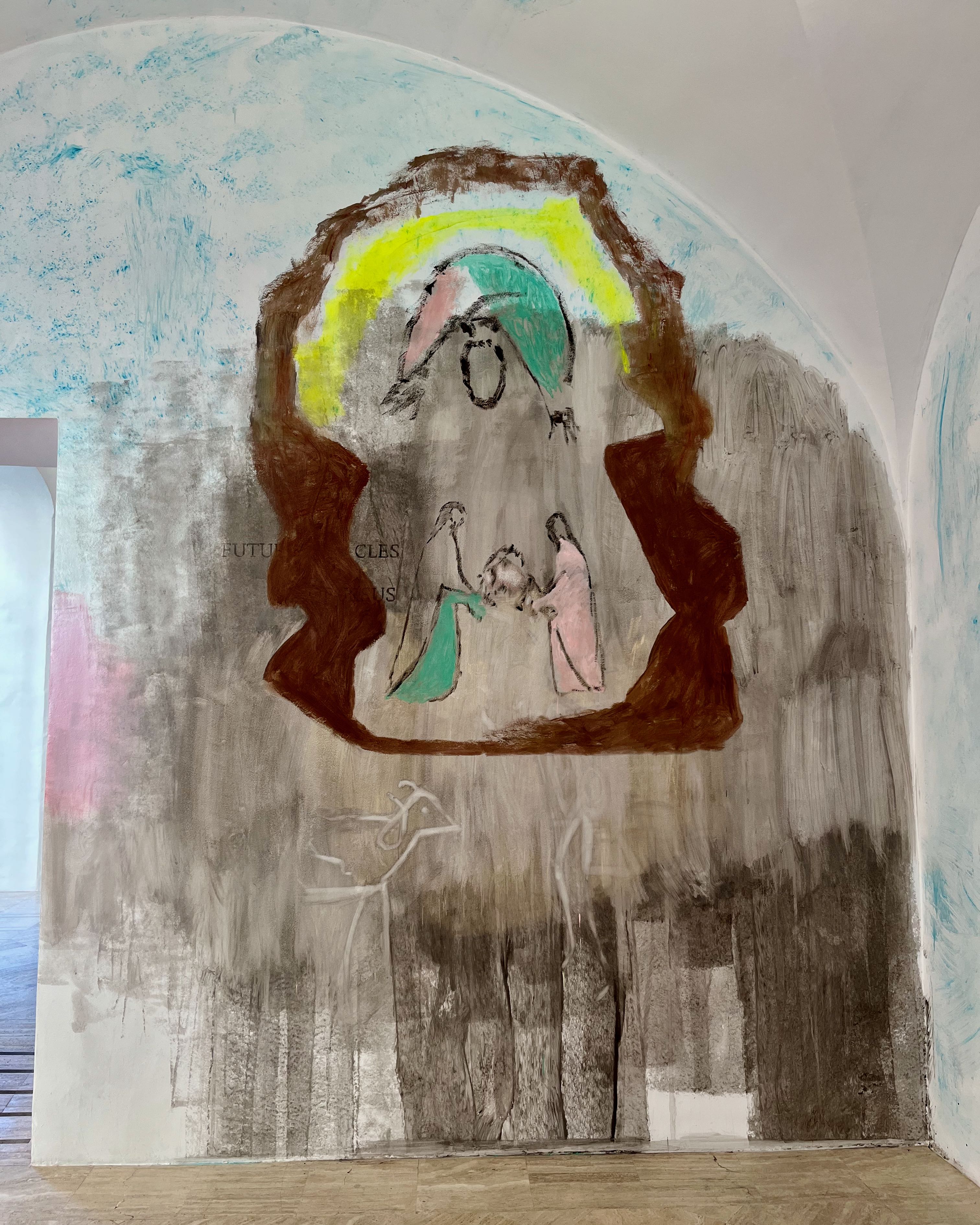
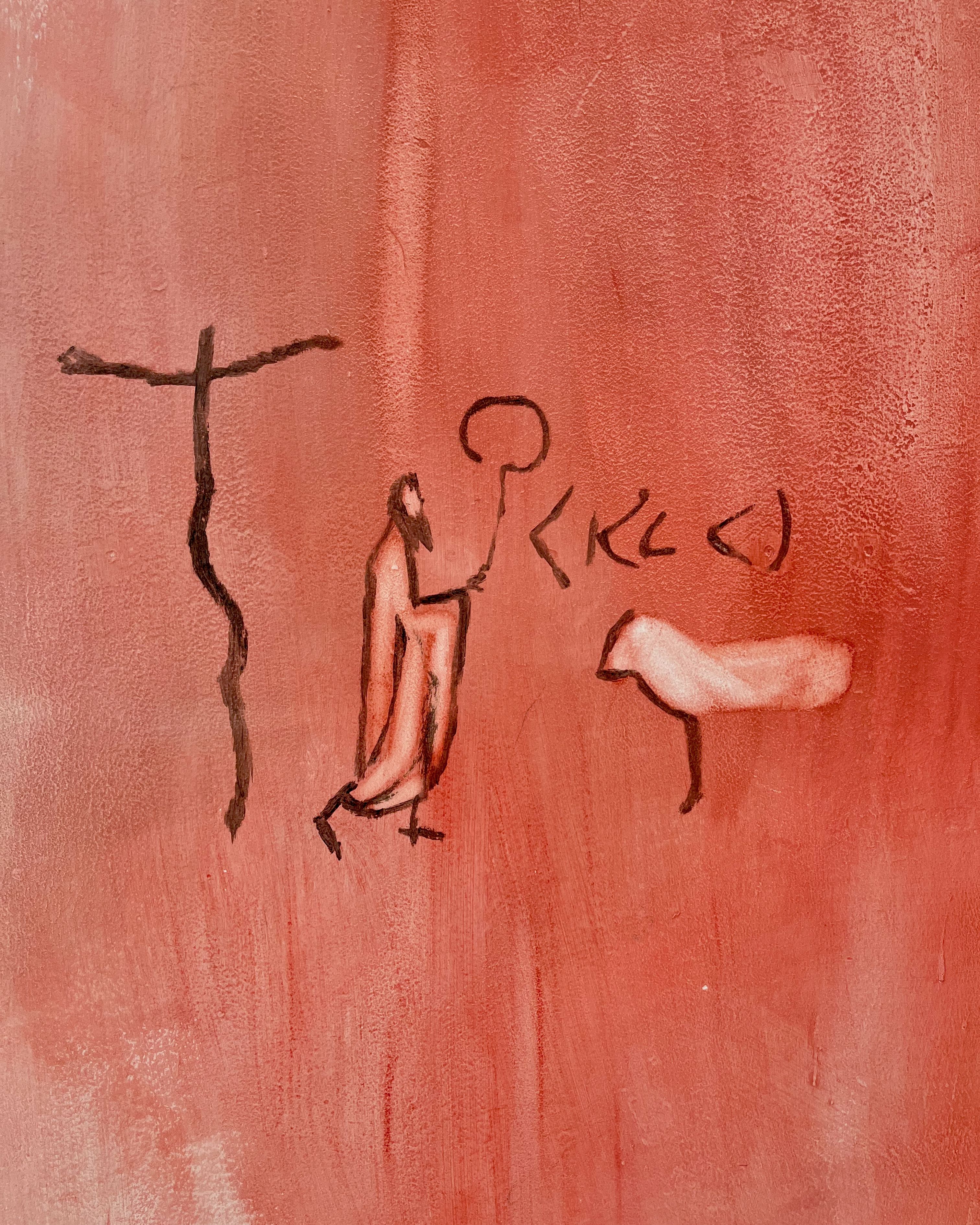
I visited an excellent group show at Fondazione Memmo in December 2022. I wanted to share the work of one artist in particular, Miltos Manetas, and specifically his piece #Manetas Floating Studio.
Any student having researched Early Christian Art will immediately recognise the iconic Early Christian Art imagery, brilliantly reimagined in the immersive wall-paintings you see on entering the space.
The simplicity of the images, and the breeziness with which the washes of colour are breathed onto the walls was stunning to view in situ. Look at the washes of gold over black, seen clearly in the video documentation, and the use of the artist’s finger to render the form of the lamb.
I made the video walk-though hoping to give students a greater sense of the scale of the work, the detail and techniques in the paintwork, the movement of the animation through the space, and of course to share the work of other artists in the show.


Post-Impressionism
Post-Impressionism in 7 minutes? We’ve got you covered.
Watch the following video in preparation for a follow-up Mini-Quiz.
Édouard Vuillard
The paintwork. The use of space. The texture. The patterning. The theatricality of the composition. The psychological charge between figures. Vuillard’s work hits me in the gut. Read this post from Arthive.com for more.

The Power of Courbet
Who is Peter Doig?
Mary Cassatt
Impressionism: Materials and Techniques
In this excellent lecture, Impressionist techniques are explored and broken down in great detail: from their choice of canvas, their paint suppliers, the innovations in paint production of the tie, and lastly a deep dive on their techniques in paint application.
The video below begins at 56m.46sec, where the lecturer speaks about the materials and techniques of Monet’s ‘Woodgatherers at the Edge of the Forest’ (1863). Enjoy.
LATEST STORIES
-
Grade 8 Impressionism: Painting Light, Colour, and Atmosphere
-
IB Grade 11 Visual Arts at Rome’s Contemporary Galleries
-
Weird Details: Medieval Marginalia Reimagined
-
From Canvas to Stage: Recreating the Work of Baroque Masters
-

JOSEF ALBERS: LEARNING TO SEE THROUGH COLOR
-

From Leaf to Light: The Mosaic Drawing
Subscribe
Sign up for a weekly newsletter with the latest blog posts and exclusive content. In your inbox every Tuesday!
 MMI Art Expanded Classroom