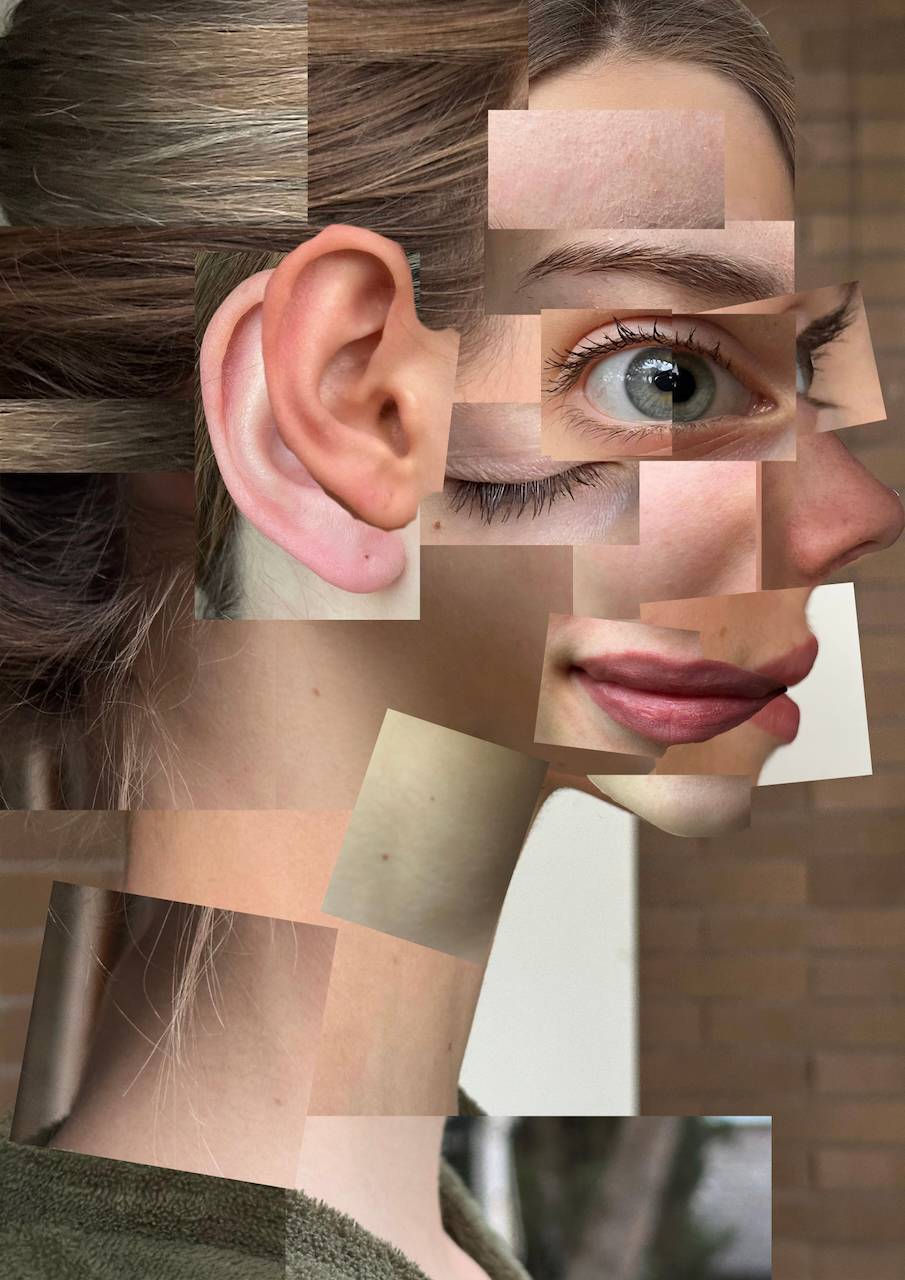
This Grade 8 Cubist portrait project asked students to reconsider one of the most familiar subjects in art: the face. But rather than treating portraiture as a single frozen image, students explored identity as something unstable, layered, fragmented, and constantly reconstructed through perception.
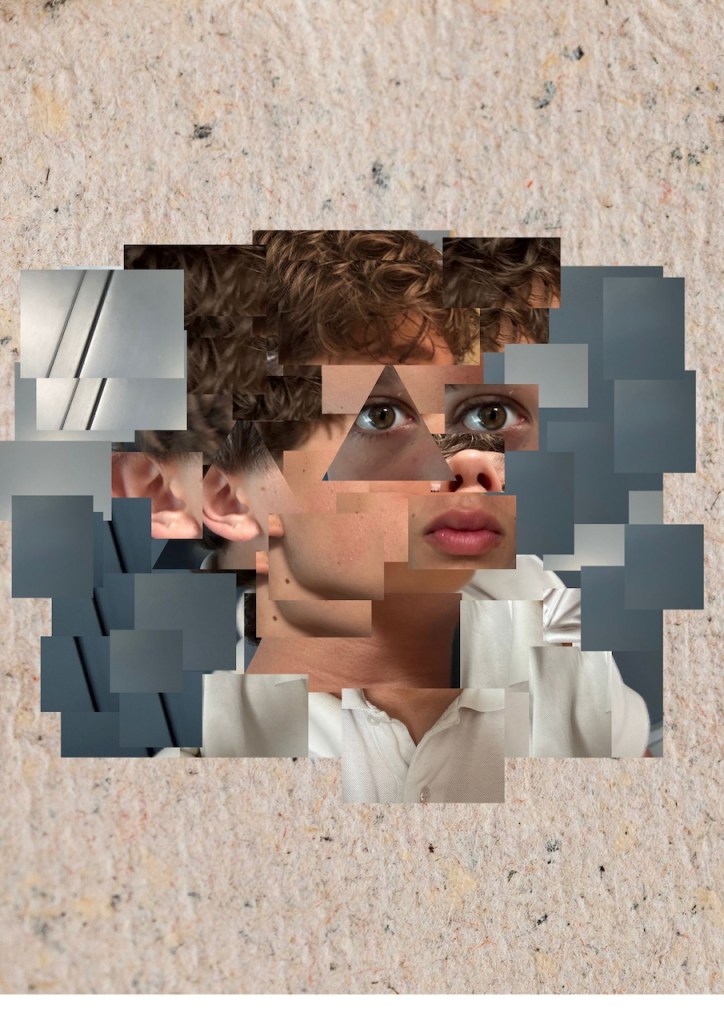
Working through photography, digital collage, and Cubist strategies of fragmentation, students produced portraits built from multiple viewpoints simultaneously. Eyes shift against profile views. Ears, mouths, hair, and facial structures repeat, interrupt, and overlap. The face becomes less a fixed image and more a constructed field of information.
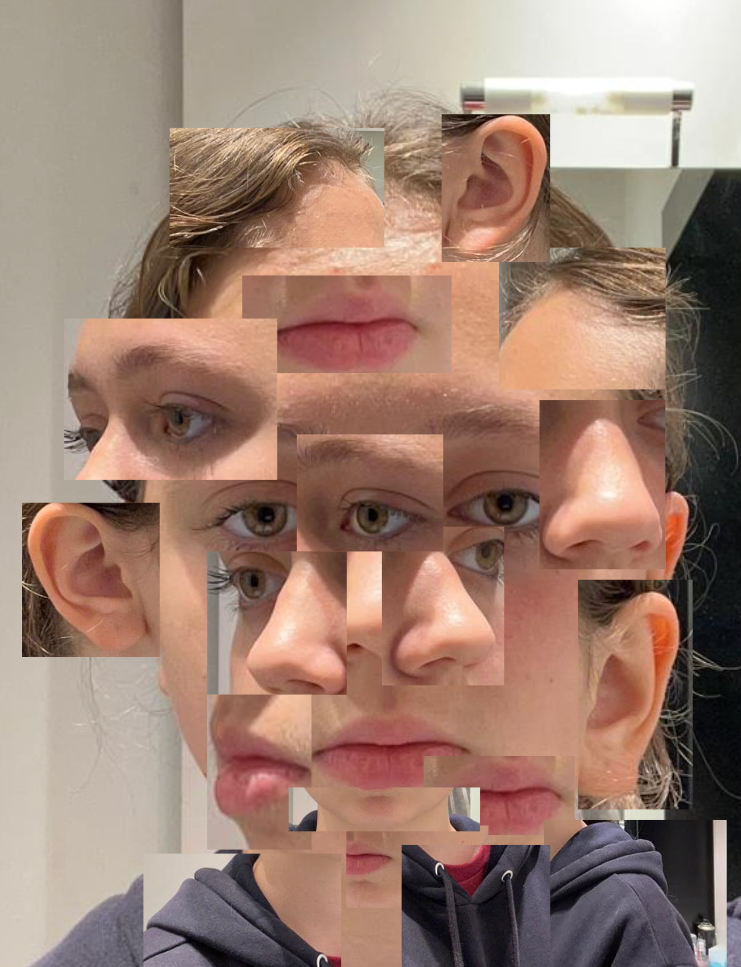
Drawing on the visual revolutions initiated by Picasso and Braque, students investigated how Cubism dismantled ideas of stable perspective. Instead of representing a person from one viewpoint, students photographed themselves and their peers repeatedly from different angles, distances, and positions before reconstructing those fragments digitally into a new visual structure.
What makes this project particularly successful is the way technical process and conceptual inquiry become inseparable. Students were not simply learning Photoshop tools or collage techniques; they were investigating how identity itself can be constructed visually through accumulation, interruption, distortion, and repetition.
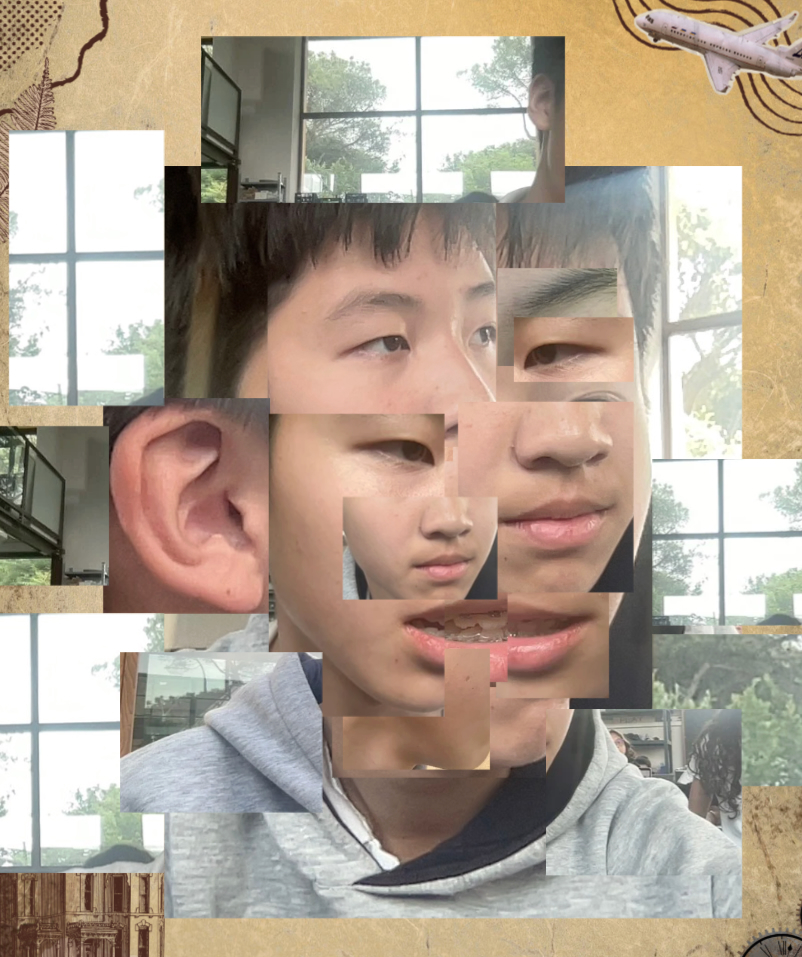
The project also reinforced one of the central ideas within the Grade 8 course: that art history is not passive knowledge. Students do not only study Cubism theoretically. They work through Cubist problems materially and structurally, discovering firsthand how radical it feels to abandon realism and reconstruct the world through fragments.
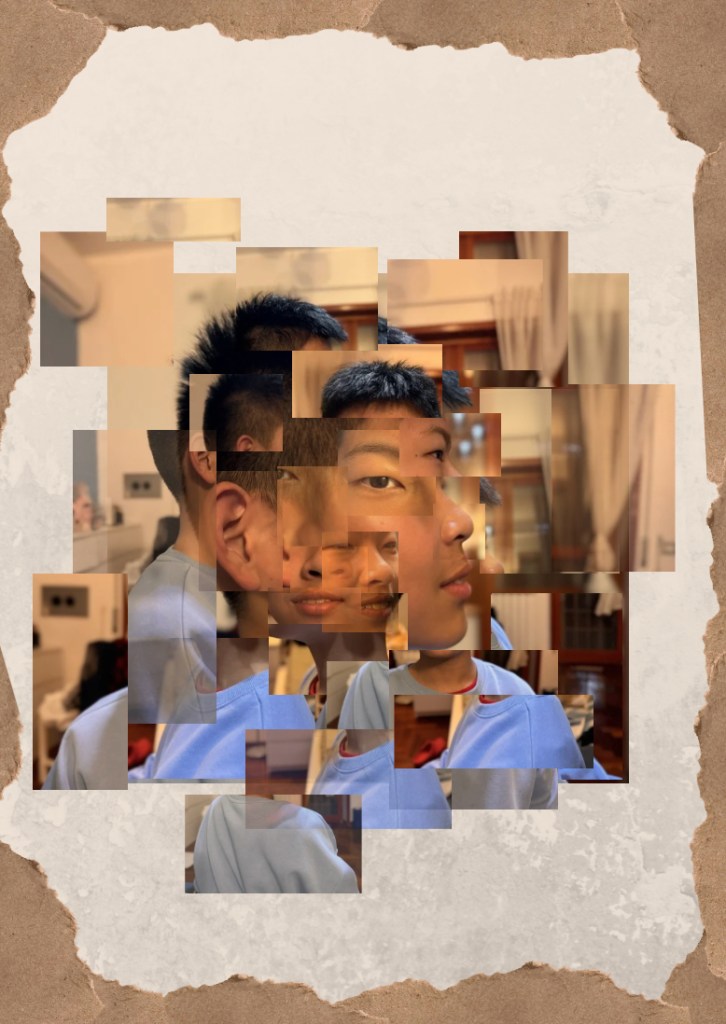
The resulting works reveal not only strong technical control, but increasingly sophisticated ways of thinking about images, perception, and the construction of self.
Cubism proposed that no single viewpoint can fully describe reality.
These portraits ask whether the same might also be true of identity.


Leave a comment