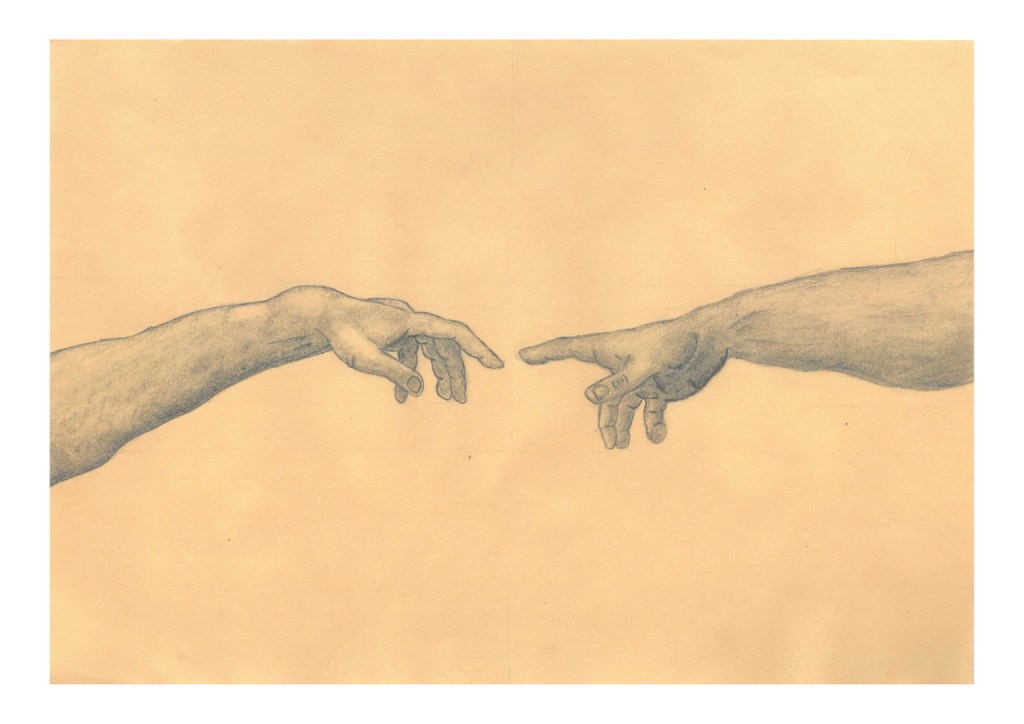
This extended graphite drawing project marked the culmination of the Grade 7 Visual Arts journey through Early Christian, Byzantine, Medieval, and Renaissance art. Across the year, students investigated how images communicate belief, authority, symbolism, and human experience through mosaics, illuminated manuscripts, observational studies, printmaking, painting, and historical inquiry. This final project brought many of those strands together through sustained figurative drawing.
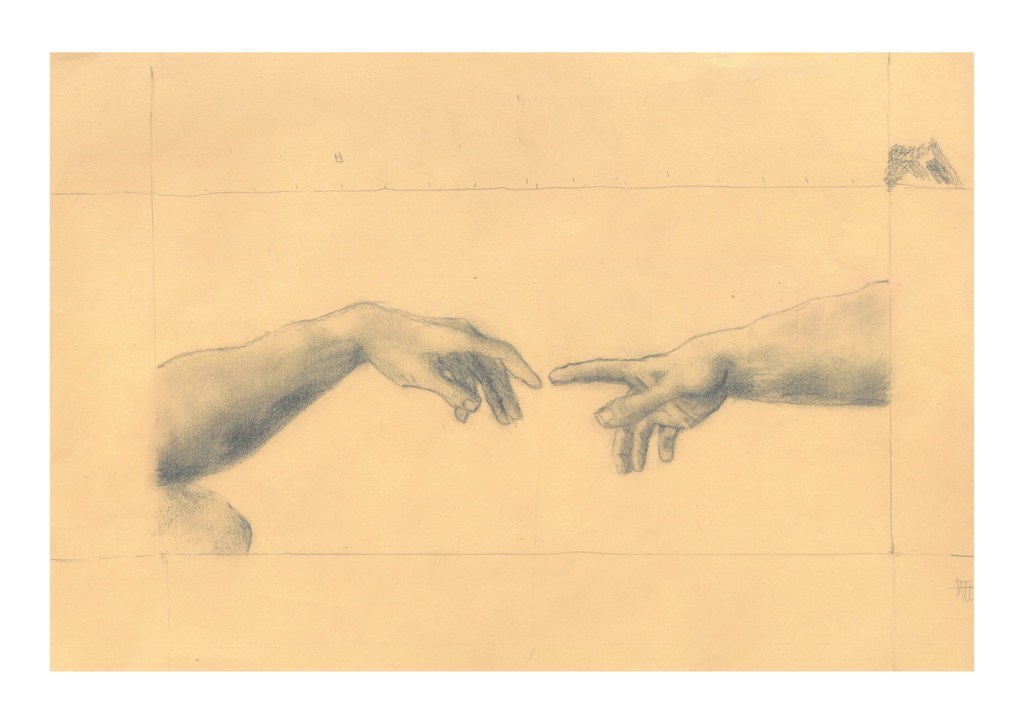
Working from Michelangelo’s The Creation of Adam from the Sistine Chapel ceiling, students spent six lessons constructing the image slowly through proportion, tonal control, sfumato shading, and careful observation. The project challenged students not only technically, but mentally: asking them to remain engaged within difficulty and trust gradual progress.
Rather than treating the drawing as one overwhelming image, students learned to approach it through a sequence of smaller visual decisions: the distance between the fingertips, the angle of a knuckle, the weight of the palm, the curve of a wrist, the subtle compression of flesh around the thumb. Each lesson focused on specific formal problems, allowing students to build the drawing through accumulated observation and revision.
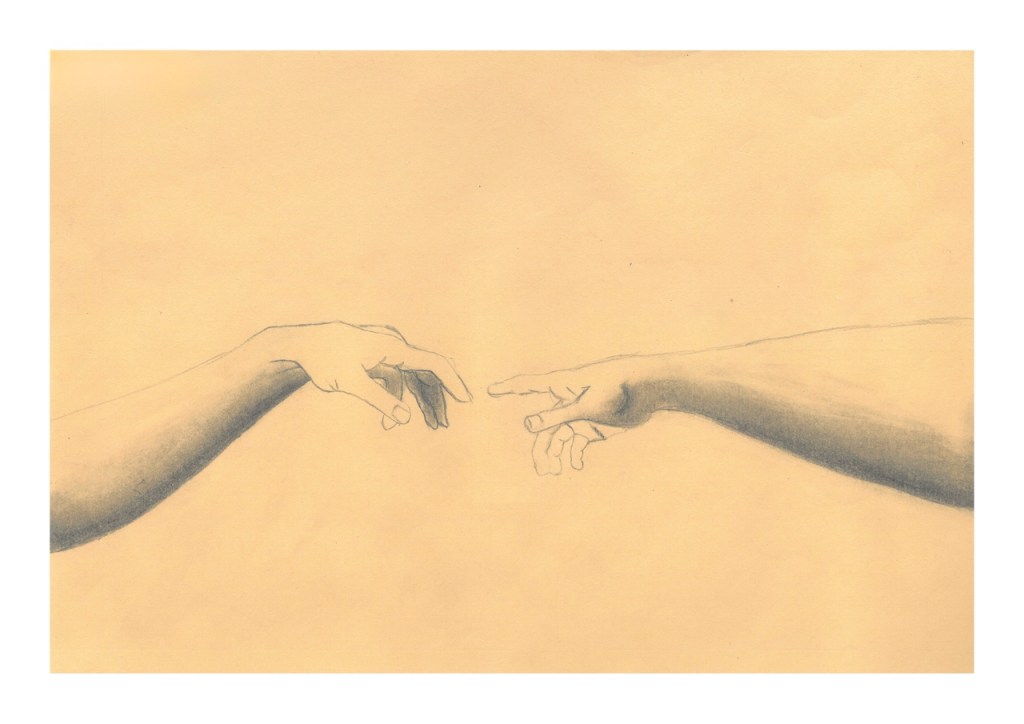
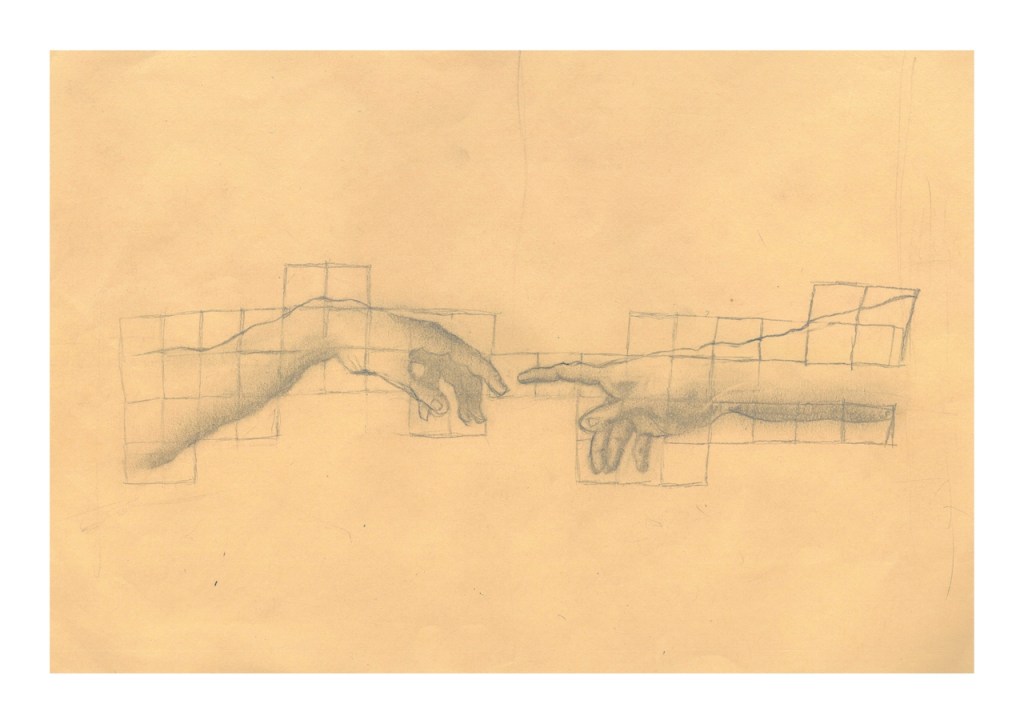
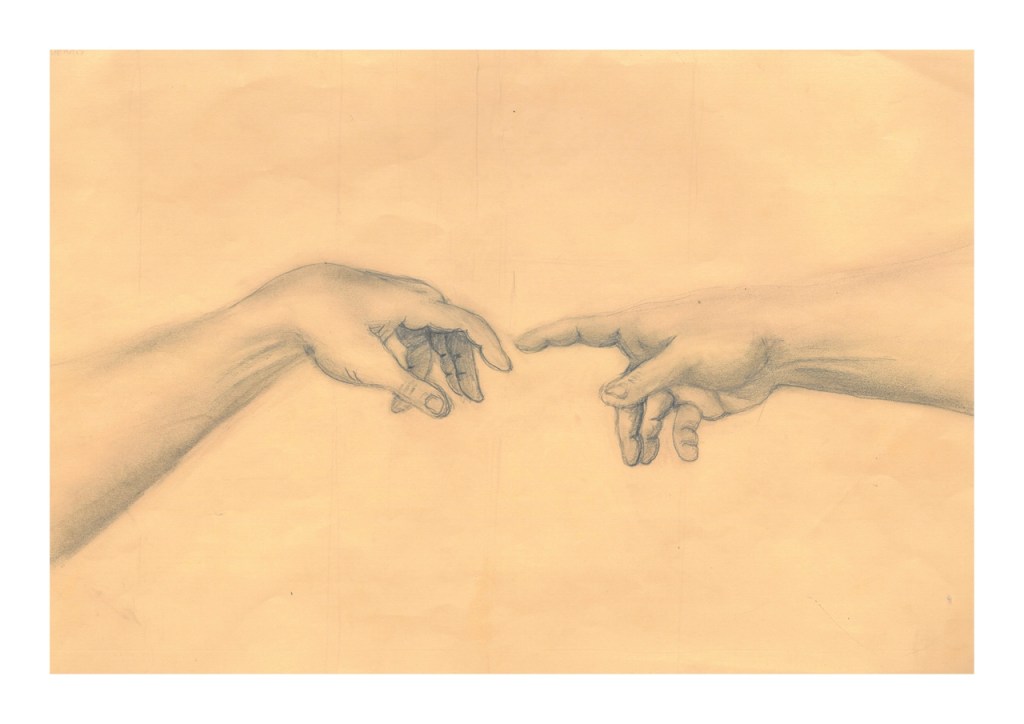
At this stage in middle school art education, the Studio Habit of Mind Engage and Persist becomes increasingly important. Students begin to understand that drawing is not simply copying what they see, but a process of visual thinking: measuring, adjusting, questioning, refining, and learning how to remain patient when the image does not immediately resolve itself.
What often happens midway through the project feels almost miraculous to the students themselves. After several lessons of mapping proportion and gradually layering graphite tone, the drawing suddenly begins to hold together. The image starts to emerge from the warm paper surface like a fresco slowly appearing through restoration.
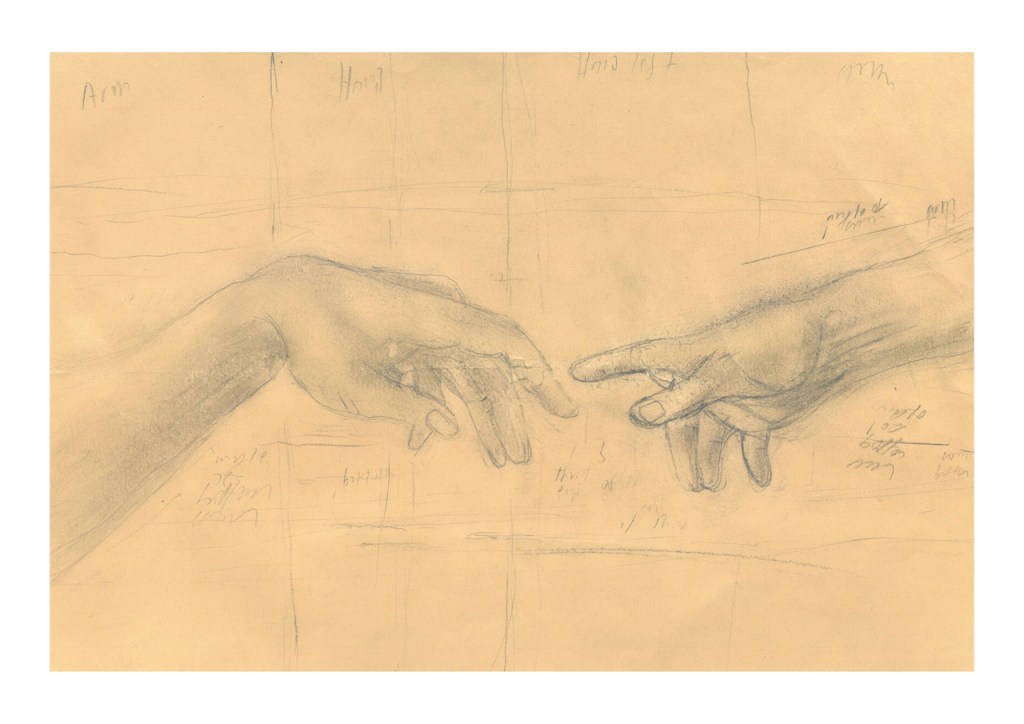
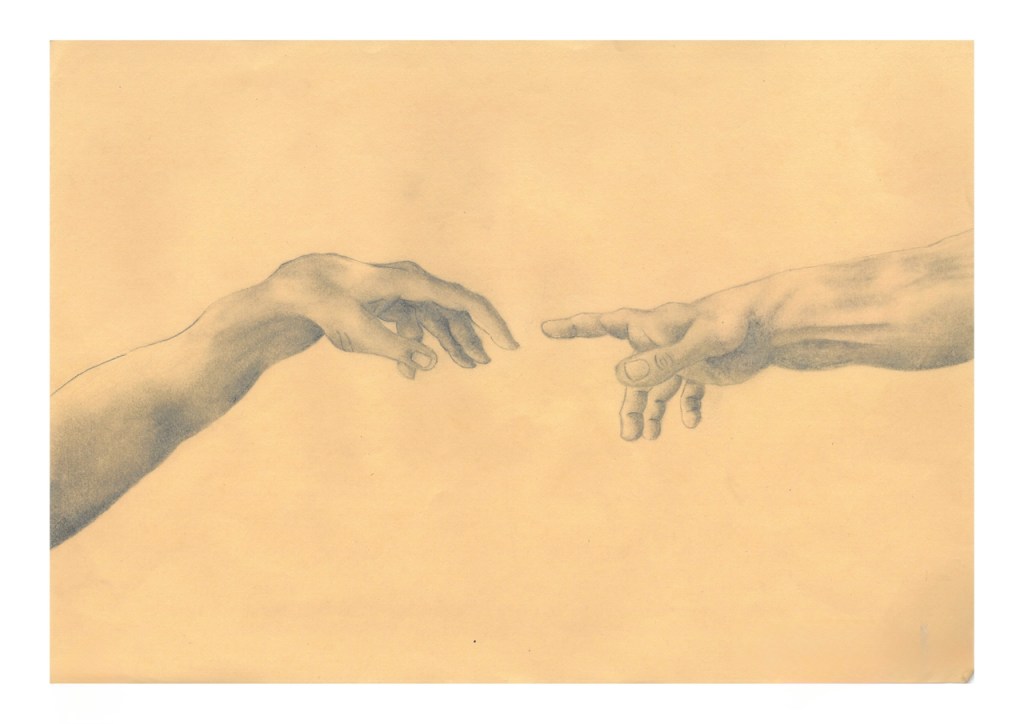
The resulting works demonstrate impressive sensitivity to proportion, volume, and tonal transition, but more importantly they reveal the students’ growing capacity for concentration, persistence, and reflective observation.
One student remarked quietly during the final lesson:
“This is the best drawing I think I’ve ever done.”
That moment says everything.


Leave a Reply