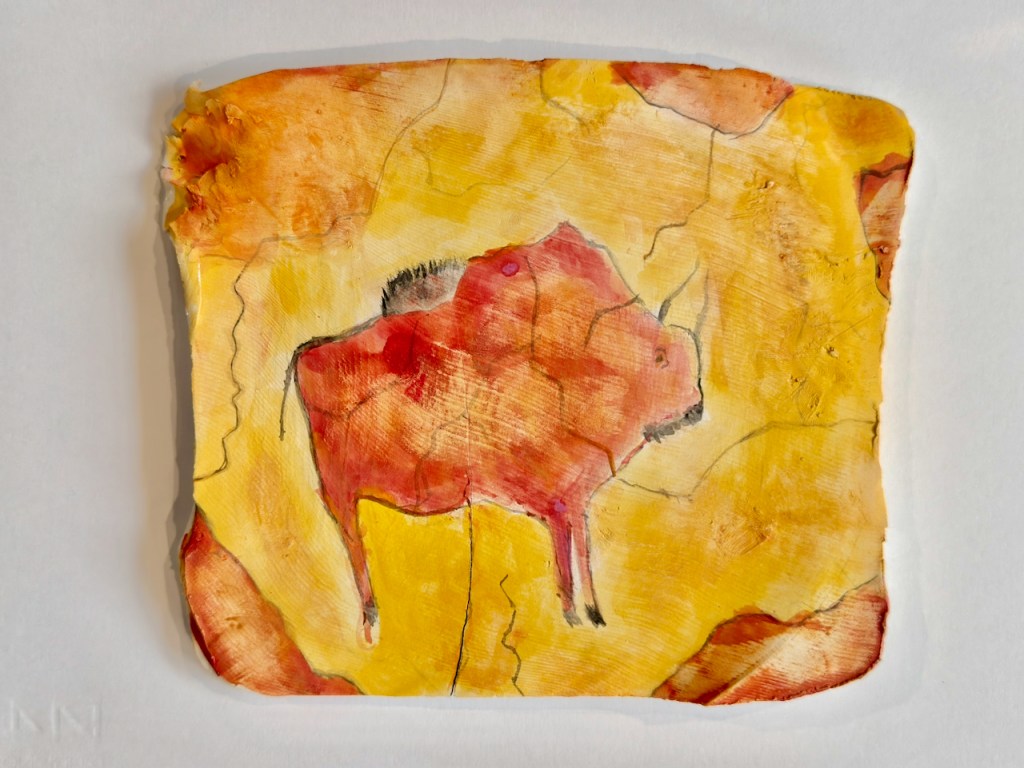
Grade 6 Visual Arts | Material Investigation & Cave Painting
What happens when the surface we paint on is no longer flat, smooth or predictable?
Inspired by prehistoric cave paintings, Grade 6 Visual Arts students embarked on a practical investigation into the relationship between surface, material, gesture and image.
Rather than simply reproducing prehistoric imagery on paper, students were challenged to experience some of the physical difficulties of painting on irregular, absorbent surfaces, developing their own interpretations of the animals and figures familiar from prehistoric art.
The project began with a simple proposition: What happens when the surface itself becomes part of the painting?
Learning Through Materials
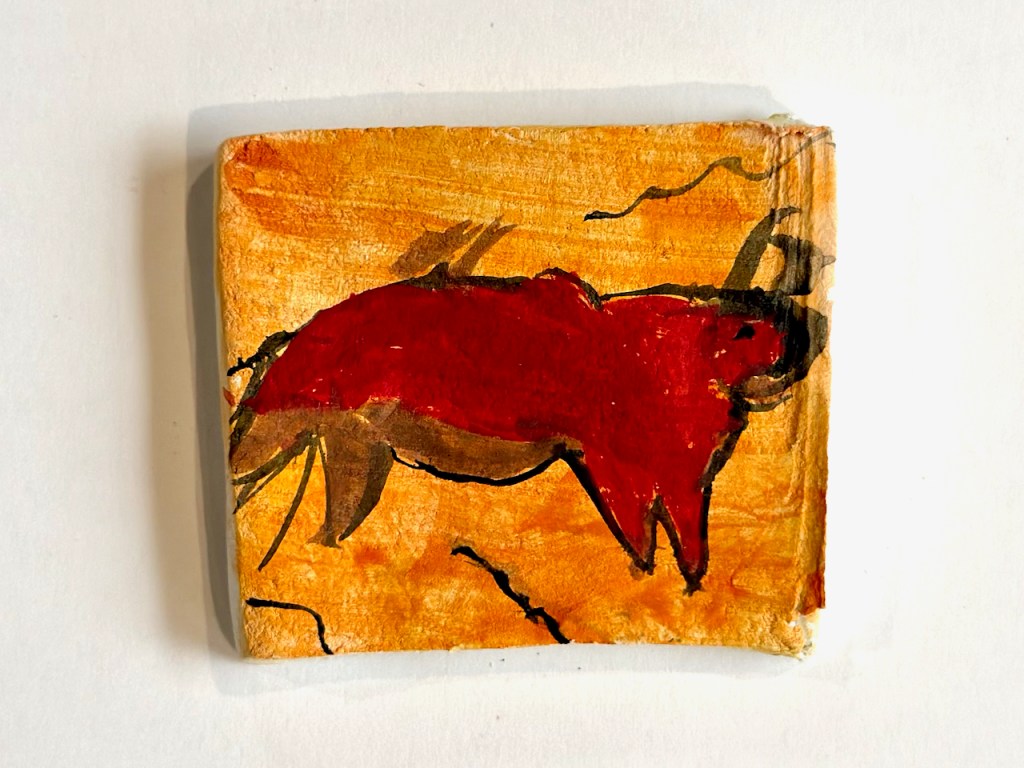
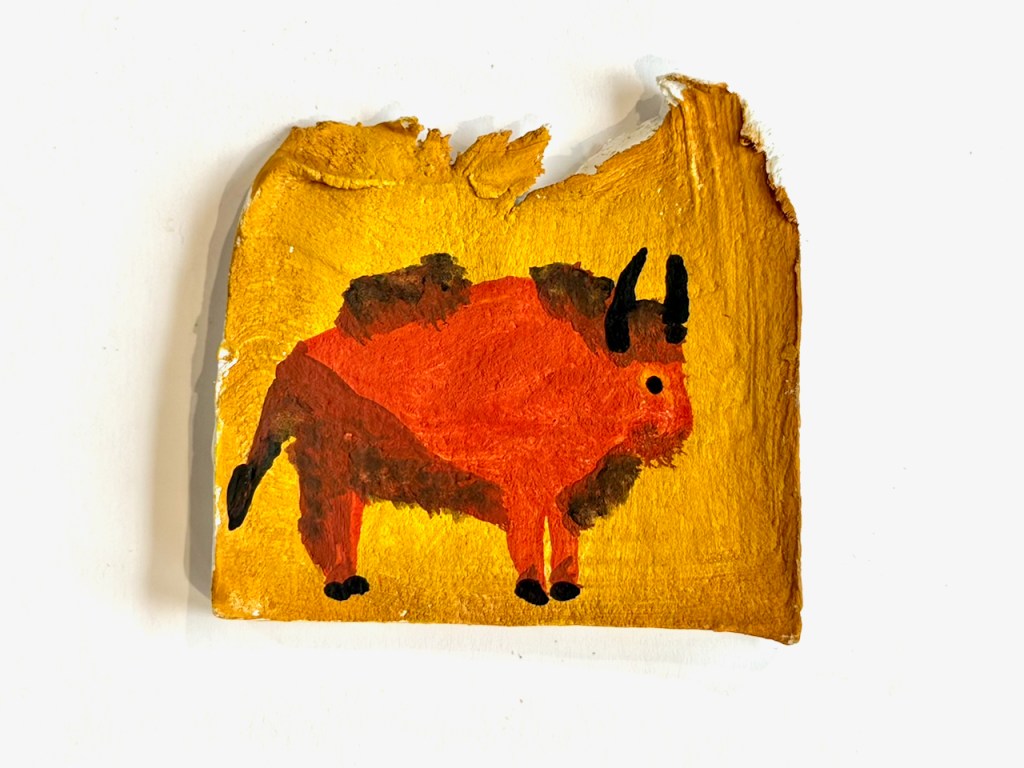
Students began by slicing small tablets from blocks of air-drying clay. They were encouraged to cut unevenly, leaving rough edges, undulating surfaces and irregular textures that echoed some of the physical characteristics of natural cave walls.
Using tempera paints in a restricted palette of ochres, reds, browns and blacks, students experimented with the absorbency of clay and the behaviour of paint on its uneven surface.
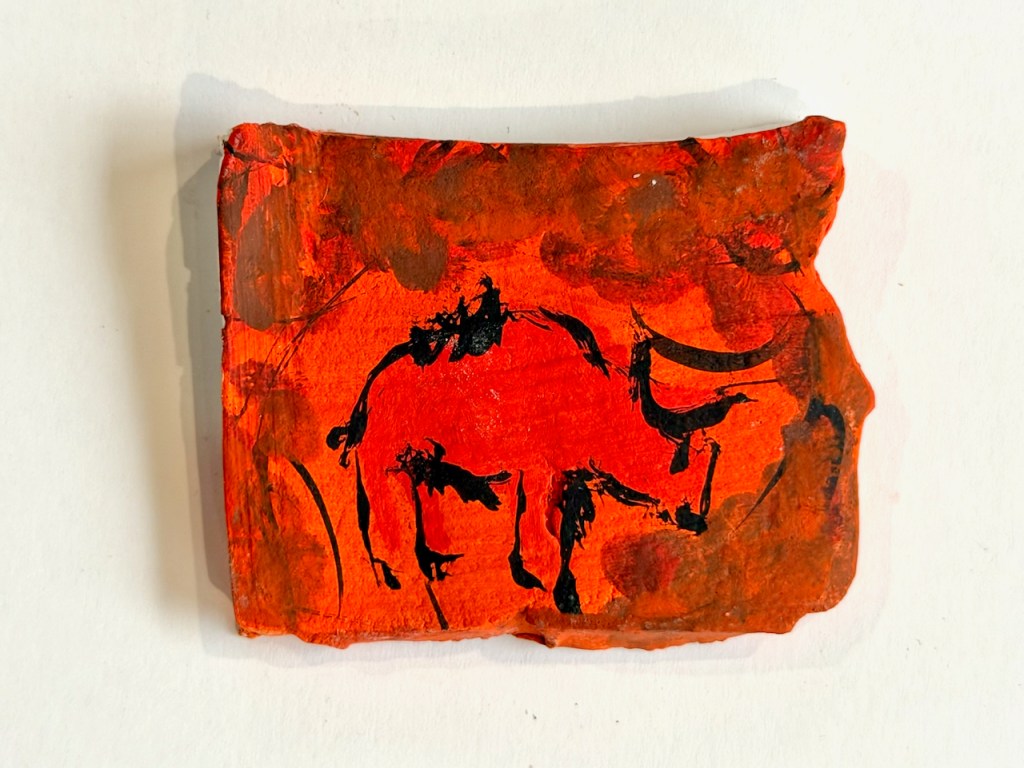
Bulls and other prehistoric animal forms began to emerge through loose, expressive brushwork.
Students discovered that lines could break, colours could be absorbed unevenly, and the contours of an animal could become distorted by the surface beneath it.
These initial investigations encouraged students to reflect on the relationship between gesture, absorbency, texture and the definition of form.
From Experimentation to Ceramic Tablets
Building on their discoveries, students progressed to larger, thicker tablets sliced from blocks of ceramic clay.
Each tablet retained the irregular character of its original cut, with uneven edges and subtly shifting surfaces. Students engraved their names on the reverse before the tablets were left to dry and subsequently bisque-fired.
The fired ceramic surfaces presented a new challenge.
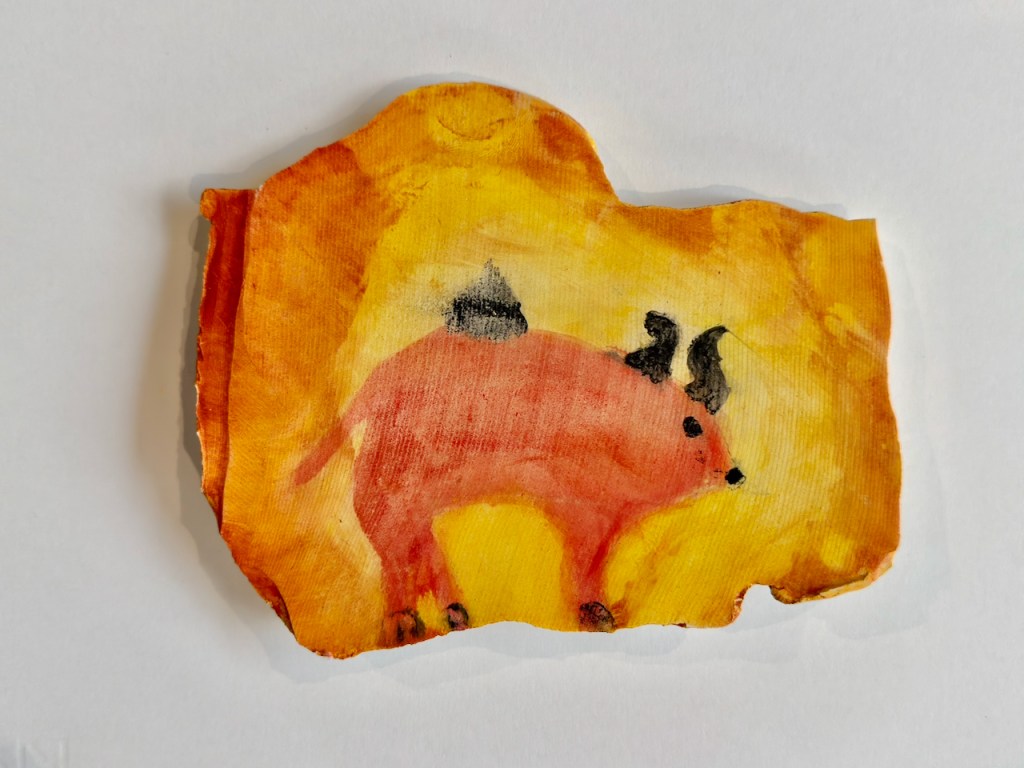
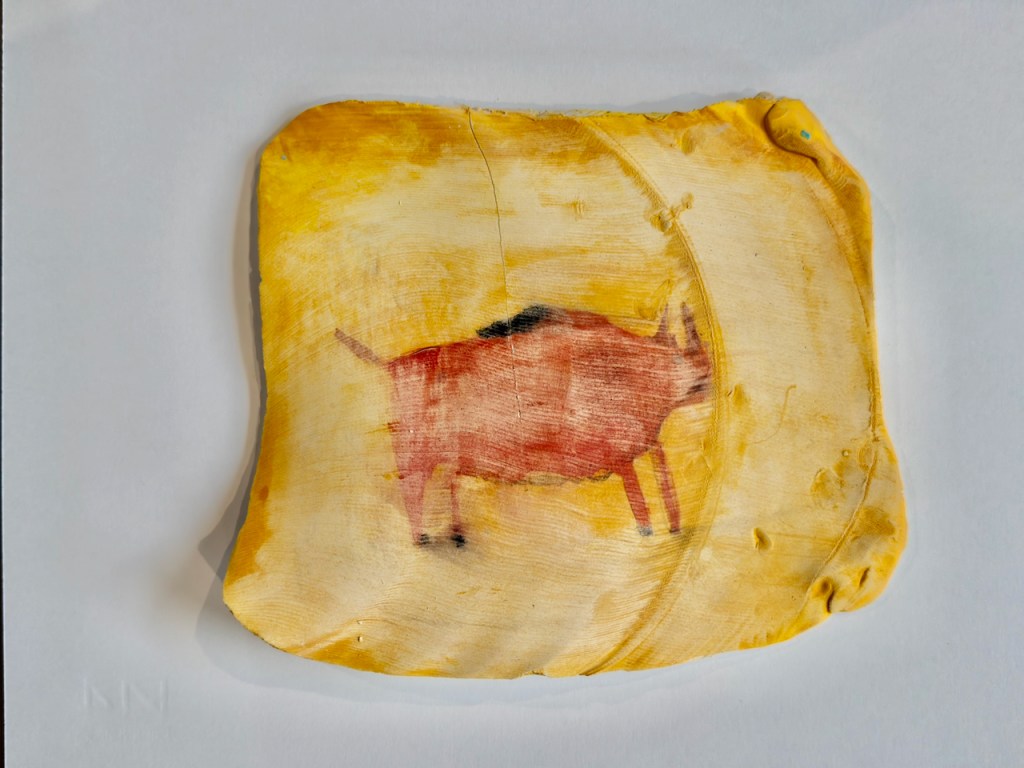
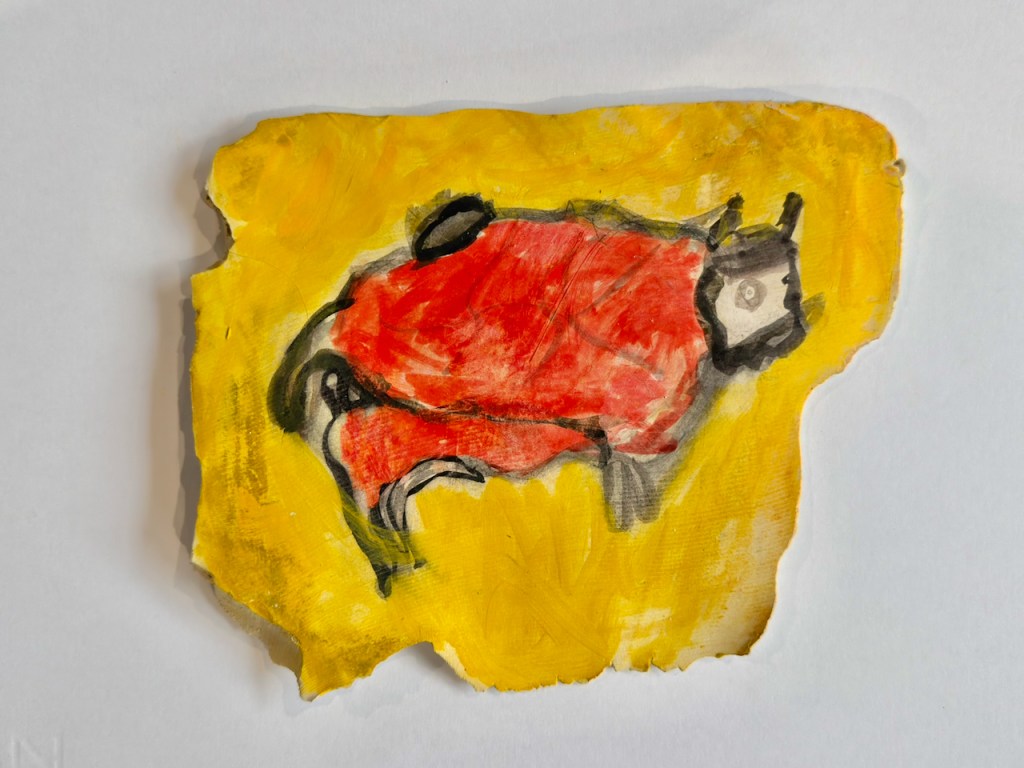
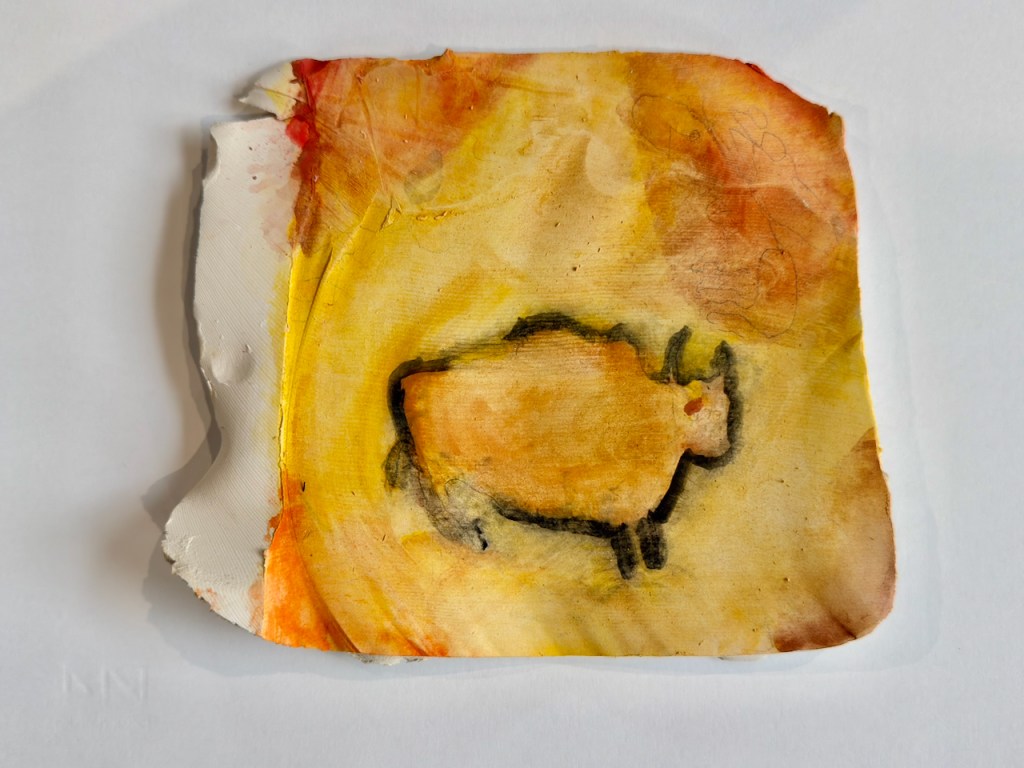
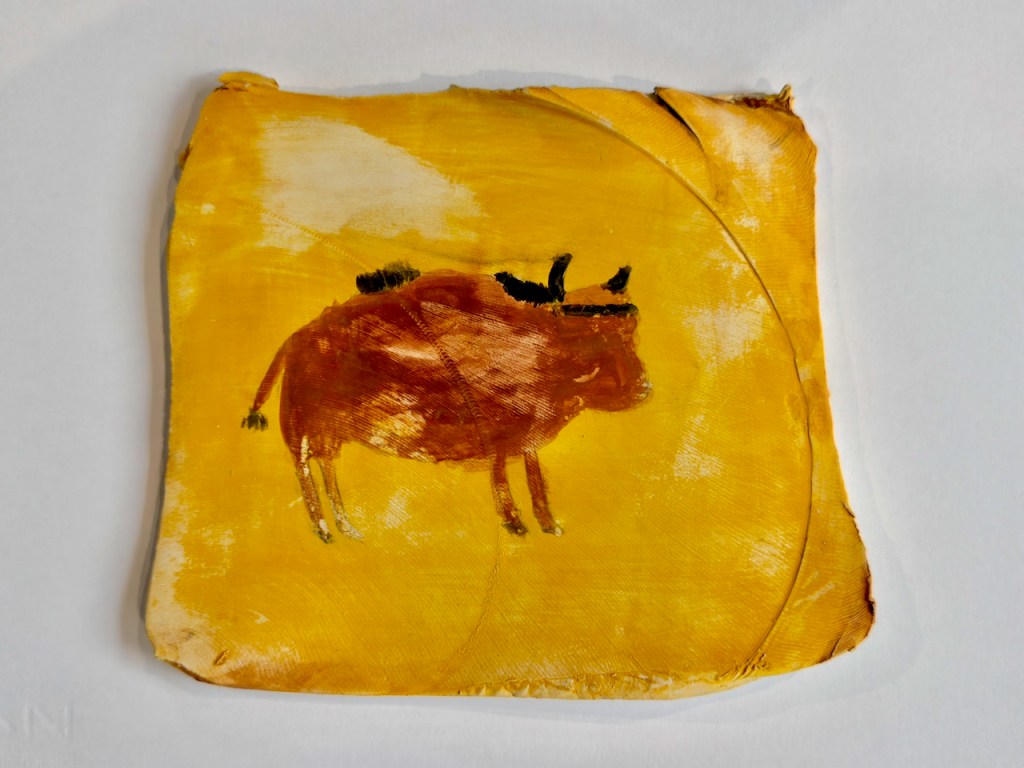
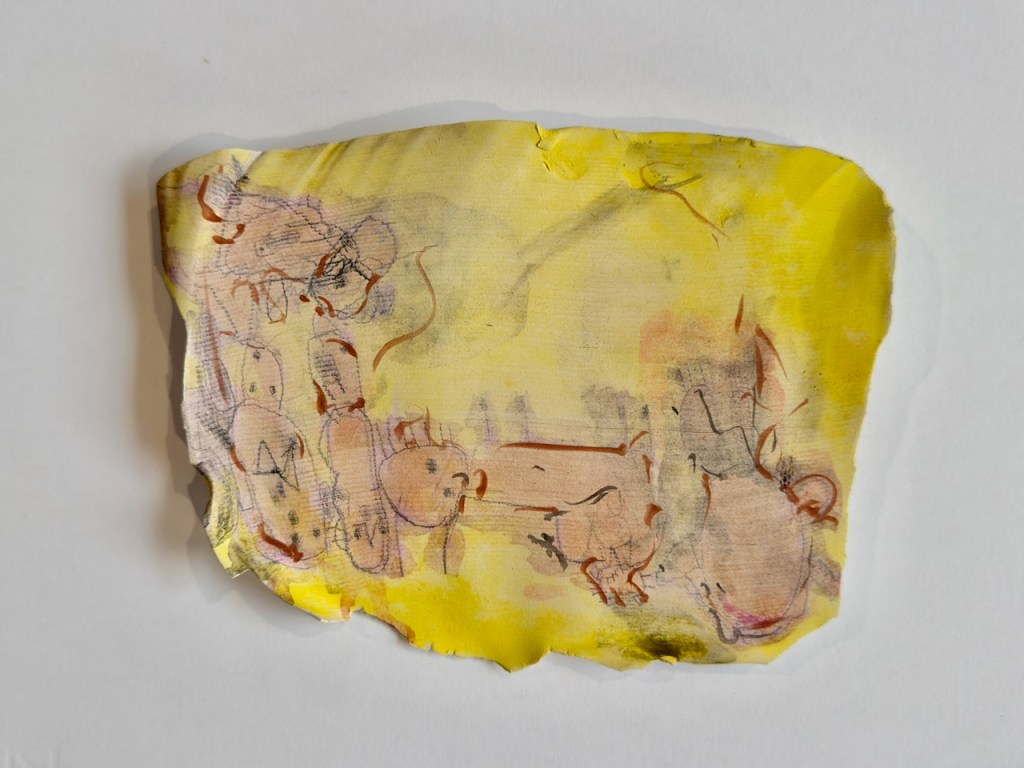
Dry, porous and highly absorbent, they resisted the smooth application of paint. Creating clean lines and clearly defined figures required patience, observation and an increasingly sensitive understanding of how the material behaved.
Rather than attempting to overcome these difficulties, students learned to work with them.
Painting, Washing, Revealing
The most significant discoveries emerged through a process of repeated painting, drying and washing.
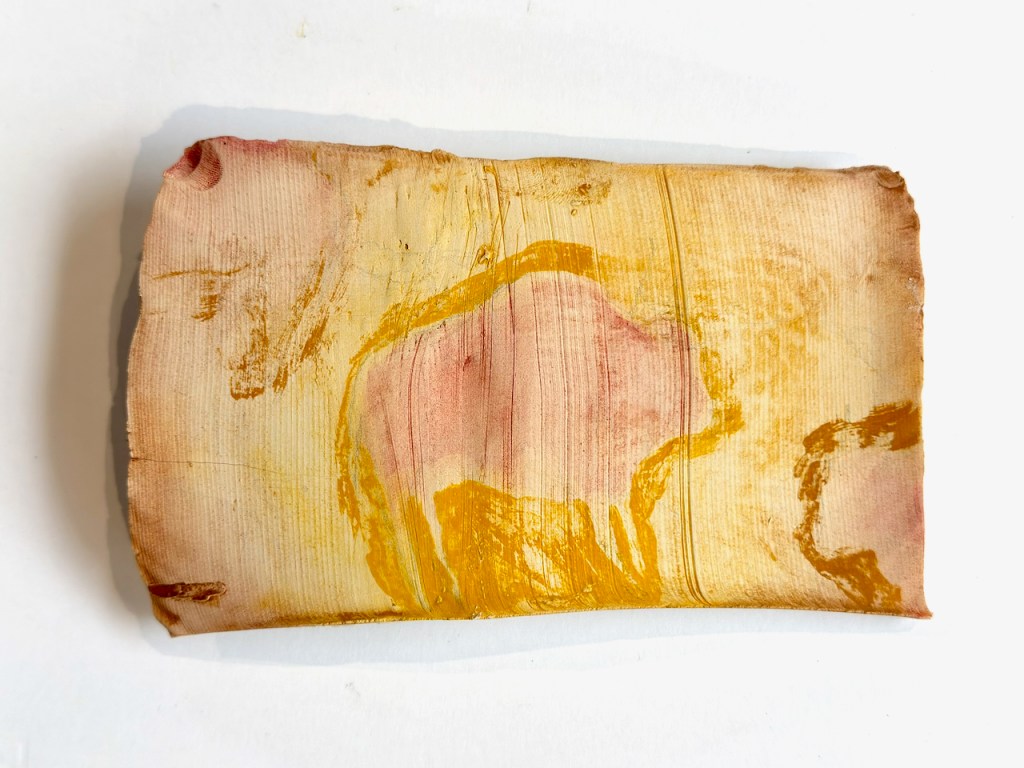
Students applied initial layers of colour, allowing the paint to settle into the irregular ceramic surfaces. Once dry, sections were carefully washed away, leaving delicate residues of pigment, fragmented marks and subtle variations in tone.
Further layers were then applied over these traces.
The process was repeated, with students selectively removing areas of paint, introducing variations in colour and gradually refining the outlines and features of their animals through increasingly delicate brushwork.
Each layer carried a memory of the one before it.
Colours accumulated. Lines emerged, disappeared and reappeared. The uneven surfaces began to influence the character of the painted figures themselves.
What initially appeared to be a technical difficulty became an essential part of the artistic process.
Painting as Discovery
The finished tablets reveal an extraordinary range of interpretations of a shared starting point.
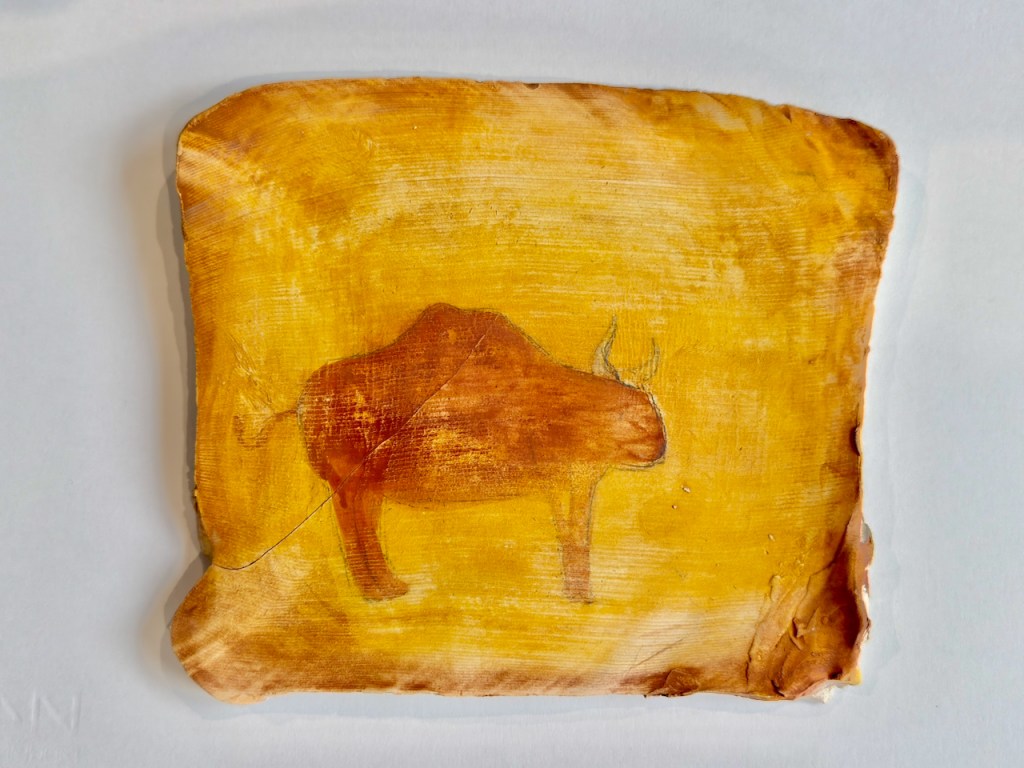
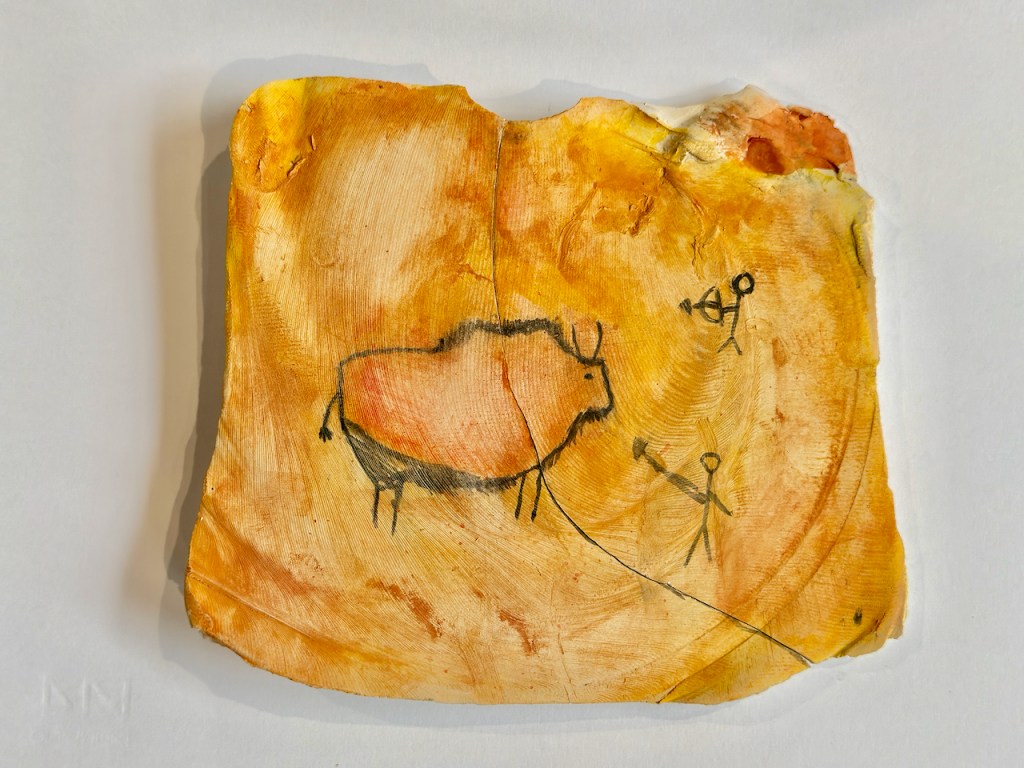
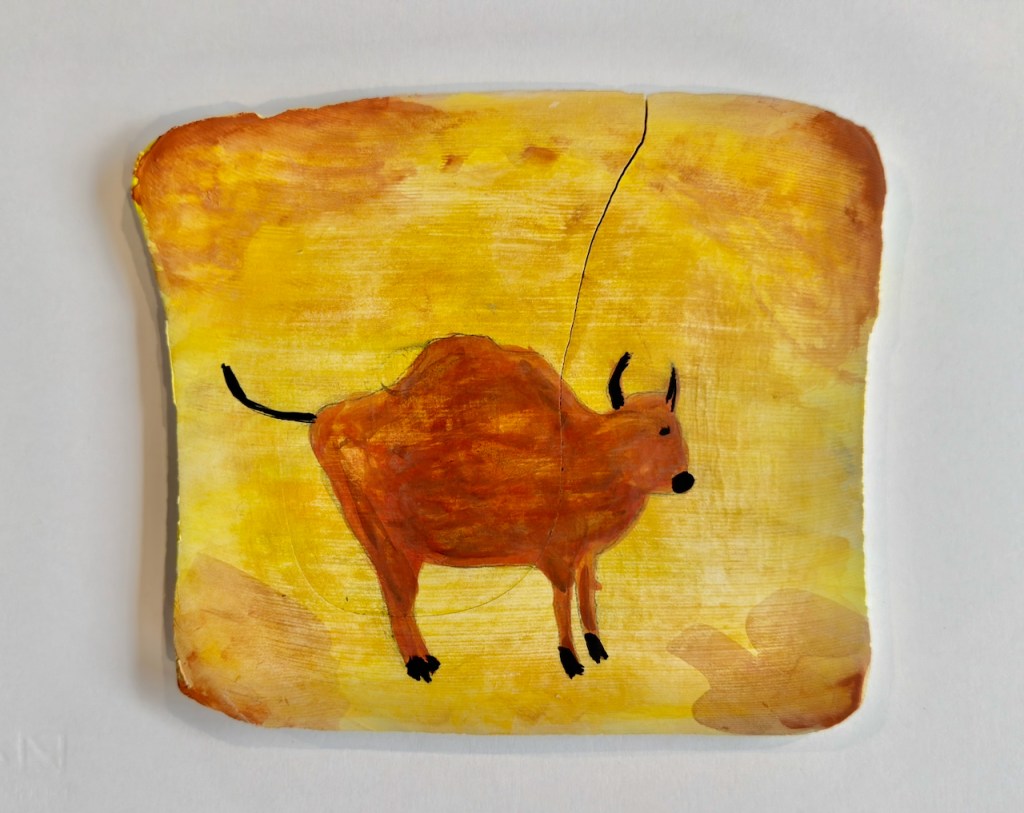
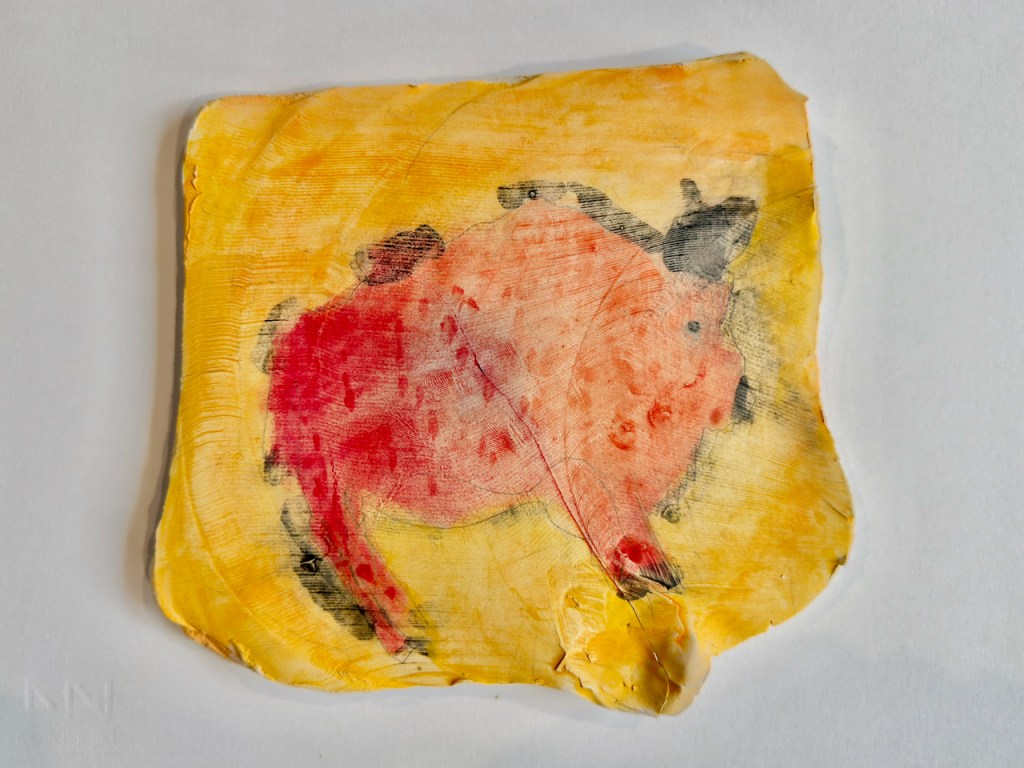
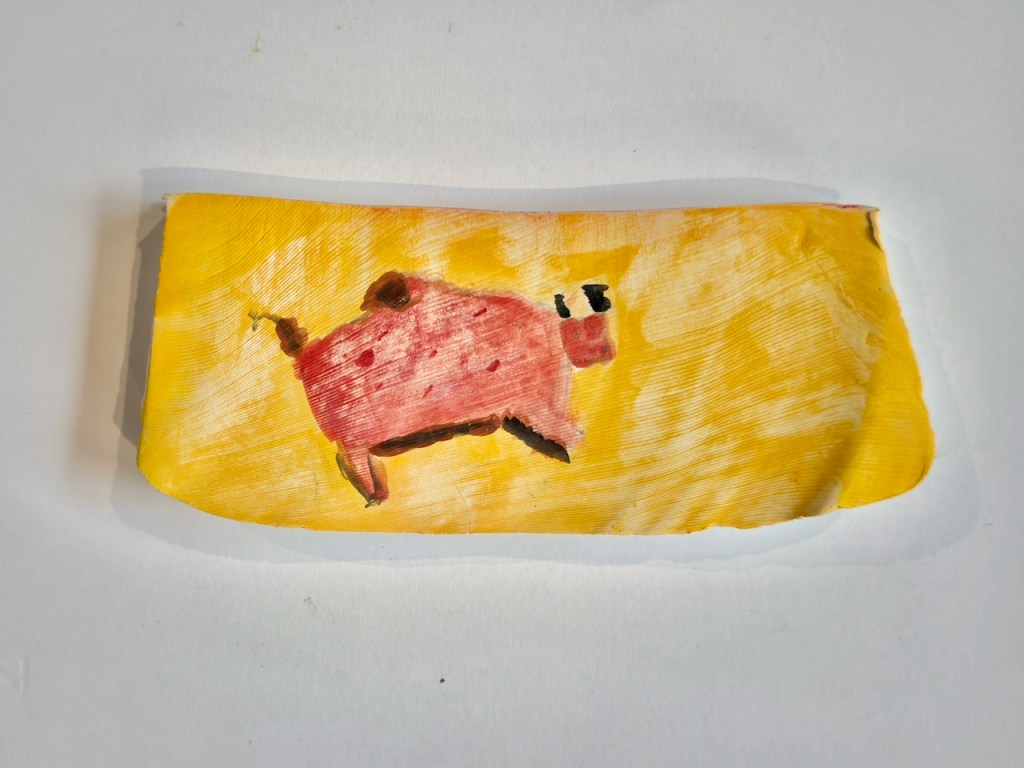
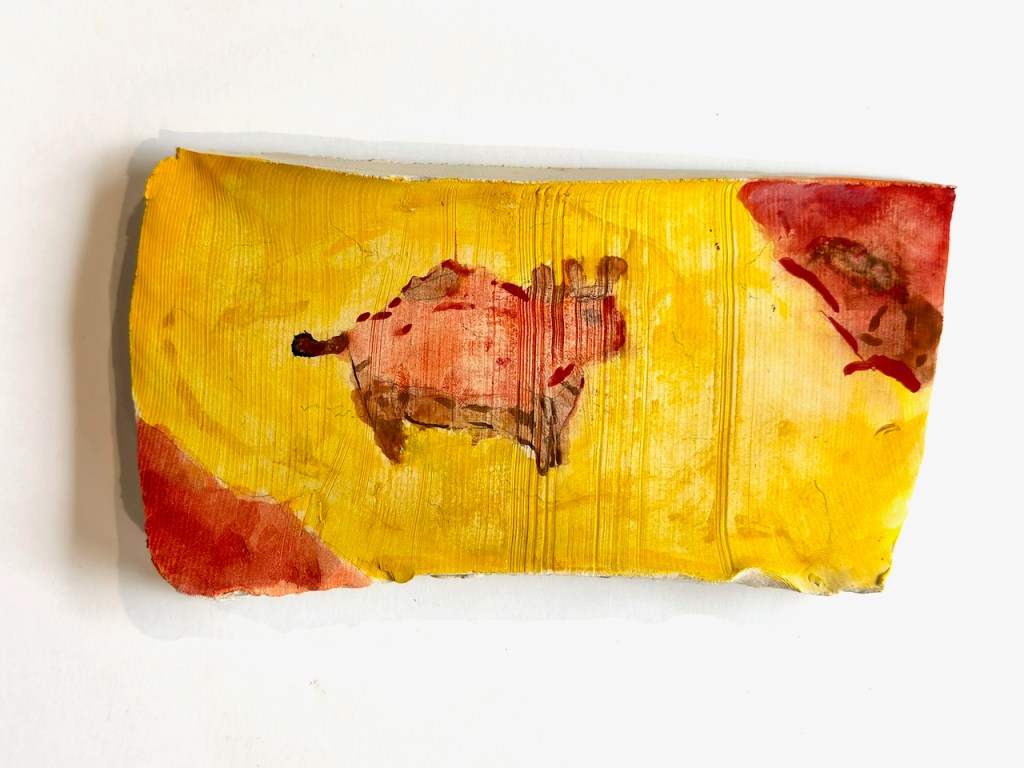
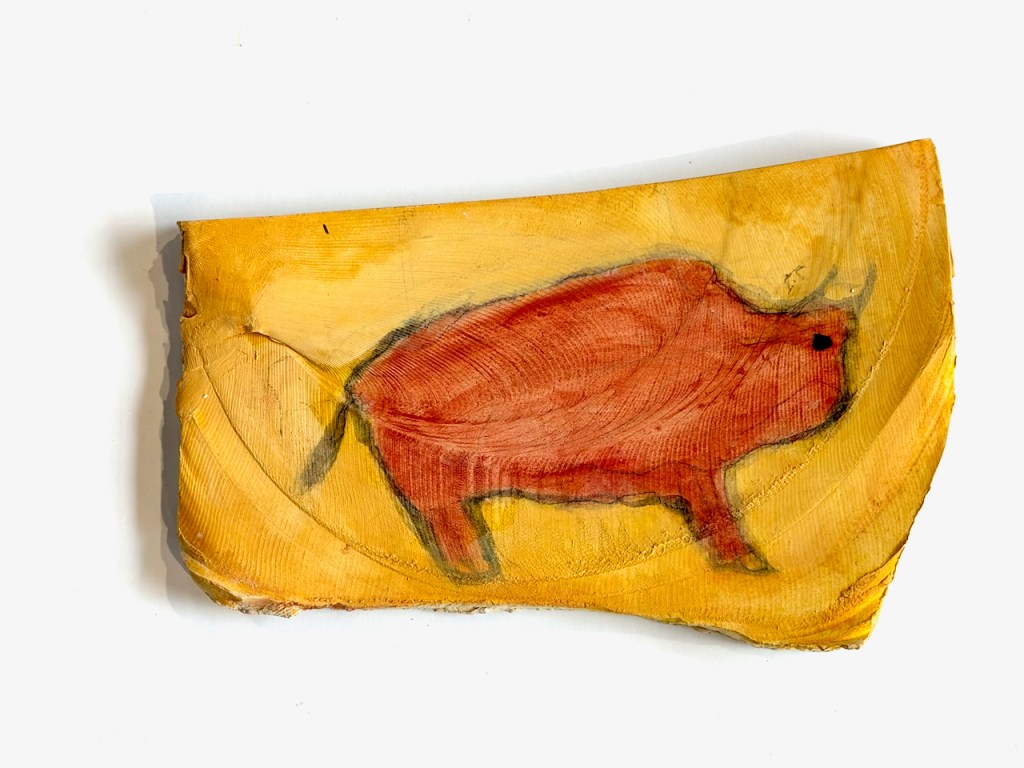
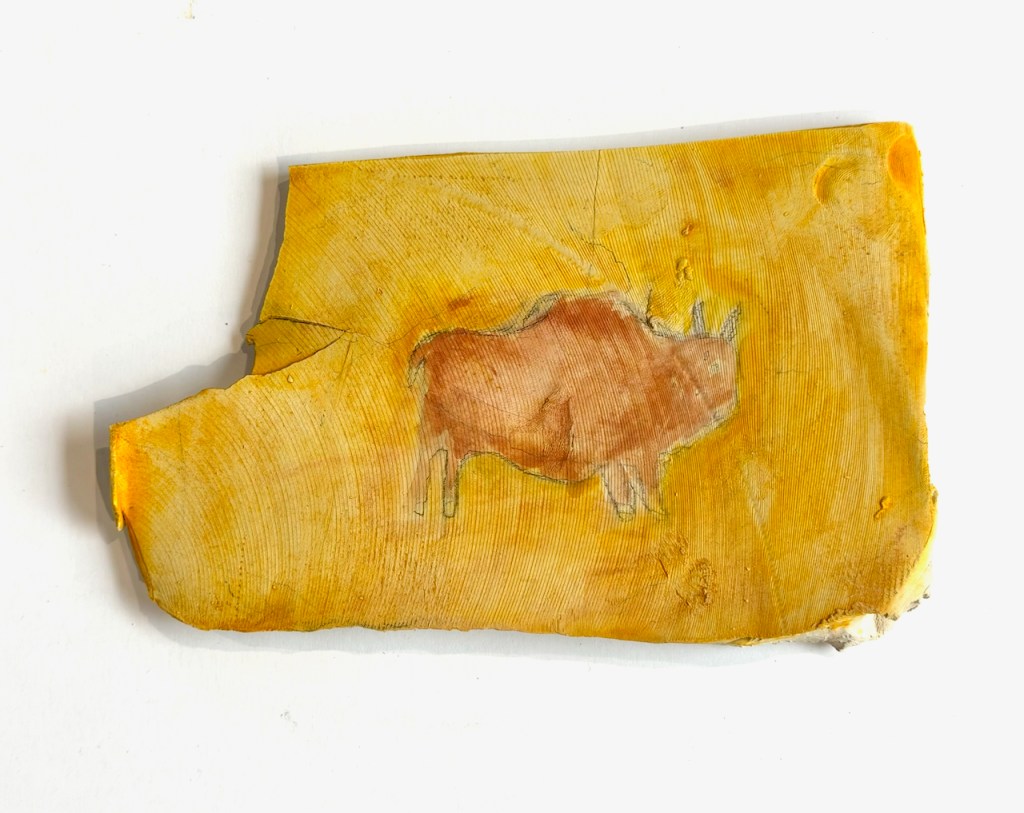
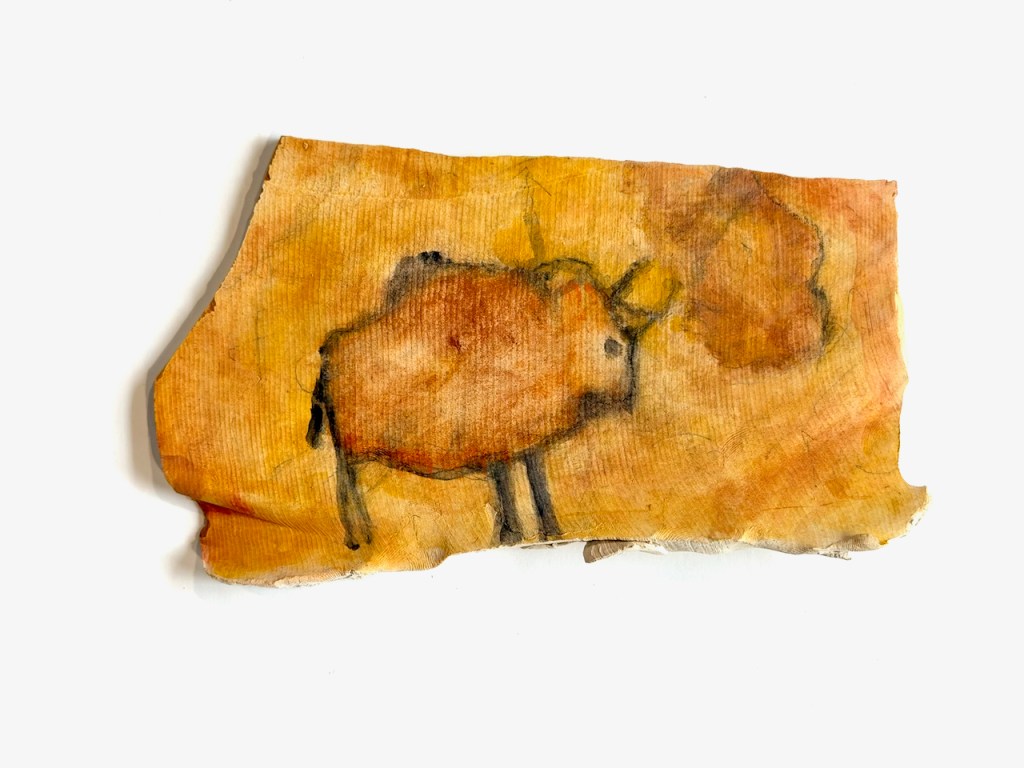
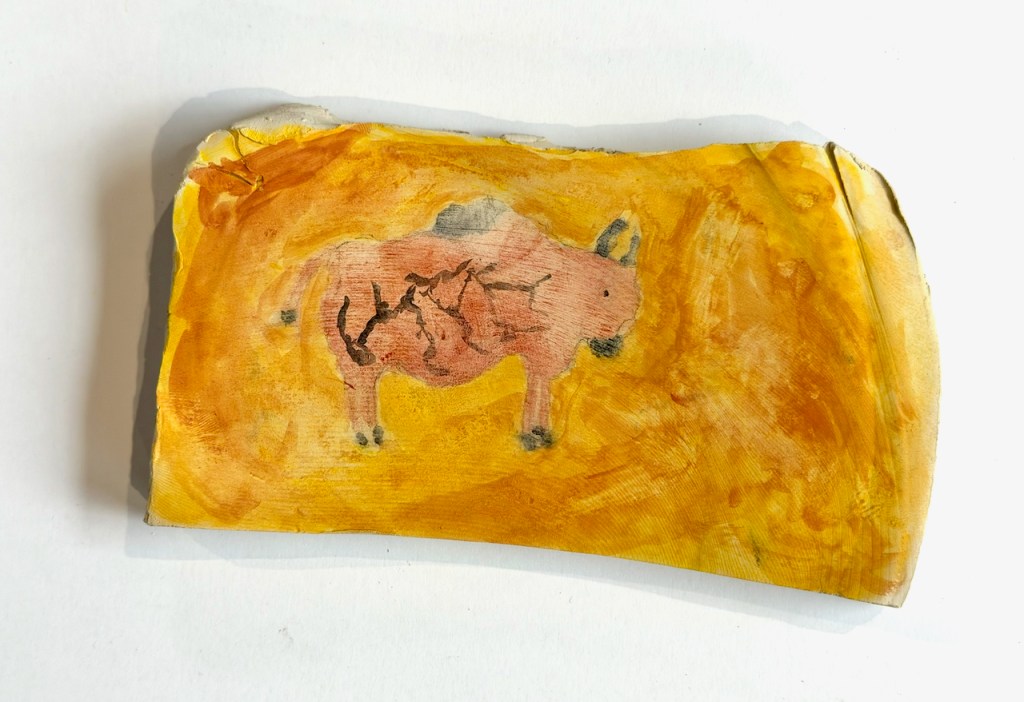
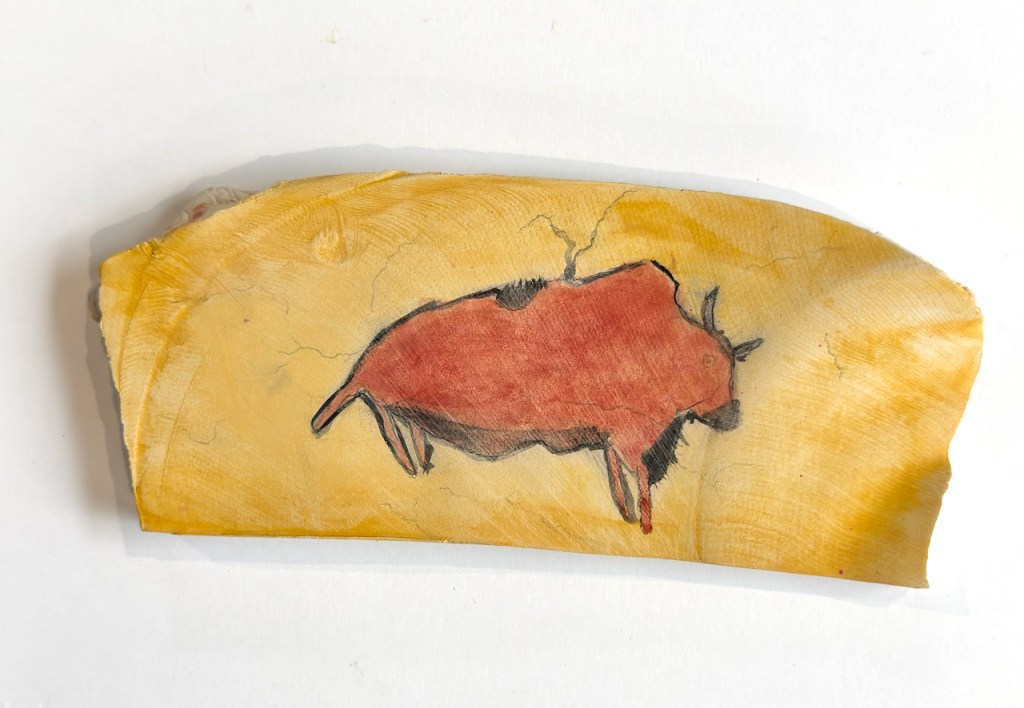
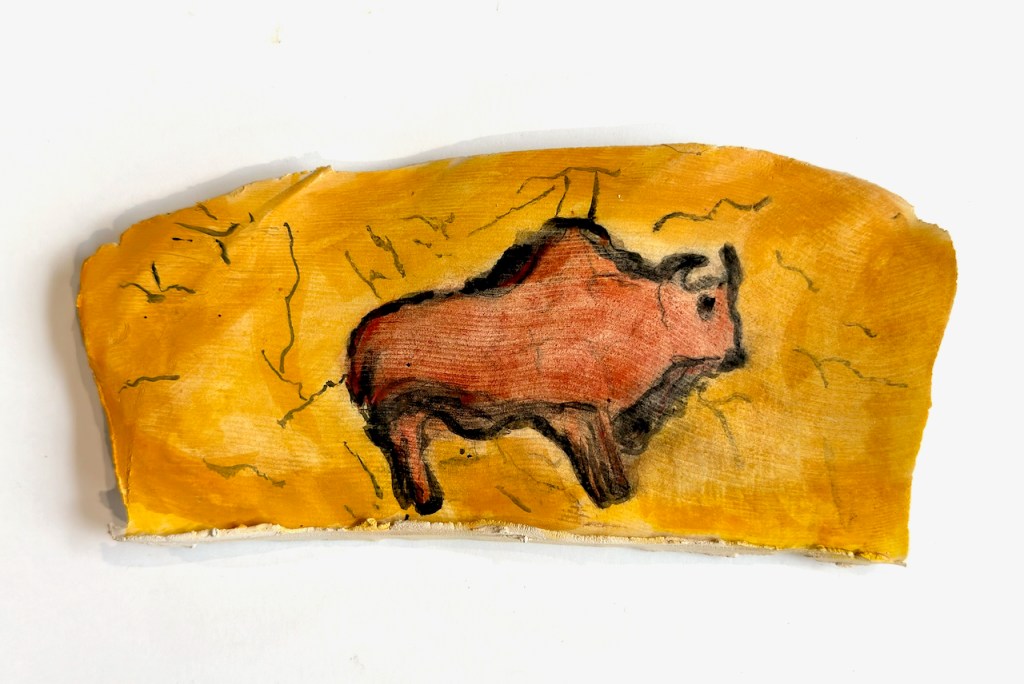
Some animals are defined through bold, confident silhouettes and strong contrasts between red and yellow ochres. Others emerge almost imperceptibly from delicate washes of pigment, their outlines softened by the texture of the ceramic surface.
In several works, the animals appear to merge with their surroundings, as though emerging from the surface rather than simply being painted upon it.
The rough edges, irregular contours and accumulated layers of colour give the tablets a distinctly physical presence, occupying a space somewhere between painting, drawing and ceramic relief.
Importantly, these works are not attempts to replicate prehistoric cave paintings exactly. They are contemporary investigations inspired by prehistoric image-making, allowing students to explore how materials, surfaces and artistic decisions shape the images we create.
The Art of Looking, Making and Revising
The achievements of this Grade 6 cohort are particularly impressive because of the patience and persistence demonstrated throughout the process.
Students learned to test materials before committing to a final work, observe unexpected results, reconsider their decisions and progressively refine their images through successive layers of experimentation.
The project established an authentic connection between historical investigation and contemporary studio practice, demonstrating that understanding art history can involve much more than looking at images or learning about the past.
It can involve experiencing the physical challenges of making an image.
What began with a rough slice of clay became an investigation into the relationship between the artist, the image and the surface on which it is made.
Paint it. Wash it. Discover what remains.


Leave a Reply