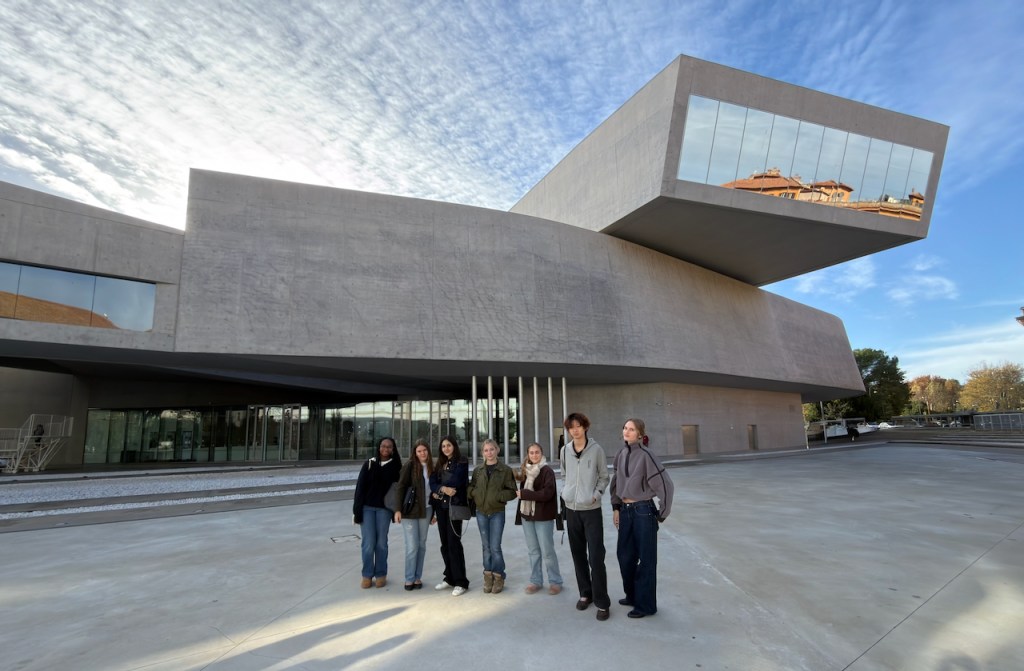
IB Visual Arts students explore how personal experience becomes artistic material, and how sustained looking can transform our understanding of art.
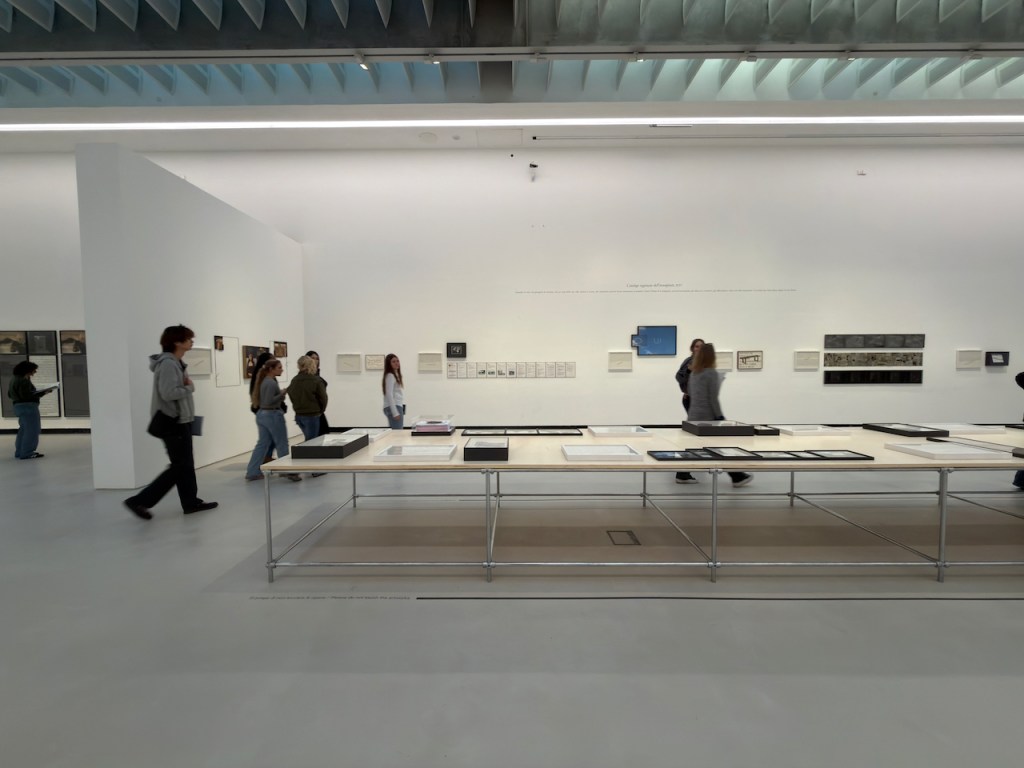
On Saturday 21 November, our Grade 11 IB Visual Arts students visited MAXXI, Rome’s National Museum of 21st Century Arts, to explore Matrimoni, Rotture e Funerali inclusi (Weddings, Breakups and Funerals Included), an exhibition devoted to the work of French conceptual artist Sophie Calle.
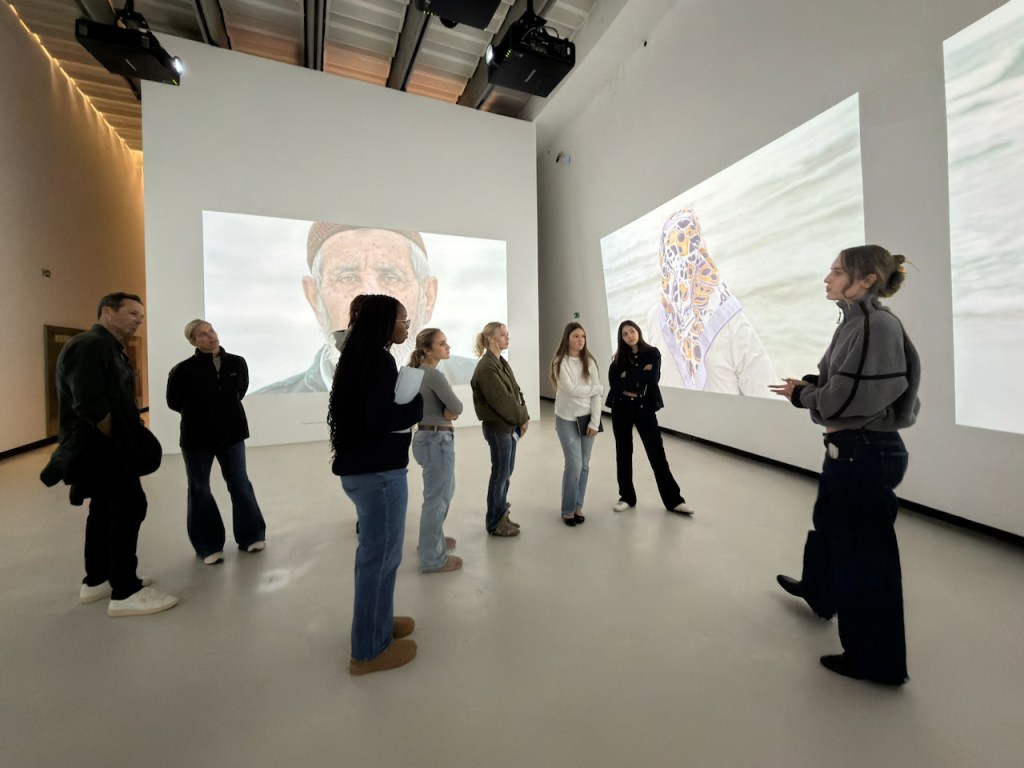
The visit was co-led by Grade 12 IB Visual Arts student and Visual Arts Ambassador Luna F., who prepared and delivered gallery talks, introduced key works and facilitated critical discussions with the Grade 11 students.
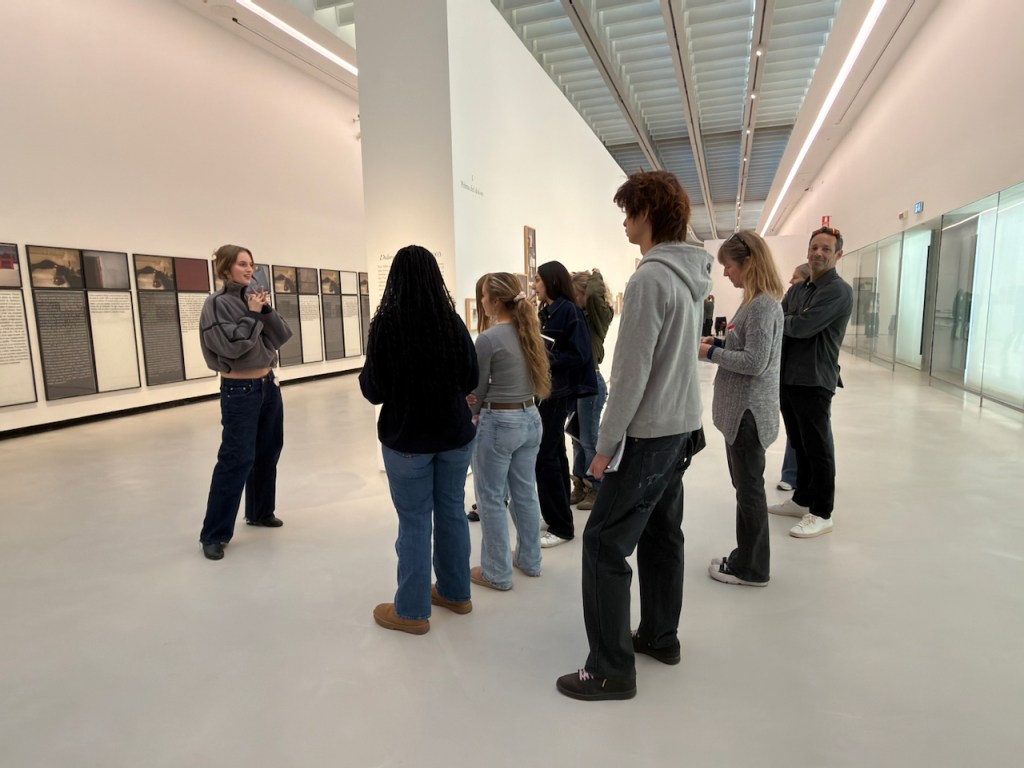
The Raw Material of Life
Sophie Calle’s artistic practice challenges conventional assumptions about what art can be and where its subject matter might come from.
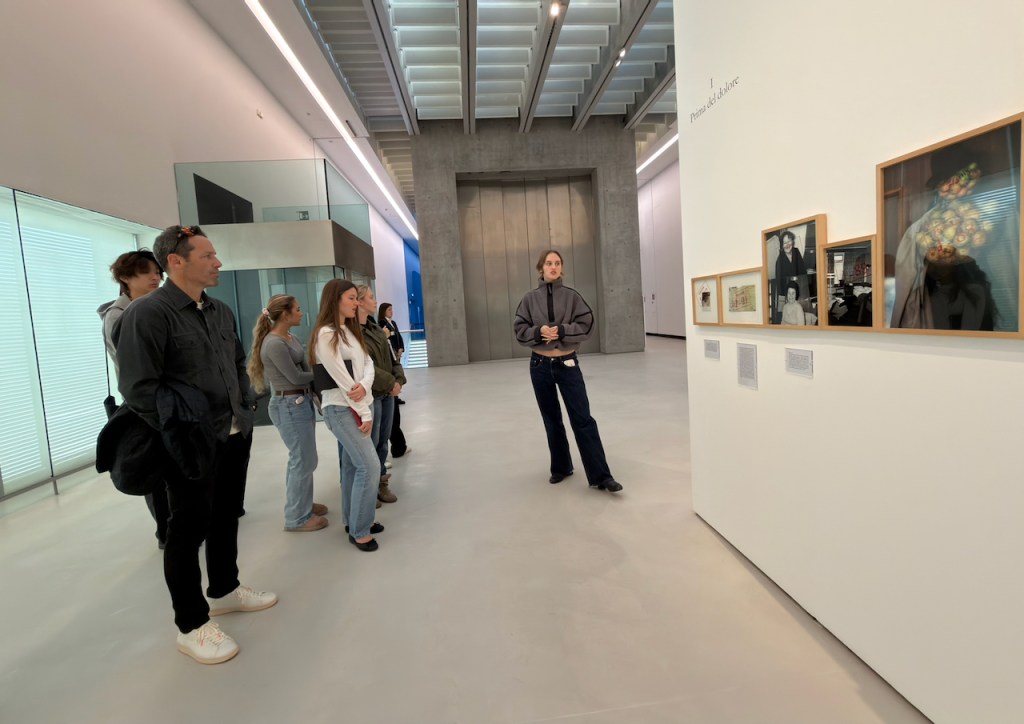
Drawing upon relationships, memory, separation, absence and everyday encounters, Calle transforms the raw material of her own life into artistic inquiry. Photography, written narratives, film, installation and carefully constructed experiences become ways of exploring deeply personal questions that also speak to universal human experiences.
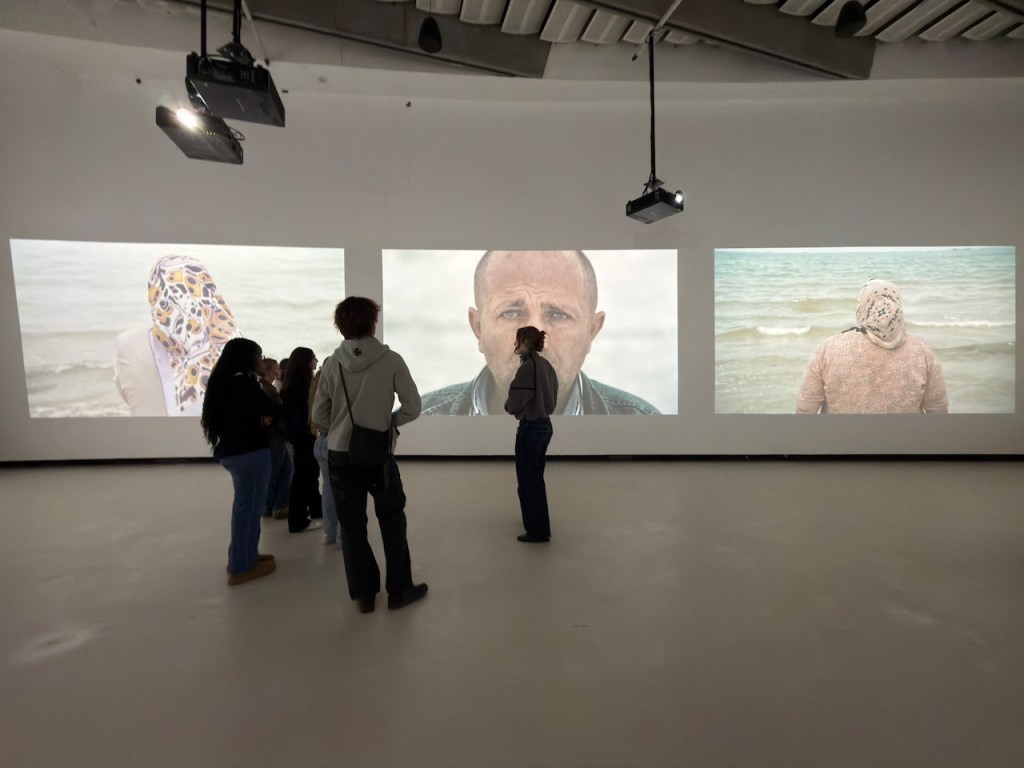
Throughout the exhibition, students encountered works addressing the end of relationships, the experience of seeing the sea for the first time, and the complexities of grief and remembrance.
What made these encounters particularly valuable was the way Calle’s work demanded more than a passing glance.
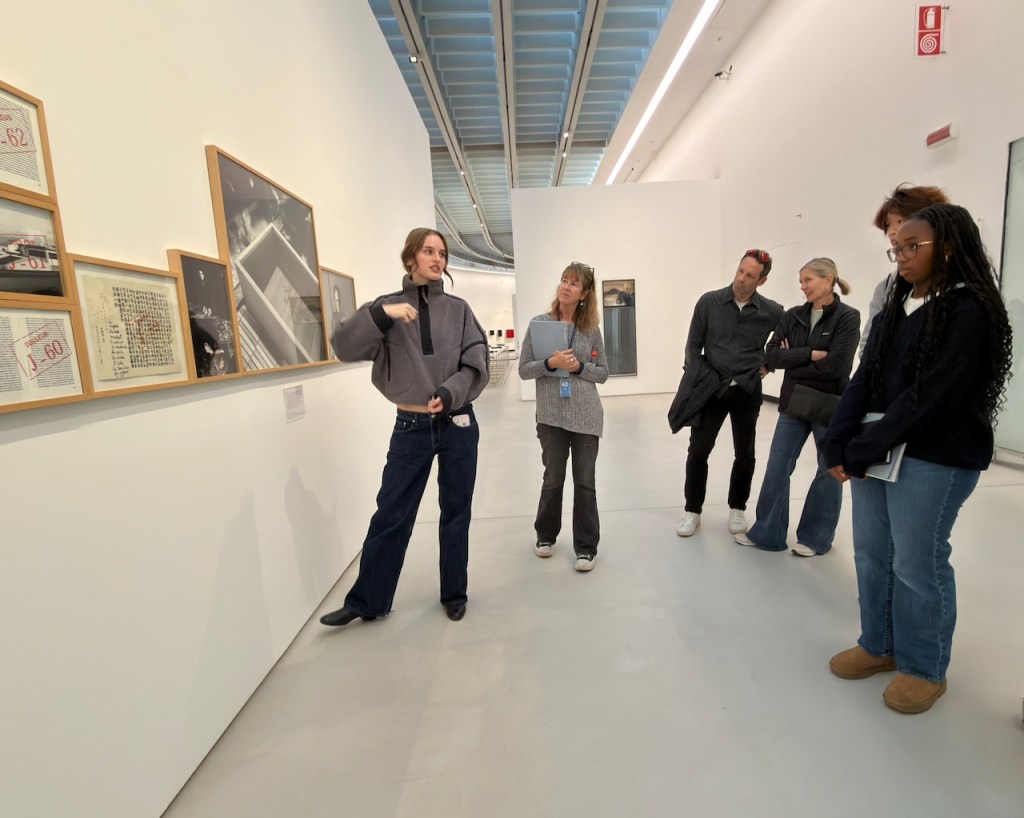
Learning to Look
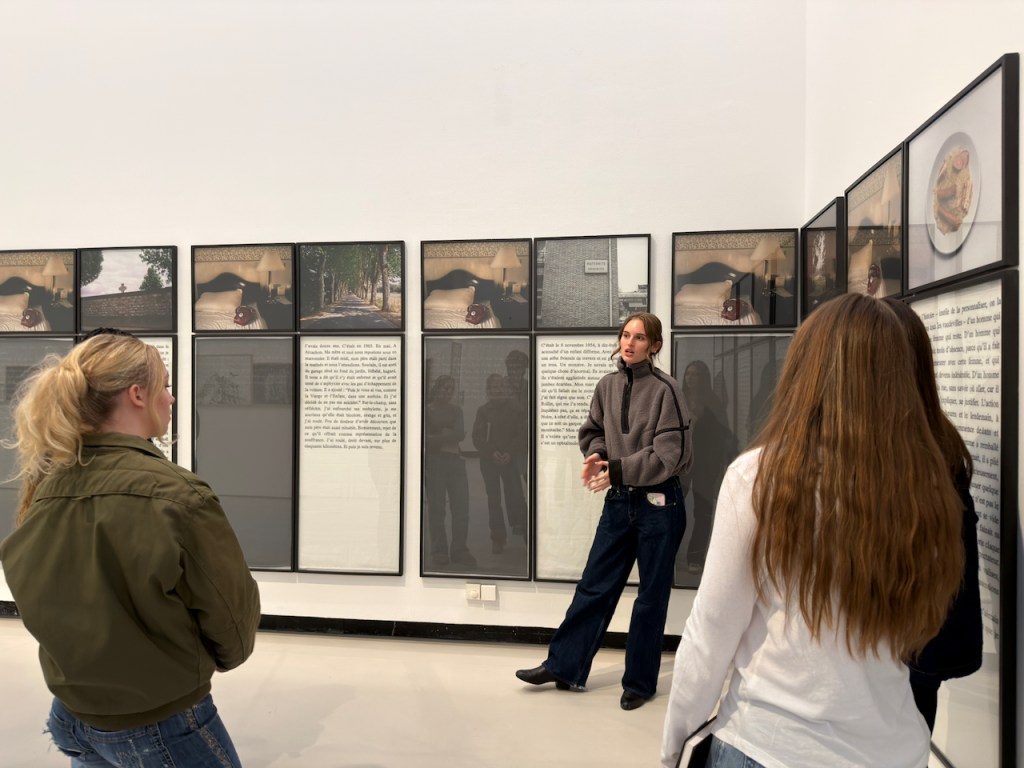
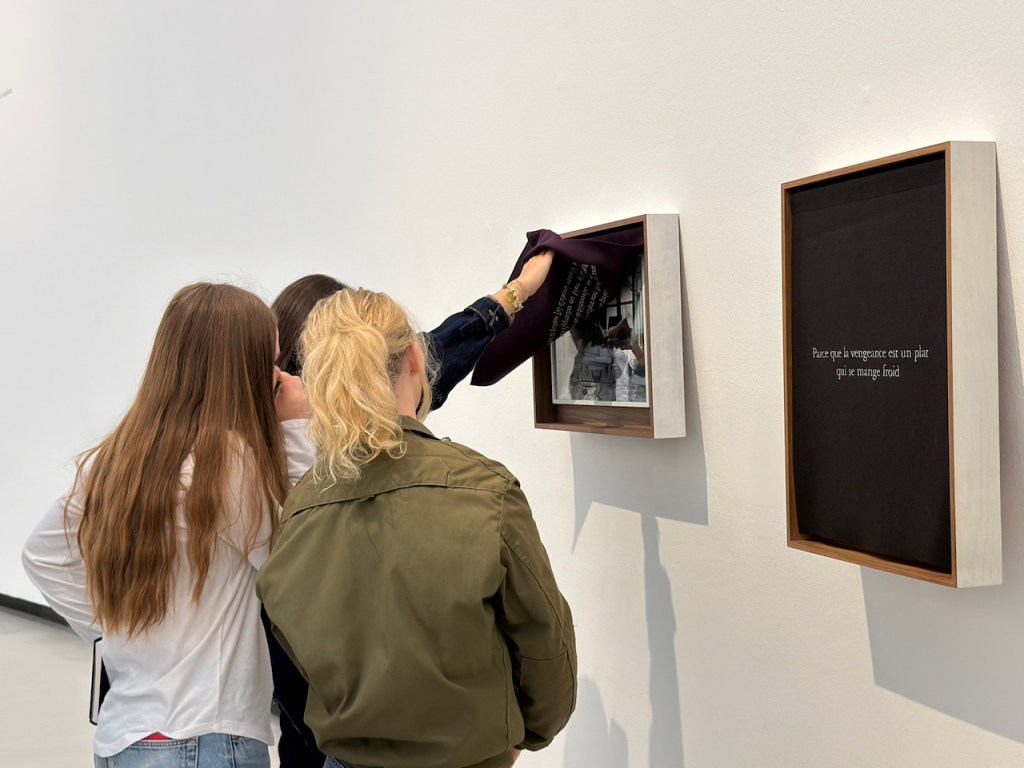
A photograph that initially appeared ordinary could become unexpectedly complex when considered alongside its accompanying text. Images and words informed, challenged and sometimes contradicted one another, requiring students to reconsider their first impressions.
This relationship between observation, interpretation and reflection lies at the heart of IB Visual Arts.
Students are encouraged not simply to describe what they see, but to investigate how artists construct meaning, consider the significance of artistic choices, and reflect on how these encounters might inform their own developing practices.
Calle’s work offered a particularly compelling reminder that artistic inquiry can begin with the familiar: a personal memory, a conversation, an absence, a question or an experience that might otherwise go unnoticed.
Student Leadership and Critical Dialogue
A particularly rewarding aspect of the visit was the leadership of our Visual Arts Ambassador, Luna F.
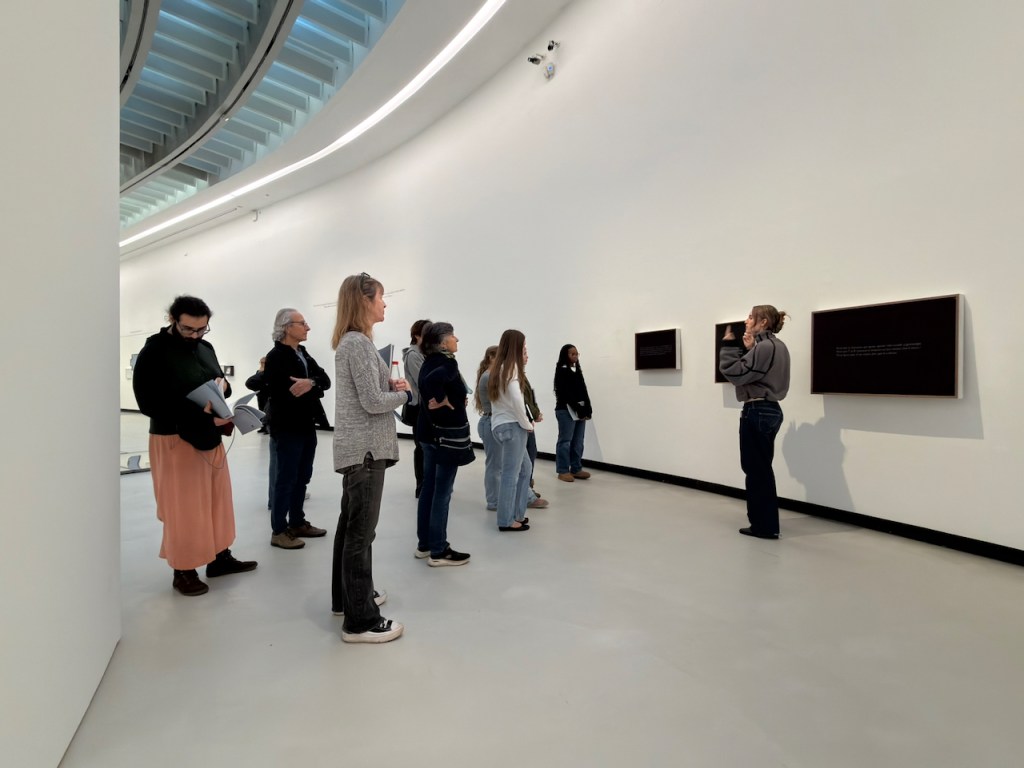
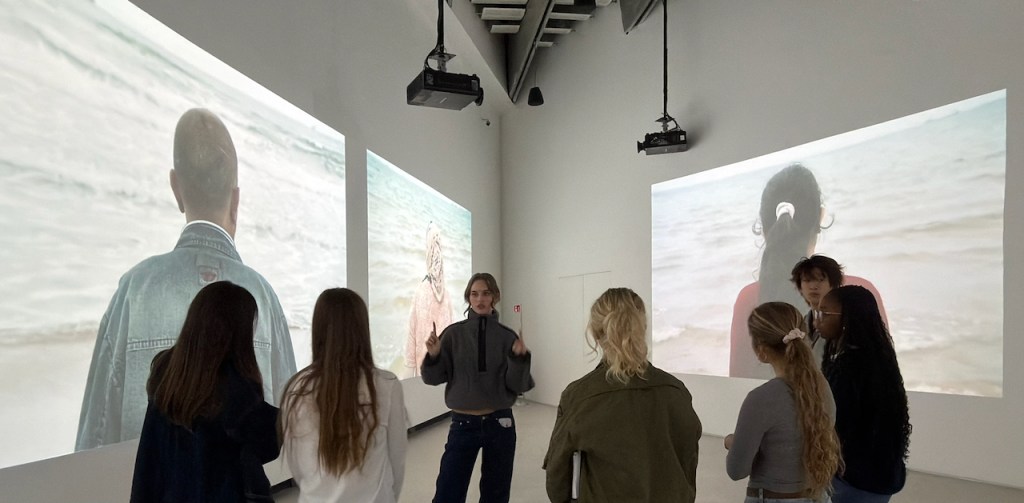
Drawing upon her experience as a Grade 12 Visual Arts student, Luna guided the group through selected artworks and modelled the close observation, contextual understanding and critical questioning that underpin meaningful engagement with art.
Rather than presenting fixed interpretations, she encouraged discussion and invited the Grade 11 students to consider their own responses.
This created an opportunity for peer mentoring, with students learning through dialogue, questioning and the exchange of perspectives.
Rome as an Expanded Classroom
One of the great opportunities of studying Visual Arts in Rome is the possibility of extending artistic inquiry beyond the studio and into the city’s extraordinary cultural institutions.
At MAXXI, students encountered contemporary artistic practices firsthand, experienced the relationship between artworks and their exhibition context, and considered the possibilities of photography, text, moving image and installation as forms of artistic expression.
The visit reinforced an important principle of our Visual Arts programme: looking is itself a form of inquiry.
The more carefully we observe, question, analyse and interpret the work of others, the more possibilities we begin to recognise for our own art-making.
And sometimes, the most valuable learning begins when we slow down long enough to look again.


Leave a Reply